Site Search

Affiliates

In association with
Amazon
Amazon UKAmazon GermanyAmazon CanadaAmazon FranceAmazon Japan

ArkivMusic, The Source for Classical Music
CD Universe
Musicnotes.com Digital Sheet Music
Sheet Music Plus


Sheet Music Plus Featured Sale

Classical Sheet Music


Francesco Maria Veracini

Francesco Maria Veracini

(1690-1768)

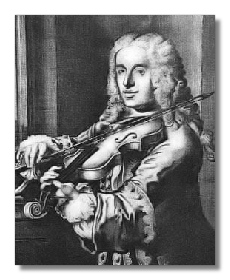
The arrogant and eccentric Florentine, Francesco Maria Veracini, was in his day one of the most sought after musicians in Europe. When he wasn't giving concert tours across Europe he was having his operas produced in London or performing at the Dresden court of Augustus the Strong. Even in 1714 his music was compared to the other Italian, Antonio Vivaldi, however unity, formal polish and proportion were not qualities which Veracini aspired to. His extravagant music, matched by his equally extravagant manner is characterised by limitless exuberance. Here was a man who called his Stainer violins "Peter and Paul", whose virtuosity caused the young Giuseppe Tartini to lock himself in a room to practise and who never failed to gain attention even in the crowded artistic world he lived in.

Francesco Maria Veracini was born into a musical family on the 1st February 1690 in the family house on Via Palazzuolo, parish of San Salvadore in Ognissanti, Florence. His grandfather had been one of the first violinists in Italy. His father however was not a musician and earned his living as a druggist and undertaker. In consequence it was his uncle Antonio Veracini, a violinist and composer who provided Veracini's early musical training. He also received instruction from the organist and composer of sacred music at Florence cathedral, Giovanni Maria Casini as well as his assistant Francesco Feroci. Casini's teaching emphasized counterpoint and his belief that music was "umana expressione" surely left its mark on the young Veracini. Again it was his uncle who introduced Francesco to performance circles in Florence including performances at the cathedral. They often performed together, as Giovanni Maria Casini wrote:

"…together playing their violins: the one old and satiated with honours, the other young and desirous of demonstrating the facility with which he overcame, with aplomb, every difficult obstacle of notes. It was marvelous for all to hear them, because the heart, rather than cleverness, guided and accompanied the finger and bow of these virtuosi."

By the time he was eighteen Veracini was composing and contributed an aria to the oratorio Sara in Egitto which included amongst the twenty four contributors works by Scarlatti, Orlandini, Casini, Gasparini, Caldara, Mancini and Bitti. The music unfortunately does not survive.

In 1711 Veracini's decision to leave Florence for Venice marks the beginning of his travels across Europe. In Christmas of that year he was a soloist at the masses held in St. Marks. Veracini performed one of his own compositions, a violin concerto accompanied by trumpets, oboes and strings in February 1712 as part of the celebrations in honour of the Holy Roman Emperor Charles VI. Veracini then returned to Florence to put on a performance of his first oratorio Il trionfo della innocenza patrocinata da S.NIccolo for four voices. Soon after this Veracini not surprisingly returned to Venice and again was soloist in the Christmas masses in St. Marks. It is possible that also during this stay in Venice the first of many legends surrounding Veracini took place, concerning the meeting of Veracini and the violinist Tartini. Antonio Vandini states:

"He ( Tartini ) came to Venice, thence to Padova, and returned together with his wife to Venice. The Elector of Saxony (Crown Prince) was there, and he (Tartini) was called to an Accademia in the house of Her Excellency Pisana Mocenigo, put on expressly to honor his Highness. There was to be found Veracini, the famous Professor di Violino, native of Florence, who was heard by Tartini to play, and he (Tartini) recognising the manner (of playing) completely new to him was mortified in such a way that the next day he fled Venice together with his wife, whom he left with his brother in Pirano, (and ) continued on desperately to Ancona where he went expressly to study the better use of the bow and thus bring himself up to an equal level with the above-said Veracini. It was 1718 or thereabouts."

The date of this story is obviously incorrect as the main protagonists were not in Venice at that time. The possibilities include 1712, 1713 and 1716, however significantly here was the first meeting between Veracini and the Crown Prince Friederich Augustus of Saxony.

Veracini next turns up in 1714 in London with the following announcement in the Daily Courant.

"At the Queens Theatre in the Haymarket this present Saturday, being the 23rd of January, will be presented an Opera call'd Dorind. With Symphonies play'd by the famous Signor Veracini, lately arriv'd from Italy."

Italians and Italian music were certainly in vogue in London at this time, Geminiani had made his debut and Italian opera performance was dominated by Handel. Veracini performed in several concerts in February and March before on April 22nd he had his own benefit concert as advertised in the Daily Courant:

"At the Desire of several Persons of Quality. For the Benefit of Signor Veracini. At Mr. Hickfords great Dancing-Room in James street near the Hay-Market, on Thursday next, being the 22nd of April, will be perform'd an Extraordinary Consort of Musick, Vocal and Instrumental, of his own Composing, viz Several Solo's for the violin, never yet performed before."

The commentator Burney himself ventured an opinion that Veracini's music was actually quite progressive:

"Veracini and Vivaldi had the honour of being thought mad for attempting in their works and performance what many sober gentlemen has since done uncensured; but both these musicians happening to be gifted with more fancy and more hand than their neighbors, were thought insane; as friar Bacon, for superior science, was thought a magician, and Galileo a heretic."

Veracini left London late in 1714 and moved to Düsseldorf. Here he dedicated an oratorio Mose al mar' rosso to Elector Johann Wilhelm in 1715. By 1716 however he was back in Venice, performing his festive overtures, reacquainting himself with and dedicating a set of twelve sonatas for recorder and basso continuo to the Crown Prince Friederich Augustus of Saxony. What follows is the dedication on the manuscript:

"Royal Highness/ I should never have dared to offer to Your Royal Highness this small sample of my musical attainments if I had not been encouraged by your generous Royal Clemency, recognized through your experience by me ( to be ) even much greater than that which Your Fame makes known everywhere; To which ( clemency) I would do too great an injustice if I feared that Your Royal Highness would disdain to see me, adorned with your August name, and displayed on these pages, those same efforts of mine, whatever their value, that You have so generously honored with kind attention, and with all the tokens of full approval. This same glorious name which they (i.e. these efforts ) carry at their beginning, is now and always will be all they have to embellish them; thus I desire that it be a sincere, true testimony, to all the world, of that profound ( and ) most humble submission with which I have for singular glory, to be able to say, in prostrating myself at the feet of Your Royal Highness."
"Venice July 26th 1716
Most Humble Servant
Francesco Maria Veracini."

The Crown Prince then on the Grand Tour had been specifically instructed by his father, Augustus the Strong to recruit singers for the Dresden opera and church. However he was sufficiently impressed by Veracini's music that by January 30th 1717 the King had replied to his request that Veracini be engaged:

"His Majesty approves the engagement of the famous violinist Veracini, on the condition that the latter shall disarrange nothing in the orchestra."

to which the Crown Prince replied:

"He has been taken on that condition."

It should be remembered that the Crown Prince had already secured the services of Johann David Heinichen as Kapellmeister and Antonio Lotti's opera company at great expense. Veracini's salary of 1200 thalers was equal to that of Kapellmeister Schmidt, Kapellmeister Heinichen and the Konzertmeister Volumeir, however Johann Georg Pisendel, the future Konzertmeister and other musicians received less than half this. Antonio Lotti and the most famous of the singers Seresino earned five times Veracini's salary and even the less famous singers earned more than the Kapellmeisters. The Crown Prince was well aware of the antagonism to be expected between the established musicians at court and the imported musicians and this may explain why he took Veracini into his private service before he was transferred to the Dresden payroll as violinist in August 1717. Indeed a letter to Count Watzdorff in Dresden proves the Crown Princes concerns were not without justification.

"Monsieur,

I have already remarked to you with perfect confidence how much I have it in my heart that the musicians engaged for the service of the King be treated according to the terms of their contract (s). It has since come to my attention that Schmidt has quarrelled with Heinichen concerning a concert of his production, and as I understand that the same (thing) can happen to the (other) musicians who are, the same as he, under my protection, and whom I have strongly recommended to you, I ask you, Monsieur, to prevent similar quarrels by your authority, and to prevent such (quarrels) which Schmidt and Volumeir might try to initiate against Signori Lotti and Veracini upon their arrival in Dresden, so that each of them (Lotti and Veracini) is satisfied with his arrangements, for which I shall be truly obliged (to you)…."

Furstenau reports that Veracini dedicated three new sonatas to the King in 1717 and this earned him the title Chamber composer. Veracini received an extra payment for performing at the palace at Moritzburg as part of the lavish celebrations marking the wedding of the Crown Prince to Maria Josepha in 1719. By 1721 he had dedicated his Opus 1: twelve sonatas for violin and basso continuo to the Crown Prince with these words which indicates the special relationship between them:

"Someone is in the habit of making a great deal of a saying of Pirro, who, asked which of two musicians seemed to him more excellent, replied that Poliperconte was the best of his captains, as if it were unbecoming to a prince to give judgement where it was a question of music, and (as if) the latter (i.e. music) should not (be given) an honored place among the nobel diversions of the mighty. more than all the examples, ancient and modern, which can be opposed to Pirro, let the delight be counted that your Royal Highness has as yet never disdained to partake of music as well as the finest discernment, with which you come to know all the delicacies of this art. Truly, this last reflection ought to keep me back from the boldness which I have to dedicate these compositions of mine to you, were it not for the generosity, with which you have shown pleasure in listening to them played in your chamber, which it gives me reason to hope that you would be equally pleased with them in this collection; beyond which, having been produced by me in your service, it would seem to me to be defrauding you of something which belongs to you if I exposed them to the public under another name. Therefore I beg Your Royal Highness to condescend generously (to give) your approval to this my most reverent offering, and it will be a stimulation, all the more, to the ambition which I have to merit in some part the great honor of my being called the Most Humble Servant of Your Royal Highness.
F.M. Veracini."

Early in 1719 Veracini returned to Italy with the task of securing the services of three more singers for the opera. Whilst in Venice he secured the services of Margherita Durastanti and Vittorio Tesi and in Bologna added Maria Antonia Laurenti. Veracini also took the opportunity to visit Florence where he married Chiara Tesi. On returning to Dresden he brought his young cousin, Tommaso for the purpose of providing him with a musical education. By 1720 Veracini was one of the few Italians left at court following the expulsion of the opera "mafia", indeed the order to the treasury specifically states that Veracini was to remain. In August 1722 Veracini left Dresden, however two bizarre incidents occurred in his last days, the earliest was printed by Johann Mattheson only a month after the event.

"Moreover here in Dresden a distressing incident has happened to one of our great virtuosos a short while ago. It is, namely, Mr. Veracini, our world famous violinist (who) suddenly became mad and so delirious that he threw himself out of a second storey window on August 13th 1722, and broke his foot in two places and (also) his hip, and is given little hope for regaining his good sense as well as for the healing of his body. The blame for such derangement of his understanding is due partly to his all-too-great application to music, partly to the reading of chemical (alchemical) writings in which he let himself get so involved that he finally could no longer sleep."
"Veracini came from Florence to Dresden in the strong hope of stepping into the lucrative service of that court. King August wanted to hear him play a violin concerto. The concertmaster Pisendel told him (Veracini) this, with the request that he (Veracini) might give the concerto to the accompanists to rehearse. Veracini, who could not imagine that the Germans were able to accompany him, much less to actually play an Italian concerto, gave one (concerto) out composed by someone else, but (which) he had claimed to be his (own) composition. When, in the Royal Presence, the concerto was finally performed and brought to conclusion, Veracini excused himself the king without blushing, for not having been more successful with it, with the unabashed additional remark: When Germans accompany, it cannot come out better. This compliment moved the concertmaster Pisendel to ask the king (permission to) perform this same concerto again, and to give the principal part to a German. With the kings permission Pisendel called to the principal part in the presence of Veracini and many other Italians, one of the lowest ripieno players, with whom he had secretly ( and) thoroughly rehearsed the piece earlier. The performance of this concerto turned out well for the unimportant student of Pisendel so as to win the praise of everyone present over Veracini. The braggard (Veracini) fell into such a rage over this that he did not come out of his room for several days, and out of shame and despair finally publicly threw himself out of a window onto the street in Dresden. His silly accident luckily did not have worse consequences that to leave a pretty considerable scar on his insane head and to break a leg. There was so much hurry about his recovery that he retained a lame leg, and with it hi limped off from Dresden to Prague, and, after a time, from there to London."

The second account by Cramer appears to have all the hallmarks of a tale which is considerably altered in the telling. But a section in Veracini's treatise seems to confirm the events occurrence and hints at a plot against his life!

Veracini spent the period 1723-1733 in Florence and set about re-establishing his reputation there as a performer and composer. Much of his work at this time consisted of sacred music e.g. oratorios, a Mass and Te Deum. By April 1733 he again visited London where the frequency of his performances caused Burney to remark "There was no concert now without a solo on the violin by Veracini." His first opera Adriano in Siria, first performed at the Kings theatre by his Majesty's command on 25th November 1735 ran for twenty performances. Many of the arias were published seperately by Walsh. His next operas La Clemenza di Tito and Partenio from 1737 and 1738 were not as popular however. Burney again commented on Veracini's performances at this time: "the peculiarities of his performance were his bow hand, his shake, his learned arpeggios, and a tone so loud and clear, that it could be distinctly heard through the numerous band of church and theatre." Critics were united in rating him amongst the finest violinists in Europe!

In 1739 Veracini returned to Florence where his uncle, wife and mother had all died in his absence. However by 1741 the "traveller" had returned to London the scene of his earlier successes. His performances included a concerto between acts of a Handel opera, a concert of vocal music, two benefit concerts, twenty one performances of entr'acte music at Drury Lane and ten performances of his last opera Rosalinda. In 1744 he also published his finest sonatas, the Sonate accademiche op.2 which include a popular ballad theme Tweeds Side. In 1745 Veracini left London and returned to Italy where he remained until his death. During his last years he became a church musician, he was maestro di capella at the church of S Pancrazio and held the same position at S Michele agl' Antinori. He also wrote his treatise "Il Trionfo della Prattica Musicale" which is as original and eccentric as its author and which seems to have grown out of a notebook Veracini kept commentating on music during his travels.

Francesco Maria Veracini died on the 31st October 1768 at about 7 p.m. Five days later the following obituary appeared in the Gazzetta Toscana:

"Sig Francesco Veracini, Florentine Citizen, famous throughout Europe for his astonishing manner of playing the violin and of composing music, lived 79 (78) years and died on the 31st (of the) past (month) with Catholic sentiments, having made a pious and generous testament: he acquired, beyond the mountains, a reputation as a player that no one, perhaps, has equalled: distinctions (were awarded him) attesting that he was esteemed everywhere the voice of his instrument was heard: in England he was applauded extraordinarily and he acquired not a little wealth in Dresden and in other parts of Europe, until (having) returned to his Homeland, he dedicated himself to writing various musical compositions, which showed, in his old age, those talents which were his in his youth."

~ Copyright © David Charlton, 1996.

Recommended Work

Recommendation to come…

Trumpet