The Internet's Premier Classical Music Source
Related Links
Recommended Links
Site News
Site Search
Follow us on


Affiliates








The Leopold Stokowski Club


Complete Stokowski Compact Discography
The following is a "complete" discography of all CDs with music by Leopold Stokowski. I always use the word "complete" with some trepidation. First, there are always new releases by small companies (in addition to the major labels) that filter across the Atlantic or Pacific. Second, to my knowledge there is only one CD we have not acquired and I am told it included the Lalo Symphonie Espagnole with Jacques Thibaud. It was coupled with a non-Stokowski performance and that is all I know. If anyone has a copy I'd love to add it to our archive. Third, while I have a lot of contacts that keep me abreast of these matters, there are always items people find that have escaped me. If anyone can add to this list, please let me know.
I have rated the releases according to a normal four-star system to let you know which ones are worth seeking out. My evaluations are also discussed where possible. Generally a three-star rating indicates that the release is excellent but may appeal mainly to those of us who appreciate Stokowski. In a select few cases I have awarded a five-star rating.
There are some CDs listed which are no longer available unless you run across them in cut-out bins. I have maintained these on the list because you might run across them and want to know how valuable they are (in a musical sense).
Finally, we would be happy to make cassette transfers for interested parties at a cost of $12.00 per tape. I will make one CD per cassette. This offer does not extend to commercially, generally available discs.
I have begun dating entries after the initial printing of this. Dates begin in December of 1995 and are noted at the end of the specific entry. I have labeled entries made in the latest edition of this CDiscography with a sign.
Revised March 2013
ACADEMY SOUND & VISION LIVING ERA CLASSICS
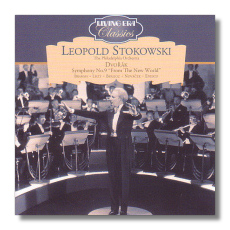
 Dvořák: Symphony #9 with outline of themes. Brahms: Hungarian Dance #1 (both from 1934) Liszt: Hungarian Rhapsody #2 (1927) Berlioz: Rakoczy March: The Damnation of Faust (1927) Novacek: Perpetuum Mobile (1940). Philadelphia Orchestra. Enescu: Romanian Rhapsody #1 (1947) HIS SO. This is the only release of the 1934 recording from a commercial source. It was issued by the Japanese Stokowski Society but that was obviously taken from an LP. The other items may be on other discs, but this is very good and nobody did the Dvořák better than Stokowski. AJC 8552.
ANDANTE COLLECTION

 LEOPOLD STOKOWSKI with the Philadelphia Orchestra and the All-American Youth Orchestra
- Disc One:
- Rimsky-Korsakov: Schéhérazade ('34)
- Borodin: Polovtsian Dances from Prince Igor ('37)
- Tchaikovsky: Solitude [trans. Stokowski] ('36)
- Disc Two:
- Bach/Stokowski: Toccata & Fugue ('27)
- Bizet: "L'Arlesienne" selections ('29)
- Saint-Saëns: Carnival of the Animals ('29) w/ Olga Barabini & Mary Montgomery piano. William van den Burg, cello.
- Tchaikovsky: The Nutcracker ('26)
- Disc Three:
- Bach/Stokowski: Passacaglia & Fugue ('36)
- Liszt: Hungarian Rhapsody [orch. Doppler] ('36)
- Sibelius: Swan of Tuonela ('29) Valse Triste ('36)
- Scriabin: Poem of Ecstasy & Prometheus-The Poem of Fire Sylvan Levin piano ('32)
- Disc Four:
- Dvořák: Symphony #9 "From The New World" ('34)
[All of these recordings above were with the Philadelphia Orchestra, as most of you know. The remaining items are with the All-American Youth Orchestra] Strauss: Tod und Verkarlung ('41) Shostakovich Prelude in E-flat Minor (trans. Stokowski) ('40) This is the only time I could hear a difference in the sound. The Columbia discs were among the worst I have heard in this collection, the surface noise significantly higher and the overall sound congested. Guess what? This sounds better than the LSSA/Music & Arts release.
An old friend of mine was a dedicated LP user. I used to go over and he'd put on his LPs and say, "There is more music in those grooves than we heard before." What Andante has managed to do is get 'more music from the grooves'. The bottom line is that without exception every single recording in this set is better than any previous release.
I should mention that this is the first 'commercial' compact disc release of the 1934 Dvořák 9th. The sound here has a nice inner depth and the bass line sounds like a wall of double basses. This is also the case in the 1934 Schéhérazade, which happens to be my favorite recording by Stokowski (or anyone). The interpretation has a sweep, portamento that swoons… it sounds like he was planning to use it in Fantasia (Fan-ta-sia as Stokowski pronounced it). The Tod und Verkarlung is just damn fine. Recently I received the Naxos release of Mengelberg's Concertgebouw recording of that piece. Comparing the two, Stokowski is much more emotional, the solo violin is touching, poignant. The 1927 Toccata and Fugue sounds much better than its previous incarnation. I do wish they had credited the cellist in the Swan of Tuonela, because his (or her?) playing is just mind-boggling. I could go on.
What you will hear in this set are the finest transfers yet. The sound stage has a depth and spread that is monaural, but more like you would have heard on an LP instead of 78s. It is so good that at times I wondered if a stereo effect had been added. I chatted with Mark Obert-Thorn about this and he tells me that there is no fake stereo. Another point about the sound is the consistency between pieces regardless of when they were recorded. There is no sudden shift that would indicate a significant change in the dates.The four discs come in a handsome, black booklet package. There are excellent essays from Tim Page and Jed Distler. The only error I could find is Page's assertion that "By 1932, Stokowski had made hours of experimental stereo recordings for RCA." Stokowski did make some experimental LPs for RCA, but the stereo experiments were for Bell Labs. The rest of his essay is about Stokowski's music making. Distler focuses more on the recording process Stokowski was involved in and the particular items on these discs. The booklet is full of wonderful photos of the Maestro.
Okay, that is all the good news. The bad news is that the discs cost $19.00 each if you include shipping. I would argue that it is well worth the price because you are going to appreciate these recordings more than ever before, however, I did remove a half star in the ratings. Andante 2985
Leopold Stokowski Conducts the Philadelphia Orchestra: 1927-40
- Disc One
- Schoenberg: Gurrelieder Part One (1932)
- Disc Two
- Schoenberg: Gurrelieder Part Two
- Dubensky: The Raven (1932)
- Hindemith: Kammermusik #2 (1932)
- Disc Three
- Rimsky-Korsakov: The Maid of Pskov (Hunt and Storm) 1939
- Mussorgsky: Khovantschina (Entr'acte from Act 4) 1927
- Mussorgsky/Stokowski: Boris Godunov (Symphonic Synthesis) 1936
- Glière:
- Symphony #3 "Ilya Murometz" 1940
- The Red Poppy: Russian Sailors' Dance (1934)
- Disc Four
- Debussy:
- Prelude to the Afternoon of a Faun (1927 and 1940)
- Nocturnes (1937/39)
- Danses Sacred and Profane (1931)
- Ravel: Rapsodie espagnole (1934)
Lots of music here. The transfers are very good. There is greater clarity and separation of instrumental sections. In particular I noticed how much more detailed and sweet sounding were the birdcalls in the Glière. We forget how much we owe to Stokowski for introducing new music on record. The Hindemith was never released and this is the first release on CD of the 1927 Prelude to the Afternoon of a Faun. The reservations I have concern the menu. I would have preferred things other than the Schoenberg or Hindemith and the Dubensky is, frankly, not very good music. This is for compleatists. Now you know what I am. Andante 4978
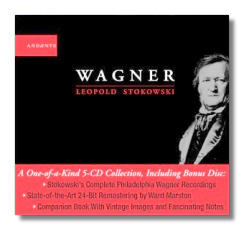
 Wagner - The Philadelphia Orchestra Recordings
- Disc One
- A. Rienzi: Overture ( 18 November 1926 & 6 January 1927 )
- B. Lohengrin: Prelude to Act 1 ( 13 October 1927 )
- C. Lohengrin: Prelude to Act 3 ( 27 March 1940 )
- D. Das Rheingold: Symphonic Synthesis ( 4 March 1933 )
- 4. Prelude: "Song of the Rheinmaidens"
- 5. "Alberich Steals the Gold"
- 6. "Wotan and Loge Descend into Nibelheim"
- 7. "Erda's Warning"
- 8. "Entrance of the Gods Into Valhalla"
- E. Die Walküre: Excerpts ( 30 April 1934 )
- 9. "Siegmund Comforts Sieglinde"
- 10. "Ride of the Valkyries"
- 11. "Brunnhilde Pleads Before Wotan"
- 12. "Wotan's Farewell & Magic Fire Music"
- Disc Two
- A. Die Walküre: "Magic Fire Music" Orchestral Version ( 9 April 1939 )
- B. Siegfried: Excerpts ( 10 December 1934 )
- 2. "The Wanderer Questions Mime"
- 3. "Nothung! Nothung!"
- 4. " Forest Murmurs"
- 5. Act III Finale - Agnes Davis (Soprano track 5) Frederick Jegel (Tenor tracks 3 and 5)
- C. Götterdämmerung: Excerpts (25 March, 29 April & 28 October 1933 )
- 6. "Dawn and Siegfried's Rhine Journey"
- 7. "Siegfried's Death and Funeral Music"
- 8. Brunnhilde's Immolation and Finale - Agnes Davis (Soprano track 8)
- D. Götterdämmerung: Finale ( 6 January 1927 )
- Disc Three
- A. Tannhäuser: Overture & "Venusberg Music" ( Paris version: 23 September 1929, 14 March & 19 April 1930 )
- B. Tannhäuser: Overture & "Venusberg" Music (Paris version: 12 December 1937) w. Chorus of 17 female voices.
- C. Tannhäuser: Prelude to Act III arranged by Stokowski ( 15 January 1936 )
- D. Tannhäuser: Overture (Dresden version: 7 November & 5 December 1921)
- E. Tannhäuser: Fest March "Entry of the Guests" ( 28 April 1924 )
- Disc Four
- A. Tristan und Isolde: Symphonic Synthesis (First version: 16 & 23 April 1932)
- Prelude to Act I
- Potion Music
- "Liebesnacht"; "Liebestod"
- B. Tristan und Isolde: Symphonic Synthesis (Second version: 5 April & 7 November 1937)
- Prelude to Act I
- "Liebesnacht" & Act III Finale
- "Liebestod"
- Disc Five
- A. Wesendonck Lieder: selections (22 December 1940; Helen Traubel: soprano)
- III: "Im Treibhaus"
- V: "Traume"
- IV: "Schmerzen"
- B. Die Meistersinger von Nürnberg: Prelude to Act I ( 15 January 1936 )
- C. Die Meistersinger von Nürnberg: Prelude to Act III ( 17 March 1931 )
- D. Parsifal: Prelude to Act I ( 28 November 1936 )
- E. Parsifal: Act III: "Good Friday Spell" ( 28 November 1936 )
- F. Parsifal: Symphonic Synthesis from Act III ( 2 & 7 April 1934 )
All recordings with the Philadelphia Orchestra. The list of contents here will exceed the length of this commentary. With the exception of the acoustic recordings all of this material has already been issued on Pearl . The transfers were made by the same genius, Mark Obert-Thorn. It is very interesting to compare and contrast the two. This Andante set is superior in every way. Inner detail, solos are clear and distinct whereas in the previous releases they were distant to the point of being damn near non-existent. There is a better sound stage, back to front perspective. I found it particularly interesting to listen to the two different recordings of the Tristan und Isolde Symphonic Syntheses. The latter sounds significantly better no doubt due to improvements in "meek-ro-phones". Add the fact that nobody did Wagner better than Stokowski. Whilst it is true that what you will hear is more like one from the 19th Century it is perhaps sad that we don't get this kind of music-making any longer. A must have. Andante 1130
ARCHIPEL

News of this label arrived to me via an email from a member of the Leopold Stokowski Club. He wrote to ask if the Bach release was the same as that on RCA some years earlier, with notes by yours truly. I happened to find a copy at Borders one day and picked it up. Sure enough the contents were the same with only a change in the order of a couple of items. Since then another Stokowski release has been made. I cannot find any information about the label nor the sources of their transfers. I can say that there are no insert notes at all and so have offered more detail than usual in these entries to the CDiscography.
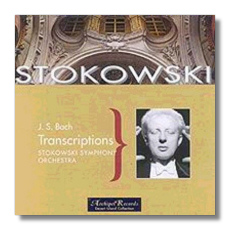
Bach: Toccata & Fugue; Chaconne from Partita #2; Jesu, Joy of Man's Desiring; We all believe in one God, Giant Fugue; Sheep May Safely Graze; Fugue; Bouree, from English Suite; Come Sweet Death; Prelude in B minor; Chorale from Easter Oratorio. HIS Symphony Orchestra. 1947 & 50. MONO. Yes, five stars! Basically they have recapitulated the RCA CD released in 1992. They have changed the order of two of the pieces but that is the only difference. I was first alerted to this release from a member of the LSSA. I found a copy in Borders and bought it out of curiosity. I was skeptical since there have been so many bad remasterings out lately (see Maestro Celebre below) but was more than just slightly surprised. The sound is significantly improved with more air around the music and a back-to-front perspective. Some reverb has also been added. There is clarity here and surface noise is gone. Seek this out. Archipel 56
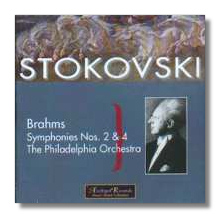
Brahms: Symphonies #2 and #4 Philadelphia Orchestra 1929 & 33. These recordings were issued on Biddulph WHL 17-18. The recording of the 2nd is probably the most interesting, as it is almost tragic in nature. This is contrary to every other interpretation I know but it is perfectly within the logic of the music and proves that music is not just black notes on white paper. The sound here is significantly better than the Pearl set. It is cleaner, has more of a back-to-front perspective and a clearer bass line. The 4th Symphony is also a better transfer but the recording itself compromises the sound. It was made in the depression and they used smaller forces to cut costs. Microphones were place closer to the players to achieve a fuller sound but it didn't work then. Later Stokowski would be able to play with the sound to achieve that larger sound. I commented in the earlier posting that the set was the first complete Brahms cycle and remains one of the best ever. My opinion has not changed. Archipel 59
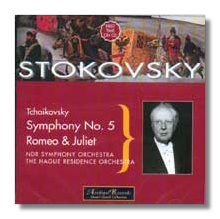
Tchaikovsky: Symphony #5; NDR Symphony Orchestra (July 1952) Roméo & Juliet; The Hague Residence Orchestra (June 1951). The symphony was previously released on Frequenz. This release has a significantly better sound, so much so that it changes the whole listening experience. The live performances are riveting and the sound excellent. Get a copy. Archipel 87
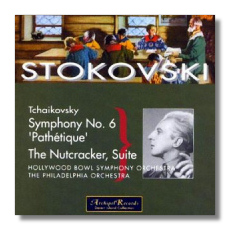
Tchaikovsky: Symphony #6 "Pathetique" Hollywood Bowl Symphony Orchestra 1945, Nutcracker Suite, Philadelphia Orchestra 1934. These two works have previously been released on CALA (506 & 521) and the "Pathetique" was also released on Pearl . Whoever is in charge of transfers there does a very good job. Added reverberation is not the only difference. There is also a better orchestral depth and spread to the sound. If you have the CALA this addition is worth it since the sound is very different. If you don't have the CALA get them too for an educational experience. I do wish that Archipel could at least be consistent in spelling Stokowski. In this disc it is with a "V". As usual there are no notes. Archipel 95
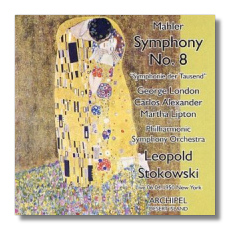
Mahler: Symphony #8 "Symphony of a Thousand" NYPO. Monaural 6.4.1950. Frances Yeend, Soprano; Camilla William, Soprano; Uta Graf, Soprano; Martha Lipton, Mezzo-soprano; Eugene Conley, Tenor; George London, Bass; Carlos Alexander, Baritone. NYPO. Stokowski conducted the U.S. premiere of the "Symphony of a Thousand" in Philadelphia and then took the whole thing to New York . He had been at the world premiere and watched Mahler rehearse it. He was originally going to perform it in London however they did the "Resurrection" instead. This performance has been released on Music and Arts (NLA) and in a mega-disc set from the NYPO. The sound on the NYPO release is thin, there is no bass line and reverberation is nil. This Archipel disc is much, much better. As mentioned elsewhere they add the all-important reverberation and have brought out the bass line. So, this is a definite need for your collection as it represents the work in a form probably very much like Stokowski heard it in Vienna. No notes come with the disc. Archipel 108
ARCHIVE DOCUMENTS
Grieg: Piano Concerto [Percy Grainger] Grainger: In a Nutshell: Suite; Danish Folk-Music: Suite. Hollywood Bowl Symphony Orchestra. 15 July 1945. Mono. These are all from a live concert and the Concerto and "In a Nutshell" items have been previously released on Biddulph 41. The sound difference is significant. While it is still not audiophile, the orchestra no longer sounds like a bunch of kazoos. In fact, the whole thing is much more listenable, the piano in particular being warm and melodic. If you have loved this performance of the Grieg you will really appreciate this release. Apparently this was issued in 1998, I found it in a Border's Book Store in Ann Arbor. I hesitated buying an unknown recording but am happy to report that you will like this very much. Archive 2003.
AVID
 Prokofieff: Peter and the Wolf. Basil Rathbone (narr.) AAYO 1941. Saint-Saëns: Carnival of the Animals. PO 1939. MONO. The transfers here are good, but not outstanding. I confess to not liking the Prokofieff as done by anyone. This disc also contains Britten's Young Person's Guide with Malcom Sargent conducting and Antál Doráti in Bizet's Jeux Enfants. Avid 601.
BBC
Most of these items have been circulated on tapes and "private" discs for years. I know that Stokowski enthusiasts are glad we can now have the performances in excellent sound.
Britten: The Young Person's Guide to the Orchestra; Beethoven: Symphony #7; de Falla: El amor brujo. (Gloria Lane mezzo) 23 July 1963 (Britten and Beethoven) 15 September 1964 (Falla). Mono. BBC Symphony Orchestra. It is damn fine monaural. The Britten and Beethoven start a bit tentatively, but then Stokowski catches fire and the audience responds in kind. The Falla is probably the best Stokowski did. This disc is a must have and not just for Stokowski fans. BBCL4005.
Scriabin: Le Poeme de l'extase; Berlioz: Symphonie Fantastique; Interview with Deryck Cooke. New Philharmonia Orchestra, 18 June 1968.The disc deserves five stars just for the interview, which is Stokowski's usual hoot. On the other hand, the music is also fantastic!!! Both items are better than the studio recordings he made. The Berlioz, in particular, is more energetic and employs the rubatto that is characteristic of the Maestro and others of his generation. The recorded sound may not be as rich as the Decca recordings but it is stereo and just fine, thanks. No bad audience noise. BBCL4018
Gabrielli: Sonata pian e forte; Tippett: Concerto for Double String Orchestra; Liszt: Mephisto Waltz; Nielsen: Symphony #6 "Sinfonia semplice" Mono. London Symphony Orchestra, 22 August 1961 (Gabrielli, Tippett, Liszt) 12 September 1965 (Nielsen). The Liszt has always been considered one of the best performances by anyone at any time. The Tippett is another example of Stokowski supporting contemporary music… then, too, so was the Nielsen back when. BBCL4059
Mussorgsky: Night on Bare Mountain (arr. Stokowski) Glinka: Kamarinskaya; Shostakovich: Prelude in e flat minor (arr. Stokowski) Stravinsky: Pastorale; Tchaikovsky: 1812 Overture; Scriabin: Le Poeme de l'extase; Lyadov: Eight Russian Folk Songs; Borodin: Polovtsian Dance. Stereo. John Aldis Choir, Welsh National Opera Chorus, Band of the Grenadier Guards. Royal Philharmonic Orchestra, 15 June 1969. What a glorious concert!!! Everything on here was recorded by Stokowski, but the excitement of a live occasion seems to have added to everyone's performance. The Scriabin here is not quite as good on the disc mentioned above, but it is still superior to the Decca recording. The 1812 will knock your socks off! This makes for a nice evening of listening. BBCL4069.
Wagner: Die Meistersinger von Nürnberg (Prelude to Act 1) Die Meistersinger Symphonic Suite (Vorspiel, Prelude to Act 3; Dance of the Apprentices; Entry of the Masters*) Götterdämmerung: Siegfried's Rhine Journey; Funeral March; Immolation Scene** Rienzi Overture. *London Symphony Chorus **Berit Lindholm (sop) London Symphony Orchestra (23 September 1967: Meistersinger; 15 June 1967) New Philharmonia Orchestra (Rienzi, 18 June 1968) The sound on this disc (the Rienzi is stereo, the rest mono) is a bit thin and the violins a tad shrill. The other reservation I have is the soloists… just don't care for her. It is an exciting experience, however, to hear the chorus in the finale of the Meistersinger. Stokowski' Wagner is a thing to behear… but the studio recordings are better. BBCL4088
Mahler: Symphony #2 "Resurrection" London Symphony Orchestra. Rae Woodland, Soprano; Janet Baker, Contralto. BBC Choral Chorus, BBC Choral Society, Goldsmith's Choral Society, Harrow Choral Society. 30 July 1963. MONO. It may say Mono but the sound is excellent! This is a release for anyone who loves Mahler and the 2nd Symphony in particular. Stokowski originally asked to perform the "Symphony of a Thousand" but financial problems precluded it. When it was suggested he do the "Resurrection" instead he didn't hesitate. This is the most spiritual performance I have ever heard and I have heard several. The audience was so overwhelmed by the experience that Stokowski broke tradition and played an encore of Whenever I want to hear this piece this one will be the first I consider pulling out. This is a MUST have for any serious collector of classical music. BBCL4136
BBC RADIO CLASSICS
For some reason I haven't included these discs in this CDiscography until now (2006). They were originally released in 1995 and 1996. Since then, as will be noted, some of the items have been reissued on the BBC Legends series. To my knowledge none of these is currently available.
Klemperer: "Merry Waltz". Vaughan Williams: "Fantasia on a Theme by Thomas Tallis". Ravel: "Rapsodie Espagnole". Brahms: Symphony #4. New Philharmonia Orchestra. These are from a concert on 4 May 1974. Klemperer was better known as a conductor but, as the notes point out, he was a considerable composer whose works include 6 symphonies, choral works, quartets and songs. This concert also came just before Stokowski recorded the Brahms with the same orchestra. Some people find the Brahms a bit too "allegro" and not enough "non troppo" in the first movement. The sound here is good. At this writing, none of these has been issued on the BBC label. Stereo. BBCRD 9107.
Shostakovich: Symphony #5. LSO: 1964. This symphony has since been issued in better sound, with other Stokowski material, on the BBC series. (BBCL4165) Coupled with The 1st Symphony conducted by Jascha Horenstein. BBCRD9154.
Vaughan Williams: Symphony #8. BBCSO: 1963. As above, this has since been issued in better sound on the BBC label on the same disc as with the Shostakovich listed above. Coupled with the 4th Symphony conducted by Sir Malcolm Sargent. BBCRD9131.
BELLAVOCE
Leopold Stokowski conducts the Philadelphia Orchestra 1962-63. Disc One: Wagner: Rienzi Overture. Introduction by Stokowski. Mozart: Le Nozze Di Figaro (Non piu andrai: George London) Borodin: Prince Igor (No rest, no peace: London) Gounod: Faust (I'endormie: London) Puccini: Tosca (Vissi d'arte: Birgit Nilsson) Verdi: Aïda (duet Act 3, Ciel mia padre: London and Nilsson) Wagner: Lohengrin: Prelude to Act I. Wagner: Götterdämmerung (Starke Scheite schichtet mir: Nilsson) 20 January '62. Verdi: La Forza Del Destino: Overture. 26 January 1963. Disc Two: Giordana: Andrea Chenier (Act I "Un di" Franco Corelli) Puccini: Tosca (Recondite Armonia, Corelli) Strauss: Salome (Dance of the Seven Veils) Donizetti: Lucia Di Lammermoor (Mad scene sans cabaetta, Joan Sutherland) Enescu: First Romanian Rhapsody. 22 July 1945. Marina Koshetz w. Stokowski at the Hollywood Bowl. Rimsky-Korsakov: Czar's Bride (Marfa's aria and the Rose and the Nightingale) Mussorgsky: The Fair at Sorotchinski (Parassia's reverie) Rachmaninov: Gregorian Melody. 11 July 1946 Bizet: Carmen Excerpts. I spent more words listing the contents than I shall on the commentary. This disc is not generally available in the US. I got my copy through a friend in the Netherlands. The sound on the Philadelphia items is good FM stereo. What makes these interesting is comparing the two sopranos. Sutherland's voice is much sweeter than Nilsson. If you think all sopranos sound the same, here is your antidote. It is also good to hear Stokowski support singers, there is damn little documentation of those efforts. The first Hollywood Bowl Symphony Orchestra items sound good and the Rachmaninov is pure Stokowski. The Bizet sucks. The sound is terrible. If you can find it and are a Stokowski completist get it. BellaVoce 107 235. (Since reviewing this set I received the Philadelphia Centennial Collection which has some of the vocal items, but not all, in superior sound. Unless you are a completist, I'd suggest you ignore these discs.
BESCOL
Among the many CDs issued from questionable sources BESCOL was the earliest with Stokowski material. This label appeared early in the issue of CDs when people were trying to sell anything, regardless of the quality of the transfers. Among other items there was a Brahms 3rd with the Houston Symphony Orchestra. The sound on these discs, apparently taken from several generations removed tapes from Everest, was terrible. The interesting thing is that this instance is an example of the haphazard issue of Stokowski CDs over the years. These Everest recordings are a case in point. Originally released on CD by this company, they later appeared on Price-Less and are now on Omega/Vanguard/Everest. The last two incarnations were excellent, with the latest being the best of the lot. If you happen to come across the Bescol discs in a cut-out bin, leave them. [Revised 30/12/95] Two new "avoid" labels are Phonographe and Gramofono. See my commentary under Phonographe. [Another addition to this list is Magic Talent, a Czech issue. See: Pearl, "A Stokowski Fantasia" above.]
BIDDULPH
LEOPOLD STOKOWSKI CONDUCTS RUSSIAN MUSIC (Vol. I) Glière: Symphony #3 "Ilya Murometz" (40) The Red Poppy [Russian Sailors' Dance] (34); Ippolitov-Ivanov: Two Caucasian Sketches; (27) Stravinsky: Firebird Suite (27) MONO Philadelphia Orchestra CDWHL 5 (Transfers by Ward Marston. In my opinion Ward and Mark Obert-Thorn are the best around at this time. I much prefer their work over Michael Dutton's. There is an excellent interview/article about Ward in the Winter 1995 issue of ICRC.
LEOPOLD STOKOWSKI CONDUCTS RUSSIAN MUSIC (VOL. II) RIMSKY-KORSAKOV: Russian Easter Overture (1929) Ivan the Terrible (1939) Schéhérazade (1927) [There is also an added track at the end that contains an alternate 'take' of the First Movement of the Schéhérazade It was recorded in May of 1927 whereas the released recording was made in October of that year. What makes this of particular interest is that the soloist is different and you can tell!!.] MONO Philadelphia Orchestra #WHL 10 (Transfers by Ward Marston)
LEOPOLD STOKOWSKI CONDUCTS MUSIC FROM FRANCE (VOL. I) Franck: Symphony in d, ['35] Andante from Grans Piece Symphonique, ['37] Panis Angelicus ['36]; Satie: Gymnopedies #1 & 2 ['37]; Dukas: Sorcerer's Apprentice ['37]; Thomas: Gavotte from Mignon ['37]; Berlioz: Hungarian March ['27] MONO Phila. WHL 11 The Franck and Satie pieces were once available on an LSSA LP. (Transfers by Mark Obert-Thorn.)
LEOPOLD STOKOWSKI CONDUCTS FRENCH MUSIC (VOL. III) Debussy: Nocturnes('37-39) Prélude à l'après-midi d'un faune [w/Kincaid] (40: Previously unpublished) Danses Sacree et Profane [w/Edna Phillips] ('31) La Cathedrale Engloutie (30) Soiree Dans Grenade ('40 Previously unissued); Ravel: Rapsodie Espagnole ('34) MONO Philadelphia Orchestra (Mark Obert-Thorn)
STOKOWSKI CONDUCTS JOHANNES BRAHMS Symphonies #1-4 [rec. 1927, 28, 29, 33] Philadelphia Orchestra MONO #WHL 17-18 (2) This remains one of the finest Brahms cycles ever. It was also the first. Ward Marston's work is revelatory. It is also on 2 discs. The First Symphony disc also includes Stokowski's "commentary" on the themes in the symphony. The pianist in this "talk" is played by Artur Rodzinski, who was an assistant conductor of the Philadelphia Orchestra at that time. (Ward Marston)
LEOPOLD STOKOWSKI CONDUCTS FRENCH MUSIC (VOL. II) Bizet: Carmen Suite [1927] L'Arlesienne Suite #1 ['29] Saint-Saëns: Bacchanale from "Samson et Dalila" ['27] Carnival of the Animals ['29] w/ Olga Barabini & Mary Montgomery (p) MONO. Phila. Biddulph 12 Much of this music was released on an L.S.S.A. LP (Mark Obert-Thorn).
TCHAIKOVSKY Symphony #5 ('34) Solitude ('37) Song Without Words ('28) 1812 Overture ('30) MONO Philalephia Orchestra WHL 15 [Trans. Ward Marston] (You know, the finale of the Tchaikovsky 5th opens the film 100 Men and a Girl. In that scene you see a bright eyed young man in the audience following along with a score. I have always wondered what he would have looked like when the coda comes sans pause.)
Dvořák Symphony #9 ('27) Outline of Themes (Rodzinski, p.) Liszt: Hungarian Rhapsody #2 ('27) Chopin: Mazurka in B-Flt Minor & A Minor, Prelude in D Minor ('37) MONO Philadelphia Orchestra WHL 27 [Trans. Ward Marston] Nobody plays the Dvořák better than Stokowski. While I prefer the M&A/LSSA AAYO release, this one is excellent.
BEETHOVEN: Symphony #7 Schubert: Symphony #8 "Unfinished" Rosamunde Music (Two versions, one unissued) Moment Musicale MONO (1927) 33 The Beethoven is one of the finest ever! (Ward Marston outdid himself, if that is possible, in this transfer. The inner detail is wonderful.)
BLOCH: Schelomo. [Emanuel Feurmann] Philadelphia Orchestra (27 March 1940) Mark Obert-Thorn remastering. Biddulph 42. [This is coupled with Feurmann and Ormandy in Strauss' Don Quixote. That is one of the finest performances I know. The Don is earthy and tangible in Feurmann's bow. The orchestra is still Stokowski's]
The Leopold Stokowski "Pops" Collection Weber: Invitation to the Dance ('27). Brahms: Minuet from Serenade #1 ('34). Strauss: On The Beautiful Blue Danube ('26). Tales from the Vienna Woods ('26). Tchaikovsky: Nutcracker Suite ('26). Sibelius: Finlandia ('30). Swan of Tuonela ('29). Novacek: Perpetuum Mobile [arr: Stokowski] ('40). Albéniz: Festival in Seville from Ibéria ('28). De Falla: Danse Espagnole from La Vida Breve ('28). Philadelphia Orchestra. MONO. There's a lot of lovely stuff in here, and the playing is typical Philadelphia Stokowski (great) but the selections may limit this discs appeal. Biddulph WHL 47.
Rachmaninoff: Piano Concerto #2. Sergei Rachmaninoff. Philadelphia Orchestra. (1929). As explained in the detailed notes by Mrk Obert-Thorn (who also did the remasterings, this is not identical with the previous releases of this on RCA.. Previous ones returned to the original masters for prodution. In fact, however, the original LPs used somewhat different masters, so what you will hear here is what you heard on the LP!! also coupled with the Third Piano Concerto with Horowitz and Albert Coates and the London Symphony Orchestra. The sound here unfortunately changes the whole recording from that on RCA. The whole perspective here is veiled, the piano doesn't sound as natural, The RCA is sharper, making the whole performance more powerful, The extra clarity of the RCA release (now available separately) also makes the recording more involving, The piano filligree at 3:00 into the first movement is delightful and feathery. In this release the effect is veiled and thus loses the poetry. Many of you may have been awaiting the release of the Horowitz Rachy 3. Well, here it is, I am one of those infidels who really never cared all that much for Horobowitz. Sorry. Biddulph LHW 36
Grieg: Piano Concerto (Percy Grainger) "In a Nutshell" Rachmaninoff: Piano Concerto (Artur Rubenstein). Hollywood Bowl Symphony Orchestra. 1945 Concertos, 1946. MONO. The Rachmaninoff was not released for "artistic reasons" in that neither the pianist nor conductor approved. You can tell why. They are often out-of-sync. It almost sounds like they recorded the performances on different dates and spliced them together. The Grieg, on the other hand, is a must have. Biddulph 41.
BOSTON RECORDS
Marcel Tabuteau: excerpts with Leopold Stokowski. This release is, ultimately, frustrating. Whilst it is good to hear Tabuteau it is a real aggravation when the music suddenly stops because he is no longer in the picture (so to speak). The only complete work is the Mozart Sinfonia Concertante, which is already available on CALA 523. Students of the oboe, however, should find this disc a treasure because they can study how one of the masters handled phrasing perhaps the most important aspect of music. . Boston 121
BUENA VISTA
 Fantasia: Vol. I: Bach/Stokowski: Toccata & Fugue; Tchaikovsky: Nutcracker Suite; Dukas: Sorcerer's Apprentice; Stravinsky: Rite of Spring; Vol. II: Beethoven: Symphony #6 "Pastoral"; Ponchielli: "Dance of the Hours" from La Gioconda; Mussorgsky/Stokowski: Night on Bald Mountain; Schubert: Ave Maria Philadelphia Orchestra MONO? ('39) [This edition is vastly inferior in sound to the LPs. The Dukas was not recorded with the Philadelphia Orchestra.] (Two discs)
CALA
{Philadelphia Rarities} Arr.Stokowski: Two Ancient Liturgical Melodies; de Falla: Spanish Dance from La Vida Breve; Turina Gypsy Dance; Dubensky: The Raven [Benjamin de Loache]; Konoye: Etenraku; McDonald: Dance of the Workers (from the Festival of the Workers Suite), The Legend of the Arkansas Traveller, Rhumba (from Symphony #2); Eichheim: Japanese Nocturne, Bali; McDonald: Concerto for Two Pianos (Jeanne Behrend & Alexander Kelberine); Sousa: Manhattan Beach, El Capitan. MONO. Phila. [For dates and other info see under LS Society releases. This is the same disc except that the de Falla was added and a new remastering was used. I frankly prefer the sound in the earlier release. This one sounds tubby and gimmicky. The original transfers were by Ward Marston, but CALA people tampered with the sound including replaying the tape at night in a church and re-recording it to add some more reverb.]
{First Releases} Philadelphia Orchestra: Pension Fund Concert: arr. Stokowski: La Marseillaise (de Lisle) Serenade (Schubert) Monaca: Saltarello [27 October 1935] Stokowski: 'Balance Test' March [2 May '27] Foster: Oh, Susannah [1 May '29] Handel: Pastoral Symphony [29 April '29] Strauss: Dance of the Seven Veils [5 April '37] NBC Symphony Orchestra Tchaikovsky: Solitude [11 May '42] Kelly: Sunset Reflections from Adirondack Suite [ 27 Nov. '41] Tchaikovsky: Marche Slav [23 Ap. '42] New York City Symphony Orchestra Scriabin: Étude in C sharp minor [11 Dec. '44] Schubert: Tyrolean Dances [10 Dec. '44] Tchaikovsky: Roméo & Juliet Fantasy Overture. [11 Dec. '44] MONO [All of these pieces were recorded but never released. The sound on this CALA release is significantly better but the items may be of limited interest] CALA 502 (Ward Marston)
Rimsky-Korsakov: Russian Easter Festival Overture. Tchaikovsky: Humoresque (orch. Stokowski) Stravinsky: Firebird Suite Prokofieff: March from The Love for Three Oranges Tchaikovsky: Symphony #4. MONO (Items 1-3 1942, 4-5 1941) NBC Symphony Orchestra [You know, I hate not giving an unqualified recommendation to these Leopold Stokowski Society sponsored CDs. On the other hand I must call them as I see them. The main reason for considering this disc would be the Tchaikovsky Symphony #4. This was the second of three recordings of it by Stokowski. The first, recorded in 1928 with the Philadelphia, is the best of the lot in performance and has a significantly better sound than this disc. The recording was made in the Cosmopolitan Opera House while acoustic improvements, insisted upon by Stokowski, were made to Studio 8-H. The sound here is still dry and dead, not at all like the rich Stokowski we are used to. If you want a Stokowski Tchaikovsky 4th I'd recommend the American Symphony Orchestra 1971 recording. The "Firebird" Suite (his fourth of eight) here is in much better sound than the Symphony (done in the improved 8-H in 1942) but still not as good as the 1927 version. I also prefer that interpretation. Still, the finest "Firebird" is Stokowski's London Symphony Orchestra performance on Phase Four. The Russian Easter Festival Overture is fascinating in its use of the bass Nicola Moscona chanting what is normally the trombone solo. Still, all-in-all, more for Stokowski fans than the general public. (6/27/96) CALA 505
Tchaikovsky: Symphony #6 "Pathétique" Hollywood Bowl Symphony Orchestra. 25 July 1945. R. Strauss: Death and Transfiguration. New York City Symphony Orchestra. 10 December 1944. MONO. The front cover is a reprpduction from the cover of the 78s of the Tchaikovsky. It is called, Pathétique Study. This is one of my favorite symphonies. but it is very delicate. It can be easilu destroyed by too much or too little emotional involvement. My favorite other than the Stokowski is Furtwängler's pre-war recording. Whereas Furtwängler hears this symphony in symphonic terms, Stokowski sees it in the light of a composer of ballets. You are always aware of the Tchaikovsky ballets when you listen to any of the Stokowski performances. This is one of the best. The sound is excellent, offering a nice sound stage and just the right amount of reverberation. The Strauss is equally well done and another Stokowski gem, In short, recommended for anyone who loves this symphony.
Post Script: After hearing Pearl's CD of the Tchaikovsky "Pathétique" I transferred the 5 Star rating for this disc to the Pearl. CALA 506
Schubert: Symphony #8 Unfinished AAYO 1941. Wagner: Forest Murmurs from Siegfried Hollywood Bowl Symphony Orchestra 1946. Brahms: Symphony #1 Hollywood Bowl Symphony Orchestra 1945. MONO. [This is the best sounding historic recording of the Brahms by Stokowski. While I slightly prefer the performances with the Philadelphia and AAYO, they do not sound as good (see elsewhere). The bass at the opening is staggering, you'd think he was using a dozen of them (and maybe he was). The Wagner is typical Stokowski, that is about the highest compliment I can give. The Schubert, next to the Hollywood Bowl Symphony Orchestra material, sounds more distant or congested. It was taken from laquer 33 1/3 pressings made by Columbia, from which they made the 78s. I acquired these from Jerry Miller, along with several other 'test pressings' as he thought them to be. The surface noise is almost non-existent. It reminds me of Dutton's transfers, but there is more air around the music. CALA 520
Tchaikovsky: Nutcracker: Suite 1934. Ippolitov-Ivanov: In the Manger (trans. Stokowski) 1934. Glazunov: Danse Orientale 1927. Rimsky-Korsakov: Schéhérazade 1934. Philharmonia Orchestra. MONO. Of the many recordings Stokowski made of this piece, this is my personal favorite. The portamento may get to some of you, but I love wallowing in it. It is as if Stokowski was preparing the orchestra to do it for Disney. (Wouldn't that have been wonderful?!) The sound is fantastic. This is also my favorite Nutcracker by anyone. CALA 521
Liszt: "Les Preludes" ( 9 December 1947 ) Sibelius: "The Swan of Tuonela" ( 11 December 1947 : Mitch Miller, Cor Anglais) Tchaikovsky: "The Sleeping Beauty" Highlights (11-14 December 1947) HIS Symphony Orchestra. The Liszt is the best I have ever heard. It is music to wallow in but too much makes it sound like a caricature. Stokowski makes it sound like music. The "Swan" is the most brooding of the several recordings Stokowski made. Stokowski loved the music of Tchaikovsky and this selection of highlights is excellent. The Stokowski Symphony was an ad hoc group of the finest musicians in New York and Stokowski, using tape, transformed it into a magnificent band. CALA 522
Mozart: Sinfonia Concertante [Tabeteau, Portnoy, Schoenbach, Jones: soloists] PO 1940. Beethoven: Symphony #6 Pastoral New York City Symphony Orchestra 1945. MONO. The sound on this disc is excellent. The Mozart is absolutely stunning with the quartet of soloists. The orchestral accompaniment is more controversial. The Adagio is really slow, as is the Scene by the Brook in the Beethoven. Despite these reservations, this is a good disc, you can hardly believe the date of the recording. CALA 523
Elgar: Enigma Variations. Czech Philharmonic 7-8 September 1972. Brahms: Symphony #1 London Symphony Orchestra 15 June 1972. The Brahms was taken from Stokowski's 60th Anniversary Concert. He repeated the exact program he conducted in 1912. This sounds much better than a Japanese release of the same piece, but different date, on a Phase 4 release available only in Japan (see below). The recording is pure Stokowski and clearly demonstrates the advantages of free bowing. The Elgar is simply one of the finest ever. I compared it with Barbirolli and Stokowski is consistently more emotional. The sound is also superb, more detailed than the Brahms. This was (is?) also available on another Japanese Phase 4 release, coupled with the Franck Symphony (see below). This disc is the first in CALA's releases featuring the Phase 4 material. Next in line is an all French disc with the Franck and Messiaen among other items. CALA 524
Ravel: Fanfare from L'Eventail de Jeanne* Chopin: Mazurka in A minor (orch. Stokowski)** Messiaen: L'Ascension** Duparc: Extase (orch. Stokowski)** Franck: Symphony.* Franck and Ravel recorded 24-5 August 1970 with Hilversum Radio Symphony. Messiaen recorded 22-3 June 1970 with London Symphony Orchestra. Chopin and Duparc recorded 13 June 1972 with London Symphony Orchestra. Chopin, French?? Well, as Ed Johnson points out in his excellent notes, Chopin may have been born in Poland but he was half-French and lived much of his life in Paris. Okay, I'm not making an argument for it. Anyway, this disc is a treasure. The program, put together by Ed, sounds just like something Stokowski would have done. The sound among the items is consistently excellent, you wouldn't guess different venues or dates. I love the Messiaen, his music is a lot like Scriabin, who also talked about music in colors. Then, too, at moments I am reminded of Ives. It is music to wallow in. The Franck is my personal favorite recording of the piece. Stokowski plays the orchestra like an organ, as only the old magician could do. Using the Phase 4 techniques, Stokowski achieved an even greater sense of an organist pulling out the stops as instruments are highlighted to magnificent effect. The pizzicato strings and harps that open the second movement are sublime, the English horn solo has more character than any other recording; it is plaintive. Speaking of openings, the opening theme, also used as the Fate Theme in Wagner's "Ring" must have 100 double basses along the back wall. Wow! Some listeners may feel it is too slow, I just love to wallow in all the details Stokowski brings to the music. CALA 525.
Holst: The Planets [14 February 1943] Debussy: Prelude to the Afternoon of a Faun [14 March 1943] The Engulfed Cathedral [13 February 1943] Morton Gould: Two Marches [14 March 1943] NBC Symphony Orchestra Monaural. The Holst is a must for any lover of the music. Stokowski inherited this orchestra when Toscanini had a temper tantrum and left. Though he was back by this time, Stokowski was still listed as 'top dog' of the orchestra. The opening pizzicato on the strings is as menacing as you'll ever hear. The Debussy items are as lush and rich as any Stokowski recording. The two marches by Gould are to "our allies in the war" China and Russia. The slightly dryer acoustic of the studio offers slightly more detail than you will hear in the Philadelphia recordings. On the other hand, Stokowski's improvements of Studio 8H give the sound a richness and fuller body than in Toscanini broadcasts. The remasterings, by The Audio Archiving Company, are wonderful. I heard the Holst originally on a Japanese Stokowski Society LP some years ago. That disc included spoken commentary between movements, which have been thankfully omitted here. I approached this disc with trepidation, but came away impressed. CALA 526.
Bach/Stokowski: Toccata and Fugue, Ein' Feste Burg, Mein Jesu, Little Fugue in g, Komm Susser Tod, Air on the G String, Preludio, Arioso, Prelude in e flat, Andante Sostenuto, Passacaglia and Fugue in c. All-American Youth Orchestra. Monaural. 1940-41. The All-American Youth Orchestra was one of many peripatetic efforts on Stokowski's part. After he left Philadelphia he organized this group of young players and toured South America in 1940 and the U.S. of A the following year. The playing is nothing short of miraculous. You would never guess that the median age was 21. This disc offers the only recording of Stokowski's transcription of the Andante Sostenuto from the 3rd Sonata for Unaccompanied Violin. How does the rest of the fare? In comparison with his other recordings, this Bach batch is more Disney-like in its flair and pulse. The Komm Susser Tod recalls Elgar's Enigma Variations… especially Nimrod. The sound is not as full as you normally get from a Stokowski recording, but the bass line is there. Primarily for Stokowski-philes, in fact a must for them. The cover photo of Stokowski has to be seen to be believed. It is Stokowski as a first encounter of the third kind, taken from a portrait made by an admirer. I love it. CALA 527.
Vaughan Williams: Symphony #4. 14 March 1943; Butterworth: A Shropshire Lad. Antheil: Symphony #4. 13 February 1944. NBC Symphony Orchestra live, monaural. Once again we are indebted to Ed Johnson and the Leopold Stokowski Society for offering us Stokowski rarities. You want the most intense Vaughan Williams you have ever heard? This is it in spades. You want to hear the "bad boy of music"? The Antheil symphony is really worth your time. If it strongly suggests Shostakovich, it may well be that Antheil was influenced by the times as well as the Russian composer. The Butterworth, from the same program, is nice to have as a filler, and there are too few Stokowski recordings of English composers. The sound on the Antheil is much improved over the acetates I worked with years ago to make a cassette copy. The sound on the other items is even better, belying the Studio 8-H dry acoustics. CALA 528
Tchaikovsky: " Aurora 's Wedding" (1976) Stokowski Encores: Debussy: Clair de Lune & Night in Granada; Albéniz: Festival in Seville; Novacek: Perpetuum Mobile; Shostakovich: Prelude in E-flat minor; Rimsky-Korsakov: The Flight of the Bumble-Bee; Tchaikovsky: Humoresque; Chopin: Mazurka in B-flat minor & Prelude in D minor. (1976) National Philharmonic Orchestra. The National Philharmonic Orchestra was created just to make recordings with Stokowski. The sound was always good from Columbia (now SONY) and the Leopold Stokowski Society has made it even better. This disc provides a wonderful evening of music. CALA 529
Humperdinck: Prelude to Hansel and Gretel; Haydn: Symphony #53 "The Imperial"; Mozart: German Dance #3, The Sleigh Ride; Schumann: Symphony #2; Johann Strauss: On the Beautiful Blue Danube, Tales from the Vienna Woods. HIS Symphony Orchestra. MONO. CALA 532
Stokowski: New York Philharmonic (1947 & 49) Vol. #1 Wagner: Flying Dutchman Overture; Ippolitov-Ivanov: In the Village (from Caucasian Sketches); Messiaen: L'Ascension; Griffes: The White Peacock (from Roman Sketches); Wagner: Wotan's Farewell & Magic Fire Music; Vaughan Williams: Fantasia on Greensleeves; Tchaikovsky: Francesca Da Rimini. New York Philharmonic Symphony Orchestra. MONO. This disc and volume two comprise all but two items Stokowski recorded with the NYPO (there were no recordings made in 1948 due to union "issues") The items are not chronological, but have been arranged by Ed Johnson to provide interesting programs. This has been achieved in spades. Given sufficient volume the Flying Dutchman will blow you off course. The Griffes sounds much better than on the ill-fated Smithsonian series issue from several years ago. The sound throughout is fantastic, taken from the original lacquers. CALA 533
Stokowski: New York Philharmonic (1947 & 49) Vol. #2 Wagner: Rienzi Overture; Sibelius: Maiden with the Roses; Khachaturian: Masquerade Suite; Tchaikovsky: Waltz from Serenade for Strings; Wagner: Siegfried's Rhine Journey and Funeral Music; Schoenberg: Song of the Wood Dove (Martha Lipton, Mezzo-Soprano) Copland: Billy the Kid (Prairie Night, Celebration Dance). MONO. It was a great idea to offer these discs separately. When in Philadelphia Stokowski often programmed an all-Wagner evening. It is too bad he never got to do any of the operas because his Wagner ranks with the best, including Furtwängler. The sound here, to add what has been said about volume one, has the rich, deep bass line that is so much a part of the Stokowski Sound. The playing is better than that achieved by HIS Symphony Orchestra (with whom Stokowski also recorded at this time) or of the NBCSO. Other than the memorable Wagner, I would also single out the Sibelius for praise. CALA 534
Mussorgsky-Rimsky-Korsakov: "Boris Godunov" excerpts. San Francisco Symphony Orchestra (1952: Nicola Rossi-Lemeni: Boris & Vaarlam the Friar) Wagner-Stokowski: Parsifal. "Good Friday Spell" Symphonic Synthesis of Act 3. His Symphony Orchestra (1952) The Leopold Stokowski Society produced what is arguably their two finest discs in 2003. In 1952 Stokowski guest conducted the San Francisco Orchestra and after a concert recorded 11 segments. You would almost swear this is a stereo recording so good is the transfer. Stokowski loved this opera and made his own symphonic transcript. For this visit, however, he used the Rimsky-Korsakov version and it is magical. The Wagner is no less fascinating. Once again Stokowski transforms an almost chamber size band to a full orchestra. CALA 535
Rimsky-Korsakov: Schéhérazade (LSO: 1964) Tchaikovsky: Marche Slave (LSO: 1972) Stokowski in rehearsal of the Schéhérazade. If I could give this a billion stars I would, but the publisher would likely object. This is the finest Schéhérazade ever, by anyone. One critic opined that if any music was ever written FOR Stokowski it is Schéhérazade. Of his several recordings this is the best (though I harbor a secret love of the 1934 recording made in Philadelphia ). The sound was harsh on the LP and earlier CD release but it has been transformed by Paschal Byrme and Craig Thompson. If I keep going this will get to the point of sounding hyperbolic. The Tchaikovsky had me on the edge of my seat. The rehearsal excerpts are an insight to the Mysterioso's magic. A MUST HAVE for any and everybody. CALA 536
Vaughan Williams: Symphony #6 (21 February 1949); Tchaikovsky: Romeo & Juliet (28 November 1949); Mozart: Symphony #35 "Haffner" (live performance: 20 November 1949); Thomas Jefferson Scott: From the Sacred Harp (Vdisc: 30 January 1949); Weinberger: Polka & Fugue from "Schwanda the Bagpiper" (live performance 16 January 1949). This release is Volume #3 in the Leopold Stokowski Society's CALA series. Stokowski gave the NYPO premiere of the Vaughan Williams 6th just a month before going into the studio to make this recording. Among other reasons to acquire this recording is that it is the only one I know of that uses the original Scherzo, later revised by the composer. The performance is the finest I have heard evoking the enigmatic aspect of the symphonies of Vaughan Williams, as does no other. The Tchaikovsky, with Stokowski's ending is perhaps the best recording he made with the NYPO strings rich and full-bodied. Some have been critical of Stokowski's way of ending the music sans the MGM crescendo but frankly it fits the music better than the normal one. Mozart's "Haffner" is my favorite Mozart Symphony because… wait a minute… I don't need a reason. Some people might expect a heavy overly Romantic reading but Stokowski is quite light in a warm performance that brings out the humor and humanity in Mozart. The sound may not be as good as the studio performances but it is very good. The other items reflect Stokowski's efforts to promote 'new' music and are accessible if not memorable. CALA 537
Vivaldi: 'The Four Seasons' Hugh Bean (Violin) Charles Spinks (Harpsichord) New Philharmonia Orchestra. Handel: Messiah: Excerpts. Sheila Armstrong (Soprano) Norma Procter (Contralto) Kenneth Bowen (Tenor) John Cameron (Bass) Charles Spinks (Harpsichord) LSO Chorus (John Alldis, chorus master) London Symphony Orchestra. Stokowski never conducted Vivaldi's "Four Seasons" until June of 1966, just before recording the music in the studio. Hugh Bean's playing is… well, I really can't find words for it other than excellent and that just doesn't capture it completely. He is in tune with Stokowski's Romantic interpretation. Stokowski is slower than the norm today (or even yesterday… Karl Munchinger's 1973 recording clocks in at 37:49 to Stokowski's 45:50) however he maintains the tension. The orchestra is a full one and the rich bass line and free bowing so essential to the Stokowski Sound is in abundance. It may not be historically informed but frankly I don't give a damn (to quote someone). This two-fer disc also offers a Romantic Handel. The soloists are excellent. You can't help but be moved by the Hallelujah Chorus. I confess to not being a singer-interpreter and so will simply say I was impressed. Both recordings are vastly superior to the previous Decca/London releases. CALA 538 (2 CDs)
Vaughan Williams: Symphony #9 (US Premiere) Riegger: New Dance; Hovhaness: Mysterious Mountain; Creston: Toccata. HIS Symphony Orchestra [live concert 25 September 1958. This was a concert sponsored by the Contemporary Music Society, a creation of Oliver Daniel. The orchestra was essentially the NYPO. Stokowski had originally programmed Shostakovich's 11th Symphony. On hearing of his friend's death, however, Stokowski changed the program and presented the U.S. premiere. This disc is a MUST HAVE even if you are not a Stokowski fan. The Vaughan Williams 9th is simply the best I have heard. It brings out the enigmatic nature of a piece which some people have said is not as good as previous efforts but anyone who listens to this will have no doubt as to its stature. Stokowski was known for his championship of 'modern' music and the rest of the program provides the listener with some excellent examples of the contemporary work of the time. If the other pieces don't measure up to the Vaughan Williams it is not the fault of the composers. This disc is indispensable. CALA 539
Saint-Saens: "Samson & Delilah" excerpts. Rise Stevens (Delilah) Jane Peerce (Samson) Robert Merrill (the High Priest). Robert Shaw Chorale. NBCSO. 1954. Tchaikovsky: "Eugene Onegin: Tatiana's Letter Scene" Licia Albanese (Tatiana). Leopold Stokowski's Symphony Orchestra. 1951. Monaural. Rise Stevens was the reason for this disc. She had performed the role several times before making this disc of excerpts. Looking at her picture you can see that she certainly looks the part. It is nice that The Leopold Stokowski Society chose to fill out the disc with the Tchaikovsky. Excellent transfers. This was the first of three discs CALA issued in 2005. CALA 540
Sibelius: Symphony #1 with LSSO and Symphony #2 with the NBCSO. ( 1950 & 1954) Stokowski and Sibelius had a personal liking for one another. This can be seen in Stokowski's tribute to the composer taken from his own notes for the release of the 2nd Symphony and Sibelius' letter to Stokowski on receiving a copy of the LP of the 1st. "I am happy that the man who [recorded] it calls me his friend." Nobody does this music better than Stokowski. The transfers are excellent! CALA 541
Grainger: Country Gardens,* Mock Morris, Early One Morning, Shepherd's Hey,* Irish Tune from County Derry, Molly on the Shore, Handel in the Strand.* Sibelius: Berceuse from "The Tempest", Valse Triste from "Kuolema." Vaughan Williams: Fantasia on a Theme by Thomas Tallis. Rachmaninov: Vocalise. Granados: Intermezzo from "Goyescas". Debussy: Clair de Lune. Ibert: Escales (Ports of Call). Leopold Stokowski Symphony Orchestra. Percy Grainger at the piano.* How Stokowski managed to get sound like this from an ad hoc band is amazing. The orchestra was usually no more than 50-60 people but using tape technology Stokowski made them sound like twice the size. It helped that he had some of the finest musicians in the country in the orchestra. Grainger made the orchestral arrangements just for this recording and took part as well. Particularly in Grainger's works the musicians all sound like they are having a great time. I could go on, but I would offer that if I had to have only one Stokowski disc this might be it. CALA 542.
Tchaikovsky: Swan Lake Highlights; Johann Strauss, II: "On the Beautiful Blue Danube". "Tales from the Vienna Woods"; Beethoven: "Turkish March"; Mozart: "Turkish March". NBCSO (Mono). These recordings, made in 1954 and 1955) demonstrate what a phenomenal orchestra the NBCSO was. It also demonstrates what Stokowski could do with tape and sound. The zither solo in "Vienna Woods" (with an added electric guitar thanks to Stokowski) was taped at a separate session and then spliced into the rest of the fabric. The playing, especially the solo harp and oboe (with Robert Bloom on the latter) are particularly telling. The sound is excellent. CALA 543.
Beethoven: Symphony #6 "Pastoral"; Liszt: Hungarian Rhapsodies #1-3; "Sounds of Nature" chat with Stokowski. NBCSO (Mono). Yes, five stars. Even though the "Sounds of Nature" is a dated, hokey bit where the 'stream' sounds like water running down a drain (but I am told it is from tapes of the real thing). This is the finest performance I know of this piece, even better than Bruno Walter's magnificent recording. Some people have complained about the length of the second movement but I find it just right. The Hungarian Rhapsodies (where Stokowski had the solo viola and cimbalom recorded at a different time and spliced in) are delicious. My notes for the symphony abound with the word "delightful". CALA 545.
RUSSIAN SPECTACULAR - Modest Mussorgsky: A Night on Bare Mountain (orch. Stokowski), Khovantchina Suite; Rimsky-Korsakov: Russian Easter Overture (Nicola Moscona, bass); Reinhold Gliere: Russian Sailor's Dance: from The Red Poppy; Piotr Ilyitch Tchaikovsky: Polonaise from Eugene Onegin; Alexander Borodin: In the Steppes of Central Asia, Dances of the Polovetzki Maidens (arr. Stokowski). Leopold Stokowski and HIS Symphony Orchestra. I have written at length about his ad hoc orchestra featuring the finest musicians in the country (and possibly the world) in the late 40s and early 50s. He took a band of around 60 and made it sound like 600 (okay, I am being a bit hyperbolic). I still relish a conversation with Bob Bloom (the oboist) who told me that sometimes they showed up and weren't sure what they were going to record. This may help explain why all of these recordings have freshness to them, they sound like they are a bunch of players having a good time exploring some music. Then Stokowski would go into the recording studio and make extensive notes on how he wanted the engineers to 'improve' the sound. The sound on this release is amazing. You'd almost think it was stereo. All of this is familiar fare from other Stokowski recordings, many of them in stereo, but there's a certain excitement in the playing here that isn't always in the others. The Russian Easter Overture includes the bass Nicola Moscona in lieu of the trombone and it frankly sounds better that way. In the Steppes is simply amazing, more atmospheric than any I've heard. CALA 546. 
THE HEART OF THE BALLET - Adolph Adam: Giselle: Variation of Giselle; Mad Scene, Memory of the Love Scene; Despair of Loys: Finale Act 1; Carl Maria von Weber: Le Spectre de la Rose, Invitation to the Dance; Frederick Chopin: Prelude in A, Valse in G-flat, Mazurka in C, Grand Valse Brillante; Leo Delibes: Sylvia: Valse lente; Pizzicato; Piotr Ilyitch Tchaikovsky: Swan Lake : Dance of the Swan Queen, Dance of the Little Swans; Nutcracker Suite: Overture Miniature, March, Dance of the Sugar-Plum Fairy, Russian Dance, Arabian Dance, Dance of the Flutes, Waltz of the Flowers; Claude Debussy: Prelude to the Afternoon of a Faun; Hector Berlioz: Ballet des Sylphes: from the Damnation of Faust. Leopold Stokowski conducting HIS Symphony Orchestra. The content of the original LP is one of those 'theme' records companies would release because the music appealed to the marginal classical music lover. It could almost be used as background music but not a 'pops' release. Stokowski would agree to releases like this (after all it is good music and it pays) and make sure he got to record more substantial fare in return. That said, I have listened to this disc several nights in a row while I read, take notes and think. It is not just pleasant background music; it is stimulating and pleasing at the same time. That is, it makes for a good evening's listening. I am going to start with the Nutcracker Music. Stokowski recorded this music five times in his life. The most famous, of course, was when he recorded it for Disney's "Fantasia" (if there is a god it will reveal the original source materials for us some day). I think that this may be the best of the bunch. I would have to agree with Ed Johnson who opined, "the upward swoops through the orchestra in the March are brilliant and I love the rubato and portamento in the Arabian Dance." The sound on this disc is very, very good. It is monaural but the details (my notes repeatedly refer to the bassoons) are exquisitely caught. It is too bad that the players are not recognized in the notes. I checked and they are William Polisi and M. Zegler (Polisi was a member of the NBCSO and later the NYPO, Zegler is not listed and I assume he might have been a free lance player in the area. My thanks to Ed Johnson for this information). The Debussy is also one of those pieces Stokowski apparently loved, recording it 10 times over his 60 year recording history. While the sound is 'better' in the 1972 London/Decca release, I am not sure the playing is better. This is a more sensuous performance, the interplay between the flute and harp (the flute is played by John Wummer and the harpist is probably Lucille Lawrence) is erotic. CALA 547.
BALLET AND BIZET - Georges Bizet: Symphony, L'Arlesienne Suites # 1 & 2; Claude Debussy: Children's Corner Suite (orch. Caplet). His Symphony Orchestra/Leopold Stokowski. There are many reasons to purchase this disc; one of them it to hear the Debussy. Stokowski recorded the piece in stereo with the NYPO on Everest but that recording included only three of the pieces. What a shame because the omitted items (Dr. Gradus ad Parnassum, Serenade for the Doll, The Snow is Falling) are possibly the best. This is really interesting music with an oriental flavor. Another reason is to hear some of the finest solo playing you'll ever experience. Listen to Bob Bloom's oboe solos in the second movement of the symphony, especially towards the end, and then compare them with that in the final recording Stokowski made. Bloom's is so much more sensual and, for lack of a better word, beautiful. The latter, while good, is not in the same league by far. As so often with His Ad Hoc orchestra, the whole band sounds like they're having a good time making music. Who the hell said you can't dance to classical music never listened to the end of L'Arlesienne…The soloists are duly credited in the fine notes and, also in comparison with those in the latter recording, are better. Phrasing is different, bringing out more feeling and, where needed, fun. The horns that open (8) just blow me away when I hear them. The insert notes include the covers from the records when they were issued. This lagniappe is nice, too. (According to the covers, the Bizet was taken from 45-rpm records, which, of course, had a better fidelity than LPs). CALA 548
THE ETERNAL MAGICIAN - George Enesco: Rumanian Rhapsodies #1 & 2; Claude Debussy: Nocturnes; Igor Stravinsky: Firebird Suite. HIS SO. Richard Wagner: Ride of the Valkyries. All-American Youth Orchestra. The most interesting piece on this release is the Enesco Rhapsody #2. I'd not heard it since parting with the Quintessence LP years ago. It full of invention and music that is just plain engaging. The Debussy and Stravinsky were Stokowski favorites which he recorded many times. As usual with this ad hoc orchestra they sound like they are having a good time. I remember Bob Bloom telling me how Stokowski would sometimes use a bull horn to get everyone's attention. The Wagner is another piece of evidence where Stokowski was experimenting with sound. It was binaurally recorded and here the two channels have been expertly wedded to a riveting performance. CALA 549.
STOKOWSKI CONDUCTS THE NEW WORLD SYMPHONY . Franz Schubert: Rosamunde Incidental Music, Overture, Entr'acte #3, Ballet #2, Tyrolean Dances; Antonin Dvořák: Symphony #9 "From the New World". HIS SO. Just listen to the tam-tam in this recording! The slow movement, with Mitch Miller, is absolutely heavenly. The annotator, Richard Gate, rightly quotes Irving Kolodin's review, "Stokowski conveys its spirit with even greater forcefulness than in any preceding version and "his" orchestra…is a virtuoso group of high ability. As for the reproduction, it is a product of RCA's new 34th Street studio and close to the best achieved this side of FFRR." The Schubert items are a welcome lagniappe. CALA 550.
CAMEO CLASSICS
Tchaikovsky: Symphony #5; Rehearsal excerpts. International Youth Festival Orchestra: 1973 (Stereo) Another five star release from 2006. Stokowski arguably loved this symphony more than any other Tchaikovsky piece. I heard this recording not long after listening to another one of the same piece from a 1952 Detroit Symphony Orchestra that bowled me over (see Music and Arts). The sound here is absolutely excellent and the performance is riveting. The drum roll into the finale is stunning. Even more fascinating is listening to Stokowski's rehearsal comments, particularly when you can hear the orchestra change its sound per Stokowski's instructions. Cameo 9007.
CEMBAL D'AMOUR
Prokofieff: Violin Concerto #2. Berl Senofsky, violin. (American Symphony Orchestra 10 January 1966). I happened upon this because of a review in the January/February issue of "American Record Guide". Carl Bauman, who wrote the review, was much more enthusiastic than I. The problem is the sound. The soloist is very forward and the orchestra barely audible. This robs the whole thing of any sense of play between the soloist and the orchestra. Repeated comparisons with commercial recordings in my collection reveal all that is missing…and that is mostly everything. The disc also includes a 1958 performance of the Beethoven Violin Concerto with Pierre Monteux conducting the Boston Symphony Orchestra. You may find the sound more acceptable than I do and it is certain that Senofsky is a powerful performer. Cembal d'amour 126.
CHICAGO SYMPHONY
These discs are available only through the Chicago Symphony. I do not have the address at hand. I am also not certain if they are still available. If they are I recommend them to all of you. The sound in all the discs is excellent and the contents intriguing. The fact that the Shostakovich is (was?) only available in a 12 disc set may limit its value to you.
Beethoven: Symphony #8 Chicago Symphony Orchestra STEREO 3/24/66. [Live performance. Part of a two disc set available from the Chicago Symphony Orchestra. also contains live performances by Giulini, Szell, Ansermet, Abbado, Ormandy, etc.] From the Archives: Vol. 5.
Shostakovich: Symphony #10 Chicago Symphony Orchestra Vol. 11 [From a live performance in 1968. Part of a 12 disc set issued by the Chicago Symphony in 1990] Stereo. This is one of the finest interpretations of this symphony. It was available on a Japanese Stokowski Society LP some years ago, but that disc was not correctly transferred. In it, and not in the CD, is a long ovation at the end. The set also includes interesting performances by every one who was anyone who conducted the Chicago Symphony from Frederick Stock. There is even a piece conducted by Stock which was written by the first conductor, Theodore Thomas.
Beethoven: Symphony #2. Chicago Symphony Orchestra. Stereo. Disc Two. From a live broadcast on 7 October 1962. Hold on to your horses. Stokowski leads a red-hot interpretation that foreshadows the "Eroica". Not at all like Bruno Walter's recording. I like it. It is part of a ten disc set available from the Symphony. See my review of the entire set on the Maestrino page of the Leopold Stokowski Club site.
CITADEL
Cowell: Persian Set [1957] Stereo; Goeb: Symphony #3 [1952]; Ben Weber: Symphony on Poems of William Blake. [1952] The latter two items are monaural. All three appeared on CRI discs. The Goeb and Weber were also recorded for RCA, but issued on different LPs. They were coupled on the CRI release. The Cowell was recorded only on CRI. This disc offers 20-Bit remastering and sounds great. You may not care for the performances, but they document Stokowski's commitment to contemporary music (can you imagine any other of the 'great' conductors in 1952 recording or even performing any of these??). How important they may be as historical documents of mid-20th century contemporary music I am not in a position to judge. Citadel 88123
CLASSICA D'ORO
Bach: Toccata & Fugue; Prelude in D minor; Air, from Orchestral Suite #3; Sarabande, from Violin Partita #1; Siciliano, from Violin Sonata #4; 'Mein Jesu' was für Seelenweb; Es ist vollbracht, from the St. John Passion; 'Christ lag in Todesbanden' from Cantata #4; "O Haupt voll Blut" from the St. Matthew Passion; "Komm, Susser Tod"; Passacaglia & Fugue in C minor. (1927-1940) Philadelphia Orchestra. MONO. This release is, so far, the only one from this label, distributed by Allegro, which I can recommend, and is also the only Stokowski release. These recordings are also available on a two disc set on Pearl 1836 that has virtually all the Bach recordings Stokowski made in Philadelphia (exceptions are when there was more than one recording of the same piece). The sound here has less surface noise and an added stereo perspective (which is not bad at all). The price is very inexpensive. If you have not the Pearl discs this would be a good way to get some of the items. If you have it you may want to lay out the few bucks for this one. I assumed the recordings were lifted from the Pearl set and fiddled with but an email from Allegro assures me that these are all remastered by one of their own men. Of course that could mean he took the recording from the Pearl set and fiddled with it. Classica D'Oro 1011
CRI
Josten: Jungle; Concerto Sacro I-II; Canzona Seria American Symphony Orchestra STEREO (1971/65/71) Is this still available? I personally don't find the music very interesting.
DISQUES REFRAIN
Tchaikovsky: Symphony #5. Mussorgsky: Intermezzo: Khovanstchina. Stuttgart Radio Symphony Orchestra. This was from Stokowski's 1955 tour of Europe. For some time now I have been convinced that Stokowski wanted this piece to be his 'signature tune' and not Bach's Toccata and Fugue. He uses it in the opening of 100 Men and a Girl and frequently performed it on tour. In fact, there is another live recording from a 1952 tour on Frequenz. This performance is super, even more driven than the earlier one. It is exciting and the sound is good monaural. It is also inexpensive. I got my copy from an Internet source for less than $13.00 shipping included. DR-930051.
DUTTON LABS
LEOPOLD STOKOWSKI: 20th CENTURY RUSSIAN MASTERPIECES: Stravinsky: Pétrouchka (1937); Firebird Suite (1935); Pastorale (1934); Fireworks (1922); Shostakovich/Stokowski: Prelude in E Flat (1935) MONO Phila. Remastered by Michael Dutton. Dutton 8002 [While many people have raved about Dutton's work, and it received a rosette in the Penguin Guide to CDs, I do not like it. All the air has been sucked out of the sound and it has an aural equivalent to colorizing black and white movies. The Pétrouchka is on a preferable transfer by Ward Marston on RCA/BMG.
STOKOWSKI CONDUCTS A RUSSIAN SPECTACULAR: Mussorgsky: A Night on the Bare Mountain ['40] Boris Godunov (Symphonic Synthesis) ['36] Pictures at an Exhibition ['39] Khovanshchina (Entr'acte to Act IV) ['27]; Borodin: Dances of the Polovetzki Maidens ['37] Philadelphia Orchestra MONO Dutton 8009 Despite my reservations about Dutton's work, these are wonderful performances not otherwise on CD at this time.
Falla: El Amor Brujo. Nan Merriman (mz) Hollywood Bowl Symphony Orchestra, 14 August 1946. Brahms: Symphony #1. Hollywood Bowl Symphony Orchestra, 1 August 1945. Dutton 9705. Dutton has rendered a wonder here. The previous issue of the Brahms, on CALA 520, sounded about like the LP. The sound was boxy, thin and distorted. I decided that this was probably about as good as it was going to get; after all, it did sound like the LP. I always considered that release one of the Stokowski failures. Now we can hear the recording in its fullest, richest glory, restoring to the catalogue one of the finest recordings of the Brahms ever. The difference in sound is absolutely amazing. You may have a slight preference for the Pearl (1836) issue of the Falla; it is good. Overall, however, I prefer Dutton again. His is a more natural sound and the performance has always been one of the finest. This is a great release, and not just for fans of Stokowski.
EMI
SHOWCASE: Beethoven: Overture. to Lenore #3; Mozart: Don Giovani: Overture.; Schubert: Rosamunde Overture.; Tchaikovsky/Stokowski: Solitude; Sousa/Stokowski: Stars & Stripes Forever; Chabrier: España; Saint-Saëns: Danse Macabre; Berlioz: Roman Carnival Overture.; Ippolitov-Ivanov: Procession of the Sardar; Rossini: Wm. Tell Overture.; National Philharmonic Orchestra STEREO ['76] The sound is superb!! These works were also on the PRT label on two discs that contained additional music. [See in Misc.] EMI 764140
Bach/Stokowski: Toccata & Fugue; Air on a G String; Preludio; Passacaglia & Fugue; Komm Susser Tod; Bouree; Sarabande; Ein Feste Burg; Shepherd's Song; "Little" Fugue "HIS Symphony Orchestra" STEREO [1958] EMI Japan 2DJ-3271. This was also available on a domestic EMI disc, but I didn't keep it because I preferred this remastering. To my knowledge the domestic release is no longer available.
Barber: Adagio for Strings ['56] Bartok: MSPC ['57] Schoenberg: ['57] HIS Symphony Orchestra STEREO EMI 747521. This is no longer available. The Barber was later released on EMI's FDS series but that transfer is inferior. I am told the Bartók and Schoenberg are slated for re-release on CD. I hope I can have some influence in making that release better sounding.
Debussy: Ibéria Nocturnes Ravel: Alborada del Gracioso Rapsodie Espagnole *Orchestre National de la Radiodiffusion Francaise ['58] London Symphony Orchestra ['57] STEREO EMI 747423 No longer available but see below. The Nocturnes in this remastering suffered from a 12 second monaural segment in the Sirenes.
Debussy: Ibéria, Nocturnes; Ravel: Rapsodie Espagnole; Ibert: Escales French National Radio Orchestra/ London Symphony Orchestra STEREO EMI 65422 [As above but much better and corrected remastering.]
Glière: Symphony #3 'Ilya Morometz' STEREO Houston Symphony Orchestra [1956] Loeffler: A Pagan Poem HIS Symphony Orchestra STEREO [1959] EMI 565074 I still prefer the interpretation and sound with the Philadelphia Orchestra (see below) but the Loeffler is an added bonus.
Holst: The Planets L.A. Philharmonic ('56) Ravel: Alborada del Gracioso L'Orchestre de la Radiodiffusion Francaise ('58) Stravinsky: Pétrouchka: Suite BPO ('57) Stereo. EMI 565423 [This issue is when EMI started to mess with the Stokowski Sound (see below). The Holst, in particular, is inferior to a Seraphim issue quietly released (and in our collection on a Japanese CD (CC-33-3796). These have a fuller, more reverberant sound. The Ravel and Stravinsky were also previously released, but this issue has a much more natural sound to it. It would be worth the price of the disc for those alone.
Martin: Petite Symphonie Concertante for Piano, Harp and Harpsichord HIS Symphony Orchestra. [1957] STEREO Matrix 24: EMI 565868-2. The opening reminds me of Schoenberg's Transfigured Night (as well it should as it is based on a tweleve-note row. Later it recalls Poulenc's Harpsichord Concerto. It is an interesting piece, if not memorable. The sound is excellent. (Coupled with Toch's Symphony #3 [fascinating piece, you should hear it] and Hindemith's Mathis der Maler. Both are conducted by William Steinberg and the Pittsburgh Symphony. Released 2/96. [The only reason for a qualifying fourth star is that the couplings might not be exactly what you want. I do strongly recommend this disc, however, especially to those who have not heard the Toch.]
Orff: Carmina Burana Houston Symphony Orchestra [1958] Stravinsky: Firebird Suite BPO [1957] STEREO EMI 565207 The Orff was available on a better transfer on a Japanese CD (see below).
Orff: Carmina Burana Stereo. Houston Symphony Orchestra. Shinseido 1000 Classics EMI SAN 13. This is a better sounding transfer than above, but is probably not readily available. I am also not certain just how "legal" this disc might be.
Shostakovich: Symphony #11 'The Year 1905' Houston Symphony Orchestra STEREO [1958] FDS 5 65206 This is far superior to the earlier EMI release both in sound and in the fact that the earlier suffered from an editing error that is ruinous and inexcusable. When the symphony was issued on a single disc LP instead of two, the third movement had to be interrupted on side one. To maintain some sense of continuity the last twelve bars at the end of side one were repeated at the beginning of side 2. When the company released the CD, they kept the repeated 12 bars of music in the tape, making it sound like Stokowski didn't know what he was doing! In this incarnation we have one of the finest interpretations ever in sound which is still comparable to anything DDD.
Stravinsky: The Firebird: Suite Pétrouchka: Suite ('57) BPO Debussy: Clair de Lune (orch. Stokowski), Prelude to the Afternoon of a Faun ('57) Stereo. Not as full sounding as on the LP and the Stravinsky has a much more natural sound on the FDS release (see Holst, above). Angel CDM 7 69116 2.
UNITED ARTISTS RELEASES: Stokowski: Transcriptions: Frescobaldi: Gagliarda; Palestrina: Adoramus te; Gabrielli: Pian e Forte; Cesti: Tu Mancavi A Tormentarmi/ Crudelissma Speranza; Respighi: Pines of Rome; Khachaturian: Symphony #2 The Bell; Shostakovich: Symphony #1, Prelude in E-Flat Minor, Entr'Acte from Lady Macbeth of Mzensk; Bloch: Schelomo [George Neikrug] Symphony of the Air STEREO EMI 65427 (2) [These were originally United Artists LPs] These are excellent recordings. The sound is much improved over the LPs, but the Khachatruian still sounds anemic (I was told the original masters had deteriorated and a lot of work had to be done to make it acceptable) and not that good a piece. It would have been nice if they could have found the masters for the Beethoven 7th. (Two CDs)
Landmarks of a Distinguished Career/The Orchestra: Dukas: Fanfare to La Peri; Barber: Adagio for Strings; R.Strauss: Gavotte; Farberman: Evolution (Part I); Vaughan Williams: Szchero from Symphony #8; Persichetti: March; Tchaikovsky: Scherzo from Symphony #4; Mussorgsky/Ravel: Hut on Fowl's Legs, Great Gate of Kiev: Pictures at an Exhibition; Debussy: Clair de Lune; Bach/Stokowski: Toccata & Fugue; Sibelius: Swan of Tuonela; Debussy: Prélude à l'après-midi d'un faune; Sibelius: Finlandia. HIS Symphony Orchestra STEREO EMI 65614 [FDS issue] In my original entry I was much too harsh on this disc. There are some wonderful things on this disc but comparison with earlier releases the sound here is thinner. The earlier release of the Barber (see EMI 747521 above) has a more cathedral ambience missing here. On the other hand, there is much more detail here that is covered by the earlier release.
Bach/Stokowski: Toccata & Fugue; Air on a G String; Preludio; Passacaglia & Fugue; Komm Susser Tod; Bouree; Sarabande; Ein Feste Burg; Shepherd's Song; "Little" Fugue "HIS Symphony Orchestra" STEREO [1958] This new remastering is a marvel. It is much superior to previous releases and includes an additional item. I originally had EMI Japan 2DJ-3271.
Rachmaninov: Symphony #3, Vocalise. National Philharmonic Orchestra. 1975. STEREO EMI 566759. This is one of the two legendary Desmar releases. These discs were made when the Maestro was 93. Some reviewers have condemned it, accusing it of sloppy playing. It is the most exciting performance I have ever heard. This is not just good Stokowski, it is good period. It's times like this that I am glad that I don't read music. I'd hate being able to read the score keep me from appreciating this. This is the orchestra of selected London elite players which Stokowski recorded with in his very final recordings for, now Sony. The sound, like on the LP, is audiophile.
Vaughan Williams: Fantasia on a Theme by Thomas Tallis. Purcell: Dido's Lament (arr. Stokowski). Dvořák: Serenade for Strings. National Philharmonic Orchestra. 1975 STEREO EMI 566760. This is the "other" Desmar disc. Great sound and the Vaughan Williams was never done better by anyone. The Dvořák will be more controversial, but it is another performance to wallow in.
Respighi: Pines of Rome. Shostakovich: Symphony #1. Gabrielli: Sonata pin e' Forte. Cesti: Tu Mancavi Tormentarmi (orch. Stokowski) Frescobaldi: Gagliarda (orch. Stokowski) Palestrina: Admoramus Te (orch. Stokowski). Symphony of the Air. 1959 STEREO This disc was culled from the two-disc set EMI issued four years ago. These recordings were released on the United Artists label around 1960. The SYO, the former NBC Symphony Orchestra, was a fantastic band and these recordings were made at midnight sessions. I don't discern any difference in sound, which is very good, but if you don't have that earlier disc you should get this one. If you are a Stokowski fanatic, get this one, too. 66864.
Debussy: Prelude to the Afternoon of a Faun, Three Nocturnes* Clair de Lune (arr. Stokowski) Ibéria **. Stereo. His Symphony Orchestra. (1957) * London Symphony Orchestra. (1957) **L'Orchestre National de la Radiodiffusion Francaise. (1958) EMI 67313. These recordings have been previously released on CD. The Nocturnes and Ibéria were on 65422 in 1994, and the sound here is as good as then, which was excellent to begin with. The other items, however, now sound much better, as good as the other pieces. In fact, if you want a disc that captures "The Stokowski Sound" you can't do better than this one. Debussy is one of those composers that Stokowski had a feeling for that transcended the score.
"Music for Strings" Purcell: Hornpipe (from King Arthur Suite) Bach: Aria (from Suite #3) Mein Jesu, was für Seelenweh befallt dich in Gethsemane; Preludio; Handel: Tamburino; Gluck: Dance of the Blessed Spirits, Lento, Musette; Boccherini: Menuet; Paganini: Moto Perpetuo; Borodin: Nocturne (from Quartet #2) Tchaikovsky: Andante Cantabile (from String Quartet #1) Rachmaninov: Vocalise; Turina: La Oracion del Torero; Berger: Rondino giocoso. Stereo, Leopold Stokowski Symphony Orchestra. Listed as "new" late (in 2003) this 1996 release sounds thin, reflecting the size of the ad hoc orchestra. None of Stokowski's instructions on adding bass, etc. were followed. That is, this does not have The Stokowski Sound. I urged the company to remaster it. The contents would have made for a fantastic disc. No luck. EMI 65912
[Disc One] Sibelius: Symphony #1, National Philharmonic, 1976; Nielsen: Symphony #2 "The Four Temperaments" Danish State Radio Symphony Orchestra, 1967; Grainger: Handel in the Strand, Country Gardens, Shepherds' Hey, HIS Symphony Orchestra, 1950. [Disc Two] Dukas: La Peri, HIS SO, 1957; Brahms: "Tragic Overture" National Philharmonic, 1977; Liszt: Hungarian Rhapsody #1, Members of NBCSO, 1955; Turina: La oracion del torero, HIS SO, 1958; Ibert: Escales, Orchestre National de la Radiodiffusion Francaise, 1958; Wagner: Tristan und Isolde Love Music Liebesnacht (Act 3) and Liebestod (Act 3) Philadelphia Orchestra, 1960; Glière: Russian Sailor's Dance, HIS SO, 1953. As you can see, there is a lot of music for the buck. There are also some interesting items not previously released on CD: the Nielsen, Liszt, and Glière. There is also a significant improvement in the sound of the Sibelius and Brahms over the previous, SONY, releases. The Wagner, however, disappoints over the version to be had in the Philadelphia Centenary set of 12 discs. It really is a bit thin and harsh on this release. Still, if you don't have it and don't want to shell out for the Philadelphia set, this is the only game in town and you might hear it very differently than I. EMI 75480.
Bach/Stokowski: The contents in this release are exactly the same as in the previous Angel/EMI release (see above). I have listened to it and compared it with that release several times. I think I detect a slight difference in sound it seems a bit warmer. On the other hand, I wouldn't swear to that in court. There is a DVD included that has Stokowski conducting Debussy's "Prelude to the Afternoon of a Faun" but it, too, has already been released on a DVD from IMP/EMI that contains Stokowski conducting Beethoven's 5th, Schubert's "Unfinished" and Wagner's "Meistersinger" Prelude to Act. 1. I noticed that the ART process (which has been used to excellent effect in other EMI new releases) was not used here. So, old wine in new bottles. EMI 57758
EVEREST
These discs are a marvel!! Using the original 35 mm tapes and great care in remastering and the Sony SBM mastering. While I do not hear the significant difference of SBM in these that I do in Sony's own Bruno Walter Edition, the sound is wonderful. I do wonder why they are all marked AAD, though. I will call and ask and place the info in an update.
Bartok: Concerto for Orchestra Houston Symphony Orchestra ['60] STEREO (Coupled w/ Kodály: Psalmus Hungaricus w/ Ferencsik) 9008 [Everest is doing a fine job of making sure their issues have the Stokowski sound. This performance is among the best. It was also issued on a Stokowski Society 45 rpm LP some years ago, coupled with the Thomas Canning piece mentioned below.]
Strauss, R. Don Juan Till Eulenspiegel's Merry Pranks Dance of the Seven Veils Stadium Symphony of NY (New York Philharmonic Orchestra) ['58] Canning: Fantasy of a Hymn Tune by Justin Morgan ['60] Houston Symphony Orchestra STEREO [The sound here shows its age in the Strauss, but is not unlike the LPs. Excellent performances and very good recordings.].
Brahms: Symphony #3 Houston Symphony Orchestra STEREO ('59) [Coupled with Steinberg's Brahms 4th. Everest 9016. [The sound here is infinitely better than the Bescol release. which may still be in some cut-out bins. That issue is to be avoided.]
Shostakovich: Symphony #5. Stadium Symphony Orchestra of NY (New York Philharmonic Orchestra) STEREO (1958) Everest 9030. [This is the latest incarnation. Previously released on PriceLess and Philips this transfer is excellent. The very opening is not as dramatic as in the PriceLess release, but after about a minute the sound improves. What is here is more intimate detail in the symphony compared with the PriceLess. The 20 bit SBM process also contributes to the experience. Unfortunately, the lack of a coupling will likely keep others from buying this. If you are reading this, don't hesitate. Released 3/96.
Villa-Lôbos: Uirapuru, Modinha; (58) Prokofieff: Cinderella Suite; Debussy: Children's Corner Suite (59) STEREO New York Philharmonic Orchestra EVE 9023 [The sound in the Debussy is curiously drier than the other items.]
Wagner: Die Walküre: Wotan's Farewell, Magic Fire Music (60) Parsifal: Good Friday Spell, Act 3 Syn. (59) STEREO Houston Symphony Orchestra EVE 9024 [Some people may carp about the timing on this disc, but I'd rather hear a quarter hour of this than 80 minutes of anyone else.]
Tchaikovsky: Francesca da Rimini, Hamlet. Stadium Symphony Orchestra of New York. (1959) Scriabin: Poeme D'Extase. Houston Symphony Orchestra 1959. Everest 9037 (10/15/96)
Amirov: Azerbijan Mugam; Chopin/Stokowski: Mazurka in A Minor, Prelude in D Minor, Waltz in C# Minor; Profokiev: Peter & the Wolf w. Bob Keeshan (Captain Kangaroo) & Orchestral Version. Houston Symphony Orchestra & Stadium Symphony Orchestra of NY (Prokofieff.). Captain Kangaroo was the Barney of my childhood. Well, sort of, my parents didn't have TV until I was six. Listening to his contrived delivery makes me realize things aren't worse than they used to be, just different. The music was actually played as a suite of music, the dialogue was added later. Still, you ought to hear the Amirov. EVC 9048
GLOBE
Debussy: Prelude to the Afternoon of a Faun. Concertgebouw Amsterdam. MONO. 5 July 1951. This is part of a two-disc set featuring recordings from live performances with the Concertgebouw. I am not sure how you can go about getting a copy in this country. Frankly, the set is worth the investment just to hear Bruno Walter and Elizabeth Schwartzkopf in Mahler's 4th. The Stokowski is very good, but the sonic limitations may bother some people. Globe 6905
GUILD
STOKOWSKI IN GERMANY - Modest Mussorgsky: Prelude to Act IV: Khovanshchina; Piotr Ilyitch Tchaikovsky: Symphony #5; Richard Wagner: Prelude and Liebestod: Tristan und Isolde. Radio-Sinfonieorchester Stuttgart: 20 May 1955. Claude Debussy: Prelude to the Afternoon of a Faun. Radio-Sinfonieorchester Frankfurt: 31 May 1955. With the exception of the Debussy, this disc has the same contents as the Hänssler issue below. It was actually issued before that disc and some people think the sound on the Guild is slightly better. The Debussy is one of the finest that Stokowski ever did. The flautist is simply amazing. I slightly prefer the sound of the Hänssler but you must hear the Prelude…For what it's worth, the back notes have the wrong expiration dates for the composers. For some reason they are listed as 1981, 1993 and 1983. Guild 2329
STOKOWSKI, TCHAIKOVSKY AND THE NBCSO - Piotr Ilyitch Tchaikovsky: The Storm, Symphony #5. NBCSO 29 November 1942. The Tempest. NBCSO 7 March 1943. I'd not heard either tone poem before and have no reference but these will do me just fine. In addition, Stokowski never commercially recorded either. They sound just wonderful to me. The Studio 8H sound is excellent though how much was due to Stokowski's changes and how much is due to the engineers at Guild is not clear. I can say that the symphony sounds much better than what I've previously heard. As for the Tchaikovsky, I have at least 6 live performances of it (see above and below) and this is one of the finest. The NBCSO was virtuosic, possibly the best in the country at the time. Stokowski puts a fire into it that surpasses all but one, a live performance, in stereo, with a Youth Orchestra in 1973. Guild 2334
STOKOWSKI AND SIBELIUS - Jean Sibelius: Finlandia, Symphony #1, Pelleas and Melisande, Symphony #7. Helsinki City Symphony Orchestra: 17 June 1953. This was a heart-breaker. Stokowski never recorded Pelleas and I so wanted to be able to recommend it. Unfortunately the sound is horrible. Apparently this is due to the source material. I read a similar review in "American Record Guide" and so the fault is not with the people at Guild. All the rest is readily available from other sources. Guild 2341
STOKOWSKI AND MODERN MUSIC - Alan Hovhaness: Symphony #1 "Exile Symphony". NBCSO 6 December 1942: U.S. Premiere; Darius Milhaud: Symphony #1. NBCSO 21 March 1943 First NY Performance; Aaron Copland: Symphony #2 "Short Symphony". NBCSO 9 January 1944 U.S. Premiere; Jose Serebrier: Symphony #1. Houston SO 4 November 1957. Stokowski was known for his efforts to promote 'contemporary' music and this disc is full of goodies. The Hovhaness demonstrates that the composer had the quasi oriental sound in his music early in his composing career. There is no other listing of the work. There is only one listing for the Milhaud, on a CPO release which sounds dull by comparison. In this performance you hear an almost erotic work of music and the orchestra sounds, as in the other two works, as if they are glad to be playing something other than the 'metronome steeple chase' of Beethoven and Brahms under the other conductor at NBC. The Copland has only 3 other listings (I used HBDirect's listings). The piece has an eerie, haunting melody about half way into it that is not unlike a desert bird singing at night. The sound on all of these is excellent with nice inner detail and back to front perspective. I can't say that I cared much for Serebrier's piece. Despite that, I've no reservations giving this the highest recommendation. Guild 2347
HÄNSSLER CLASSIC
STOKOWSKI CONDUCTS IN GERMANY - (Disc One) Boris Blacher: Orchestra Variations on a Theme by Paganini; Serge Prokofieff: Romeo & Juliet Suite #2, 3; Darius Milhaud: Concerto for Percussion & Small Orchestra; Werner Egk: French Suite after Romeau. SWR Sinfonieorchester Baden-Baden: Blacher- 6 June 1955 & Prokofieff, etc. 15 May 1955. (Disc Two) Richard Wagner: Tristan und Isolde: Vorspiel und Isoldes Liebestod; Modest Mussorgsky: Khovanshchina: Intermezzo; Piotr Ilyitch Tchaikovsky: Symphony #5. Radio-Sinfonieorchester Stuttgart des SWR 20 February 1955. This is a must have. Coincidentally, I'd just heard the Egk piece on the radio and was seeking a recording when this arrived. I'd forgotten what was on the disc and was pleasantly surprised. The audience was certainly given a dose of Stokowski's efforts to promote 'contemporary music at Baden-Baden. The Milhaud was released previously on Music and Arts but this sounds much better. There's more inner detail to be heard. I'd heard the Blacher on a DG release but now I know how it should've sounded. The Prokofieff is beautiful. The second disc includes the Tchaikovsky 5th that has been released on other labels. Most recently it was on a Guild disc (see above). The other items are also standard Stokowski fare but the real reason for this is disc #1. Hänssler 13312
IMP/BBC
Klemperer: Merry Waltz; Vaughan Williams: Fantasia on a Theme by Thomas Tallis; Ravel: Rapsodie Espagnole; Brahms: Symphony #4 STEREO (4 May 1974: Stokowski's last public concert in England. The Brahms was later recorded in the studio and issued on RCA.)
Shostakovich: Symphony #5 London Symphony Orchestra STEREO 17/9/64 Live performance. Coupled with a 1970 Live performance with the RPO and Horenstein in Sjostakovich's 1st Symphony. BBC Radio Classics 15656 915429. This performance has been previously released, most recently on Music and Arts 765. The sound on this issue is marginally superior. If that sounds like an oxymoron it isn't. There is less FM noise in this transfer, offering the slightest degree of enhanced detail and body, but removing that veil has the same effect as so doing it with the last one on Salome. Well worth duplicating. (21/6/96)
Vaughan Williams: Symphony #8 BBC Symphony Orchestra STEREO Live performance. Coupled with Symphony #4 with Sir Ma London Symphony Orchestralm Sargent conducting. Same basic comments as above. (10/7/96)
Britten: The Young Person's Guide to the Orchestra; Beethoven: Symphony #7; de Falla: El amor brujo. Gloria Lane (mz). 23 July 1963 (Britten and Beethoven) 15 September 1964 (de Falla) STEREO BBC Symphony Orchestra. BBC 4005. This disc is a must have for music lovers. The sound is very good and the performances are exciting, fiery, quintessential Stokowski. The Britten and Beethoven take a few minutes to warm up, but once they do, look out ! About 4 minutes into the Beethoven, for example, it is like Stokowski suddenly kicks the players in the butt! The de Falla is simply one of the most sensuous things I have ever heard.
Scriabin: Le Poem de l'extase; Berlioz: Symphonie Fantastique; Interview with Deryck Cooke. New Philharmonia Orchestra 18 June 1968 STEREO BBC 4018. This live performance was just prior to Stokowski's commercial recording of the Berlioz. It is vastly superior to the studio account. There is more excitement and more depth in the interpretation. It is what I expected from the original LP and was disappointed. The critic in Gramophone called the Symphonie the "darkest" performance he ever heard. The interview, as usual with Stokowski, is a hoot. He talks about Napoleon Bonaparte as if he knew him. The Scriabin is still a piece I do not appreciate.
INTAGLIO
Brahms: Symphony #1; Glazunov: Violin Concerto [Silvia Marcovici/violin] STEREO London Symphony Orchestra (1974) [These performances were from Stokowski's 60th Anniversary Concert with the London Symphony Orchestra. The LP set included a compilation of the first and second performances. This one is from the first and is more 'by the seat of the pants. The sound is remarkably similar to the LP.]
: Bartok: Miraculous Mandarin Suite American Symphony Orchestra [1969] Messiaen: L'Ascension ; Ives: Second Orchestral Suite London Symphony Orchestra [1970] STEREO from live performances, Intaglio 7421 The Ives & Messiaen are from concerts preceding the Phase-4 London release. Only recording of this Bartók piece by Stokowski.
( Mahler: Symphony #2 (Resurrection) London Symphony Orchestra 1963 MONO Intaglio 7491 [Previously this was issued on a Penzance LP set. This has also recently been issued on Music & Arts. I do not have that disc for comparison at this time. The sound is excellent and this is by far the finest performance by Stokowski of the two currently available on CD (the other includes cuts Stokowski made in the final movement and was issued by the L.S.S.A. as our first CD release. (You will note a parenthetical qualification for this issue, despite my comments. This is because I have just (literally, it is the evening of 12/9/95 [or 9/12/95 for those of your in Europe]) received the Music and Arts CD release and it is vastly superior to this. See under Music & Arts.
IRON NEEDLE
The Bell Labs Tapes. Berlioz: Roman Carnival Overture. Weber: Invitation to the Dance. Mendelssohn: Scherzo from Midsummer Night's Dream. Wagner: Tristan und Isolde [Prelude and Liebestod] Scribin: Poeme du due [stereo] Mussorgsky (orch. Ravel) Pictures at an Exhibition [Promenade, The Gnome, The Old Castle - stereo] [Bydlo, Promenade, Unhatched Chickens, Samuel Goldenberg, Catacombs, Baba Jaga, Great Gate of Kiev. MONO except where noted. PO 1931-32. I hate to recommend this disc, but I will take it as is rather than not at all. I know that Iron Needle stole this from Ward Marston. On the other hand, the sound on this disc seems very good. If you "crank it" you might detect an occasional LP swish, but you'd have the level too loud for comfortable listening. There are also moments of wow and flutter, but they are noticeable only through headphones. One critic indicated that he "felt" the channels had been switched in the stereo portions. I cannot confirm nor deny that since I do not have the LP at hand at this moment. In particular I listened to the Mussorgsky "Pictures". (Digression: It IS Ravel's Orchestration. Stokowski had yet to do his. A few years ago a writer in Gramophone discussed the various transcriptions. In it he asserted that Stokowski wrote his because Koussevitzky, who commissioned the work, had forbade Stokowski rights to perform it. So much for that theory.) Anyway, to hear the Philadelphia Orchestra, in stereo, as primitive as it might be, at their zenith, is an intense experience. The "Old Castle" already is more Stokowski than Ravel. I'd like to shoot the guy who coughs in the middle of that section. I do wish we'd get an official CD release which would include the famous Ride of the Valkuries where the Philadelphia Orchestra is in monaural at the beginning and then, and then the stereo switch is turned on and you hear the most marvelous playing ever. The monaural pieces are also sonically way ahead of the time.
LINCOLN CENTER FOR THE PERFORMING ARTS
This four CD set, bound in a pseudo leather book-like cover, contains material previously released on London/Decca discs. All are in stereo and seemingly remastered for this issue. The Schéhérazade My initial reaction was that this issue was better than the one previously released (see below) but I have since changed my opinion. After much listening I have come to the conclusion that while this disc has managed to smooth out some of the rough edges of that release, it has also smoothed over the excitement. You should also be aware that Decca has announced plans to issue all of their Phase-4 recordings, Symphony Orchestra stay tuned if you don't want to invest in the whole set. also, only the Tchaikovsky 1812 is not (or was not) available on the company's Weekend series. Disc 1: Rimsky-Korsakov: Capriccio Espagnol [New Philharmonia]; Mussorgsky/Stokowski: Night on Bald Mountain [London Philharmonic Orchestra]; Tchaikovsky: 1812 Overture [Royal Philharmonic Orchestra]; Tchaikovsky: Marche Slav [London Symphony Orchestra]. Disc 2: Beethoven: Symphony #7 [New Philharmonia]. Disc 3: Rimsky-Korsakov: Schéhérazade [London Symphony Orchestra]. Disc 4: Tchaikovsky: Symphony #5 [New Philharmonia]. This set was one of many in a promotional sale sent through the mail. You can purchase the Stokowski edition for $47.95 plus $4.95 shipping and handling. For information write: Lincoln Center for the Performing Arts 575 Madison Ave. New York, NY 10022.
LONDON/DECCA
DECCA Has released a six-disc set of items Stokowski recorded in the Phase 4 period of his recording career. This set is not currently available in the US. I have not listened to the set but commented on the previous one that the sound on those CDs was inferior to the original releases. My conclusions were based on extensive A/B listening to both. The Beethoven 5th and 7th in this latest release was released on the Weekend Classics series in the U.S. but on the King label in Japan. The King series discs sounded better than the U.S. series. The set also includes the Schéhérazade and Brahms 1st Symphony, both issued in excellent sound on CALA. Decca has announced that the discs have been taken directly from the tapes used for the original issues (though my comments about the first set question that assertion) so if you already have those issues I see no need replace them.
STOKOWSKI ENCORES: Clarke: Trumpet Voluntary, Byrd: Pavan; Bach: Toccata & Fugue; Rachmaninoff: Prelude; Chopin: Mazurka; Schubert: Moment Musical; Tchaikovsky: Chant Sans Paroles; Duparc: Extase; Dvořák: Slavonic Dance in e; Elgar: Nimrod; Tchaikovsky: Waltz: The Sleeping Beauty; Stravinsky: Pastorale; Debussy: Engulfed Cathedral; Berlioz: Dance of the Sylphs; Wagner: Ride of the Valkries. STEREO Various orchestras & dates. London Weekend 433 876. It has been announced that the Phase-4 series will be remastered and issued in 1996.
STOKOWSKI ENCORES: Rachmaninoff: Prelude in c#; Chopin: Mazurka in a; Schubert: Moment Musical; Byrd: Pavans & Galliards; Tchaikovsky: Chants sans Paroles; Dvořák: Salvonic Dance in e; Clarke: Trumpet Voluntary; Duparc: Extase: Rimsky-Korsakov: Capriccio Espagnol STEREO Various Orchestras '72/3 London/King 3OY 124 [Japanese disc of above with obvious differences in content. The sound here is superior (fuller and richer) to the "Weekend" issue. The "Weekend" sound is closer and very strident in the strings. The fact that this disc is Symphony Orchestra good leaves hope that the forthcoming Phase-4 will sound more like this than the "Weak end" issue.]
STOKOWSKI/BACH TRANSCRIPTIONS Toccata & Fugue; Prelude; Geistliches Lied: Mein Jesu; Wir Glauben All'an Einen Gott; Chorale from Easter Cantata; Passacaglia & Fugue STEREO London/King K3OY 1512 [This was issued on the Weekend series but this Japanese disc sounds better.]
Beethoven: Symphony #5 LPO STEREO [w/Schubert: Symphony #8 (Unfinished) 1969 Jap/King K30Y 1538 This was also released on London's Weekend series coupled with the Beethoven 7th. That coupling earns a 4-star rating, but I already had these from the Japanese Stokowski Society and this disc sounds slightly better to me.
Beethoven: Symphony #7 New Philharmonia Orchestra STEREO [w/Egmont Overture.] 1973 Jap/King K30Y 1019 (See my comments directly above.)
Beethoven: Symphony #9 "Choral" London Symphony Orchestra 1967 STEREO Jap/King K30Y 1020 This was also released on the Weekend series. It is one of the finest Choral Symphony recordings ever!
Berlioz: Symphonie Fantastique New Phil.O. 1968 STEREO London/King K30Y 1513 [A London Symphony Orchestra released on the Weekend series, this is surprisingly tame for Stokowski. It is excellent with some nice touches (using two pianos) but perhaps I just expected more.]
Debussy: La Mer London Symphony Orchestra 1966 STEREO London Symphony Orchestra [w/La Cathedrale]New Philharmonia Orchestra 1969; Berlioz: Danse des Sylphes 1966 Ravel: Daphnis & Chloé] London 417 779 [I have previously commented that while other fine interpretations, such as Martinon, evoke the sea, Stokowski plays La Ocean. This is an excellent interpretation and recording.]
Handel: Messiah excerpts 1966 STEREO London Symphony Orchestra [Armstrong/ Proctor/ Bowen/ Cameron] London 433 874 Not to be taken after a heavy meal, this is grandly old fashioned. Wonderful sound. This is another example of the vagaries of earlier Stokowski issues on CD. This was originally issued on CD by IMP, but the channels were reversed!!
Ives: Orchestral Set #2 1970 STEREO London Symphony Orchestra [w/ Symphony #2/Hermann] London 433 17 [If you like Ives you'll like this, but I wonder why they didn't couple this with the other Ives and Messiaen which was issued on LP?]
Mussorgsky: Pictures at an Exhibition (arr. Stokowski) New Philharmonia Orchestra STEREO 1966 [w/Debussy/Stokowski: Engulfed Cathedral] London/King K30Y 1546 When this is issued in this country grab it. I know I am in the minority here, but Stokowski's version is better than Ravel's.
Rimsky-Korsakov: Schéhérazade London Symphony Orchestra STEREO 1965 [w/ Capriccio Espagnol & New Phil. 1968/ Borodin: Polovtsian Dances RPO 1971] London 417 753 [See my comments above regarding the Lincoln Center offering. This is one of the finest Schéhérazade's ever. This from a conductor who never recorded this piece anything less than phenomenally. The soloist is Erich Gruenberg, who was the same violinist chosen when Stokowski recorded this work again for RCA a decade later. If you must have a digital recording, a recent one on EMI with Mariss Jansons is the only one to have. Jansons greatly admires Stokowski and is one of the L.S.S.A.'s honorary advisors.
Tchaikovsky: Swan Lake & Sleeping Beauty Music New Philharmonia Orchestra 1965 STEREO London 430 140 [I'm sorry, I just don't much care for the music. If you do, you'll love this.]
Tchaikovsky: Symphony #5 STEREO New Philharmonia Orchestra 1967 [w/Roméo & Juliet L'Orchestre de la Suisse Romande 1968] London 433 687 [The sound is wonderful, the interpretation is magnificent, Alan Civil is the horn soloist. The R&J is also excellent!! For as low as $5.00 it's a steal.]
Tchaikovsky: 1812 Overture. RPO STEREO 1969 [w/March Slav London Symphony Orchestra 1967; Mussorgsky/Stokowski: Night on Bare Mt. London Symphony Orchestra; Borodin: Polovtsian Dances RPO 1971] London/King K30Y 1022 [See my comments in the section on the Lincoln Center set above. The 1812 has not been issued in this country, but the others are on different London/Decca issues.]
Vivaldi: The Four Seasons STEREO New Phil.O. 1967 [w/ Hugh Bean] (coupled w/non-Stokowski Bach items) London 433 680 [You have to hear this to believe it. My good friend, John McGrody, on first hearing the first movement, exclaimed, "How does he get the orchestra to do that without them rebelling?"]
Wagner: The Ride of the Valkyries, Dawn & Siegfried's Rhine Journey, Siegfried's Death and Funeral Music, Entrance of the Gods into Valhalla, Forest Murmurs; Die Meistersinger: Prelude London Symphony Orchestra 1966 & 1970 STEREO Decca 433 639 [This was issued on London's Weekend label, but this English singer: release is later and from a different mastering and is better. This is spectacular!]
Franck: Symphony. Hilversum Radio Orchestra 1970. Elgar: Enigma Variations. Czech Philharmonic 1972. These are personal favorites and the sound is damn good. I don't know of a single better recording, by anyone, of the Elgar. POCL 9889. This disc is available ONLY in Japan and ONLY if you have a friend there who will get them for you. Amazing.
Brahms: Symphony #1. Wagner: Die Meistersinger [Prelude to Act One]. 1972. London Symphony Orchestra. Wait for the Leopold Stokowski Society release. The sound here stinks. The strings are strident and there's no bass line. The Society's issue will undoubtedly sound better. The Wagner is already out on the Phase 4 Wagner disc and sounds better there. POCL 9888. This disc is available ONLY in Japan and ONLY if you have a friend there who will get them for you. Amazing.
In 2003 Decca issued a five disc set in an "Original Masters" series. It included material previously issued on CD from their Phase 4 series and one disc issued by the Leopold Stokowski Society on CALA. This set is a disaster. Except for the one issued by CALA the transfers are all at a lower level and the bass is weak. If you don't have the originals the Leopold Stokowski Recording Library will make copies for you.
LONDON "PHASE FOUR"
The following were issued beginning in 1996. London, following the success of Mercury's "Living Presence" and RCA's "Living Stereo" went back to their Phase Four recordings and remastered them for issue. Frankly, these are spectacular. They are far better than any previously issued CDs. The sound is fuller, warmer and still detailed.
Tchaikovsky: 1812 Overture, Mussorgsky/Stokowski: Night on Bare Mountain, Borodin: Polovtsian Dances, Tchaikovsky: March Slave. RPO (1812 and Borodin: 1969), London Symphony Orchestra (Mussorgsky and March: 1967) L'Orchestre de la Suisse Romande (1968). STEREO 443896-2. [These are spectacular performances and recordings. I personally find the music a bit banal and the 1812 was more interesting, if not Symphony Orchestra spectacularly recorded, in the live performance prior to the recording. That is available on Music & Arts #847]
Mussorgsky/Stokowski Pictures at an Exhibition (New Philharmonia 1967) Scriabin: Le Poeme de l'extase (Czech Philharmonic: 1975) Stravinsky: Pastorale (RPO: 1969) Firebird Suite (London Symphony Orchestra: 1967) STEREO 443898-2. [I have long argued that Stokowski's Pictures at an Exhibition is, while not better than Ravel's, more Russian. This is apparent from the outset with the lower strings opening the Promenade rather than the trumpet. Of the five different recordings Stokowski made of the Firebird this is the finest, most Stokowskian. The recorded sound here is spectacular. In the Firebird the sound is just slightly congested at loud passages, but it was that way in the LP. Apparently Stokowski really tried the sound equipment of the time. He would have loved digital.]
Wagner: Ride of the Valkyries, Dawn & Siegfried's Rhine Journey, Siegfried's Death & Funeral Music, Entrance of the Gods into Valhalla, Forest Murmurs, Die Meistersinger: Prelude. STEREO London Symphony Orchestra (1966 Meistersinger 1972) 443901-2. [This is the way Wagner should sound!! Barry Tuckwell plays horn solo in Dawn & Siegfried's Rhine Journey. This remastering made me realize just how poor the previous issues were, shrill by comparison. Now I know why I didn't listen to them as much. Now I listen all the time and never get tired.]
Bach/Stokowski: Toccata & Fugue in D Minor; Prelude in E Flat minor; Geistliches Lied; Chorale prelude; Chorale; Passacaglia & Fugue in C minor STEREO Czech PO 1973. Byrd: Pavan Clarke: Trumpet Voluntary Schubert: Moment musical #3 in F minor. Chopin: Mazurka in A minor, Op. 17 #4.. Tchaikovsky: Chant sans paroles. Duparc: Extase. Rachmaninoff: Prelude in C sharp minor.. [trans. Stokowski] Stereo. London Symphony Orchestra. 1975. Here is another masterpiece of music making and reproduction of a CD. The disc has all the warmth of an LP and the added detail of digital. The non-Bach items were originally issued on an LP labeled Encores.. You should appreciate this even if you are not a Stokowski fan. London 448946-2 (29/8/96)
Tchaikovsky: Swan Lake; Sleeping Beauty: (excerpts) New Philharmonia O. ('66) Roméo & Juliet L'Orchestre de la Suisse Romande. ('68). Nobody does Tchaikovsky better (or worse?) than Stokowski. This is a Tchaikovsky with his heart on his sleeve. The sound is sumptous and warm. The only reason I didn't give it five stars is because the sound in the ballet suites is just this side of being as gorgious as the Bach. If you want to wallow in Tchaikovsky, this is it. London 448950-2 (29/8/96)
Beethoven: Symphony #9. London Symphony Orchestra 1969. Heather Harper, Helen Watts, Alexander Young, Donald McIntyre STEREO "Egmont" Overture. New Philharmonia O. 1975. London 452487. [This has been the first disappointment in the Phase 4 series. The sound seems thin and the bass is weak. I compared it with the Japanese "King" release (see elsewhere) and the earlier one is much better. The bass is firm and full in that earlier incarnation, the trademark of a Stokowski recording. This one is brighter, revealing some details obscured in the "King" issue, but this latesst incarnation is shallow…. It is not a Stokowski Sound. I hope this was an abberation.
Berlioz: Symphony Fantastique. New Philharmonia Orchestra. (1969). Dance of the Sylphs. London Symphony Orchestra (1970) Dvořák: Slavonic Dance Op. 72 #2. (1975). London 448955. Okay, now we're back on track. In fact, this recording is better than the LP so far as I am concerned. It has made me reassess my opinion of this recording. The extra detail adds a bite to the Symphonie Fantastique that is lacking in the LP. The sound here is full, warm and a wonderful, deep bass line. The other Berlioz is equally beautiful. The Dvořák is hopelessly Stokowskian. You may hate it.
Debussy: La Mer, (London Symphony Orchestra 1970) Prelude to the Afternoon of a Faun, (London Symphony Orchestra 1972) The Engulfed Cathedral (orch. Stokowski). (New Philharmonia 1965) Ravel: Daphnis & Chloé.(London Symphony Orchestra 1970) Stereo. London 455152 This was previously released (see below) but the remastering has transformed a very good recording to a masterpiece. The added detail, feathery strings and richer bass have added so much music that it boggles the mind. I noted that the latest discs in the series have been produced in the US. Earlier issues were made in Germany. I am not sure what the Americans are doing better, but it is. The La Mer now stands with the best ever. The Ravel will suck you into its magic.
Tchaikovsky: Symphony #5 (New Philharmonia: 1966) Glazunov: Violin Concerto [Silvia Marcovici] (London Symphony Orchestra: 1972). You may rank this even higher. My problem is the Tchaikovsky. Stokowski's is as good as anyones, but I am currently in an "I don't care for it" mood. The sound here is a significant improvement over the earlier issue. The Glazunov is as moody as you could want. It is good to have it in excellent sound now, the earlier Intaglio issue was thin. Improved sonics are again noted in the U.S. made disc. London 455157.
LSSA & Stokowski Society in England
Mahler: Symphony #2 (Resurrection) STEREO [w/ Veronica Tyler (sop) & Maria Lucia Godoy (Mezz)] Philadelphia Orchestra 1967 CD1 (Even though I was part of issuing this disc it is a disappointment, I sent a master tape to the Japanese Stokowski Society but they used a different one from the Ward Marston tape I sent . It was better sounding, but you still might not be able to handle Stokowski's cuts in the finale. In this live performance, the Mahler was preceded by a Bach/Stokowski transcription. Then the first movement of the Mahler was played before intermission, thus effecting the long pause between the first and other movements as Mahler had suggested. In the live performance the close of the first movement is followed by thunderous applause. This is also on a monaural disc in a Memories disc listed in the Misc. section below.
Beethoven: Moonlight Sonata [First Movement] Symphony Orchestra (1946) Symphony #9 [Choral] Philadelphia Orchestra (1934) MONO CD3 (Trans. W. Marston & M. Obert-Thorn resp.)
Brahms: Piano Concerto #1 [w/ John Ogdon] Rehearsal Excerpts STEREO American Symphony Orchestra (1969) CD2 [The rehearsal excerpts are in MONO and invaluable to hear how Stokowski molds the sound.]
Beethoven: Symphony #5/ Brahms: Symphony #1 MONO AAO (1941) CD4 This is amazing. I was offered 33 1/3 test pressings of these performances by someone who came into them as mysteriously as I did. The sound on the disc belies its age and while not stereo it is finely detailed and exciting. The Brahms was not previously released and is one of the finest interpretations ever. Mark Obert-Thorn trans.
STOKOWSKI CONDUCTS PHILADELPHIA RARITIES: Turina: Gypsy Dance (1937); Two Ancient Liturgical Melodies arr. Stokowski (1934); Konoye: Etenraku (1934); Eichheim: Bali-Symphonic Variations, Japanese Nocturne; Dubensky: The Raven [narr. Benjamin de Loache (1932); McDonald: Concerto for Two Pianos (1937), Legend of the Arkansas Traveller (1940), Dance of the Workers (1935), Rhumba from Symphony #2 (1935); Sousa: Manhattan Beach (1929/ previously unreleased) El Captian (1930) MONO Phila. [Remastered: Ward Marston] LS 20 (I prefer the sound on this issue over the CALA as it is more realistic. I do not know if it can still be obtained from them.]
Native Brazilian Music. The year 2000 saw the first release of a recording from the LSSA since 1995. I had a cassette of the music taken from a Brazilian LP that was sent to me years ago. I sent the cassette to a friend who made me a CD of it. I then sent a burned CD of that to a friend in Florida and the Netherlands. The friend in Holland transferred my 3 track disc to 16 tracks. The friend in Florida made a CD insert and label that were really attractive. So, I sent the 16 track disc to Florida and my friend made the society 50 copies (which I paid for). Both have declined to be named. Anyway, so that is how we made the first recording in years. Stokowski 'supervised' these recordings whilst on tour in South America with the All-American Youth Orchestra in 1940. I understand that Villa-Lôbos had something to do with it, but I sometimes wonder if it was Stokowski trying to do a Bartók/Kodaly-like effort of recording native folk music. Who knows? What we do know is that we have 16 tracks of "native Brazilian music" that was recorded on board the cruise ship that Stokowski and his orchestra used on their tour. The English translation of the Portuguese LP liner notes is fascinating. It is primarily for Stokowski fans. The monaural sound is really pretty good, sans pops, clicks and wow or flutter. I gave away 20 copies and sold 25. If you really just want the disc and don't care about the neat CD insert and label I can make a CD for you for $10.00 post paid. I will also include a photocopy of the liner notes. Just email me
MAESTRO CELEBRE
I am not going to even list the number of items in this 10 disc set. The sound is terrible and no doubt taken from superior sources such as CALA, Pearl and Biddulph. Avoid this at all costs.
MCA
Brahms: Serenade #1; Dawson: Negro Folk Symphony STEREO Symphony Orchestra MCA9826A (Sounds a bit drier than the LPs but is still wonderful.]
MEMORIES
See Pristine Classical.
METROPOLITAN OPERA
PUCCINI: TURANDOT: Marsh Moffo Corelli /Giaiotti /Ferraro Guarrara/ Nagy/ Anthony/ dePaolis /Nilsson Metropolitan Opera Orchestra and Chorus MONO [4 March 1961] MET 16 (Two discs) [The sound here is very good. I have seen this performance listed on other labels but have not heard them.]
MUSIC & ARTS
Mahler: Symphony #8 "Symphony of a Thousand" New York Philharmonic Orchestra [1950] Debussy: Three Nocturnes Ravel: Rapsodie Espagnole Leipzig Gewandhaus Orchestra [1959] MONO Music & Arts 280 [This performance was also issued on a single disc ARKADIA issue, but I have not heard it.]
STOKOWSKI CONDUCTS: Prokofieff: Alexander Nevsky Cantata STEREO Hilversum Radio Orchestra (1970) [Disc also contains Prokofieff's Violin Concerto #1 w/ Oistrakh & Rozhdestvensky] Music & Arts 252 The only reason for the low rating is that this same Stokowski performance was reissued by M&A coupled with other Stokowski material and that release is preferable for that reason.]
LEOPOLD STOKOWSKI IN PERFORMANCE: Mussorgsky: A Night on the Bare Mountain STEREO London Symphony Orchestra (9/17/64); Wagner: Siegfried Idyll [same as Library of Congress below]; Franck: Symphony in D Minor STEREO Hilversum Radio Orchestra (8/22/70) Music & Arts CD657 [The Franck is from the live performance that preceded the London/Decca Phase-4 recording and is MUCH different.]
LEOPOLD STOKOWSKI IN PERFORMANCE: Mussorgsky: Pictures At An Exhibition (orch. Stokowski) BBC Symphony Orchestra 23 July 1963; Mussorgsky/Stokowski: Night on Bare Mountain; Shostakovich: Symphony #5 London Symphony Orchestra 17 September 1964 CD765 [See: Seven Seas. This is the same couplings as that issue and the sound is essentially the same, too. The Shostakovich 5th is a must, make it five stars. This has since been issued on BBC Radio Classics 15656 915429 in superior sound. See BBC Classics above. (21/6/96)
LEOPOLD STOKOWSKI CONDUCTS: Rare Broadcast Performances Rachmaninoff: Symphony #2 Hollywood Bowl Symphony Orchestra 8/13/46 Prokofieff: Piano Concerto #3 (Wm. Kapell, p) New York Philharmonic Orchestra 2/20/49 MONO CD769 [The Rachmaninoff was the first LP issue of the LSSA. Unfortunately both that release and this one, from the same sources, is improperly equalized. The sound is strident but at least you can hear what might have been since Stokowski planned to record this symphony in stereo but death decided differently. The Prokofieff, however, sounds fine.
LEOPOLD STOKOWSKI CONDUCTS RARE & UNUSUAL REPERTOIRE: De Falla: El Amor Brujo [w/Gloria Lane]; Vaughan Williams: Symphony #8 BBC Symphony Orchestra 15 Sept. 1964; STEREO Messiaen: Hymn For Orchestra Frankfurt Radio Symphony Orchestra 1955 MONO CD770 [The Vaughan Williams has been released on BBC Radio Classics 15656 91312. It is coupled with the 4th Symphony conducted by Sir Malcolm Sargent. See my comments above in that section.] (10/7/96)
LEOPOLD STOKOWSKI CONDUCTS RARE & UNUSUAL REPERTOIRE: Kodály: Hary Janos Suite Radio Budapest Symphony Orchestra (1967) Te Deum (of Buda Castle) The American Youth Performs Chorus & Orchestra [w/ Joyce Mathis, Ivanka Myhal, Arthur Williams, Alan Ord (1968) De Falla: Nights In the Gardens of Spain [w/ William Kapell] New York Philharmonic Orchestra 1949 CD 771 MONO The Hary is probably worth the entire disc but this may otherwise be of limited appeal.
LEOPOLD STOKOWSKI CONDUCTS MUSIC OF THE TWENTIETH CENTURY Messiaen: L'Ascension ; Ives: Second Orchestral Suite London Symphony Orchestra 1970 (These are the live performances of these works done before the studio recordings for Phase-4) STEREO Britten: Young Person's Guide to the Orchestra BBC Symphony Orchestra 23 July 1963 STEREO (This is a magnificent performance!!) Barber: Adagio for Strings Large Symphony Orchestra of Soviet Radio & Strings 1958 MONO [The Barber is the only clinker on this disc. The sound is distant and the performance rushed.] M&A 787
LEOPOLD STOKOWSKI CONDUCTS MUSIC OF FRANCE: Ibert: Escales; Ravel: Alborada del gracioso; Debussy: Ibéria (French National Radio Orchestra 1958); Debussy: Prélude à l'après-midi d'un faune (Frankfurt Radio Orchestra 1955); Milhaud: Concerto for Percussion & Small Orchestra (Baden-Baden Radio Orchestra 1955) MONO M&A 778 [The Ravel and Debussy were later recorded and issued by EMI and that stereo disc is preferable to these live performances.]
DAME MYRA HESS: Mozart: Piano Concerto #21 New York Philharmonic Orchestra MONO 2/6/49 [Part of a four CD set containing music by Hess including Beethoven Piano Concerto #4 & 5 and Brahms Piano Concerto #2. Not available separately] M&A 779 Dame Myra Hess did not like Stokowski and said she dreaded his slow tempi in Mozart, but if you listen to this you have to wonder what she considered fast. As this is currently only in a four disc set it may qualify your interest.]
STOKOWSKI CONDUCTS MUSIC FROM RUSSIA II: Tchaikovsky: Roméo & Juliet [Hague Residentie Orchestra] (1951); Prokofieff: Roméo & Juliet (Selections) [Sowthwest German Radio Orchestra] (1955); Prokofieff: Alexander Nevsky [Hilversum Radio Orchestra] (1970) w/ Sophia Sante MONO/Stereo M&A 831 [See, also: M&A 252 This release contains some wonderful music.]
STOKOWSKI CONDUCTS MUSIC FROM RUSSIA: VOL. III Mussorgsky: Night on Bare Mountain; Glinka: Kamarinskaya; Shostakovich: Prelude in E-Flat; Stravinsky: Pastorale; Tchaikovsky: 1812 Overture; Scriabin: Symphony #4 "Poem of Ectasy"; Liadov: Eight Russian Folk Songs: #3 Lament, #4 Humorous Song, #6 Lullaby, #8 Dance STEREO Royal Philharmonic Orchestra [Live concert 15 June 1969.] M&A 847 [This disc includes the 1812 Stokowski went on to record on Phase-4. You can tell that he and the orchestra are having a wonderful time as this performance is more dynamic even though lacking the cannon and chorus. The Glinka is not otherwise available.]
LEOPOLD STOKOWSKI CONDUCTS: Dvořák: Symphony #9 "New World" *Sibelius: Symphony #7; Ravel: Boléro* All-American Youth Orchestra MONO 1940. This was among the final releases in which I was directly involved. The Dvořák, like the Brahms/Beethoven listed above in the LSSA section, is from 33-1/3 test pressings. Frankly, I was personally against releasing the Boléro as it is really weird, but gave in to the large number of people in the society clamoring for it. (Trans. by Mark Obert-Thorn and * Ward Marston)
BRAHMS: Piano Concerto #1 [John Ogdon] American Symphony Orchestra STEREO (1969) w/ Rehearsal Excerpts. M&A 844. [See, also, LSSA CD2]
BRAHMS: Symphony #4; Bach/Stokowski: Andante Sostenuto; Mendelssohn: Scherzo [Midsummer Night's Dream]; Strauss: Tod Und Verklärung MONO AAYO 1940/41 (The Brahms and Strauss were taken from 33 1/3 Masters and those transfers are by Mark Obert-Thron, the others are by Ward Marston. The Brahms is the strangest performance I've ever heard.). Issued in collaboration with the LSSA.
Mahler: Symphony #2 (Resurrection) [Janet Baker, contralto) London Symphony Orchestra MONO?Stereo? 30 July 1963. M&A 885. This disc has just (and I mean that literally, today is 12/9/95 in the USA) and I just got finished listening to this disc and the previously released Intaglio disc, and a comparison between these two is almost an oxymoron. It almost sounds like two different performances. The Intaglio is flat and the sound very directional in the opening. That earlier disc sounds like there is a weak signal coming from the right channel, even though this is a monaural disc. The M&A disc is fuller, has a more pronounced bass line and more depth. It almost sounds like an early stereo broadcast. I am not sure, but either this is from a stereo source, or methinks it has reverb.
Tchaikovsky: Symphony #4 (Japan Philharmonic: 8 July 1963; Symphony #6 "Pathétique" (London Symphony Orchestra: 21 April 1973); Symphony #5 (American Symphony Orchestra: 4 Dec 1967); 1812 Overture (RPO: 15 June 1969) FM STEREO (2 CDs). Let me say at the outset that you really ought to have this set in your collection if you are a Stokowski afficianado. It contains what is arguably the finest Pathétique by Stokowski and perhaps by anyone. The 4th Symphony is also excellent. There are, however, two reservations. First, the Pathétique's final movement is shorn from the end of disc one and placed at the begining of the second disc. I hate it when that happens. Better, to these ears, to separate the 5th Symphony. The other problem is the sound in the 5th. It sounds as if it has been transferred off-pitch or something. The strings are shrill. This is alleviated somewhat by a healty cut in the treble, but it is a problem. The Fourth, is mostly free of the mannerisms that mar the latter two Stokowski recordings. In fact, the timings for it are almost identical with the ones in his first recording, with the Philadelphia Orchestra. The Pathétique is stunning. I listened to the first movement four times, on separate occasions, before I could get on to the rest of the symphony. Despite my reservations, I strongly recommend this set to lovers of the Stokowski Sound. (10/22/96) Music and Arts 944
Beethoven: Symphony #9 "Choral" London Symphony Orchestra: Harper, Watts, Young, McIntyre 23 September 1967. Wagner: Suite from The Meistersingers (same date). FM Stereo. Music and Arts 943. Man this was a disappointment. I was really looking forward to hearing this concert performance that just pre-dated the studio recording for London. The problem is that the sound is a disaster. It is off pitch or something. The sound is shrill-to-unpleasant. No bass, I had hoped this would be another gem from Music and Arts, Sorry. (10/21/96)
Avshalomov: "The Taking of T'ung Kuan"; Tchaikovsky: Symphony #5. Detroit Symphony Orchestra: 1952 (Stereo). Until I heard the Cameo Classics release (see above) I felt this was the finest Stokowski performance of the Tchaikovsky that I had ever heard. The sound is very good, but not as detailed or rich as the Cameo Classics release. The performance is dynamic and exciting. The piece by Jacob Avshalomov is evidence of Stokowski's continual advocacy of new music. It is somewhat cacophonous and certainly not the main reason for buying this release. The recording was made by Bert Whyte in an early form of stereo (binaural) that sounds fine. The notes by Mark Obert-Thorn and Ed Johnson are informative and interesting. I didn't know that Reiner said that Stokowski was "the man who invented high fidelity." The disc also contains "Tabor" from Smetana's Ma Vlast with Kubelik in a live performance with the Chicago Symphony Orchestra also from 1952. Music & Arts 1190.
NAXOS
Sergey Rachmaninov: Piano Concerto #2 (1929) w. #3 (Ormandy) [8.110601]. Rhapsody of a Theme of Paganini w. #1 & 4 (Ormandy) [8.110602]. These are the famous Philadelphia recordings issued on RCA 61265 transferred by Ward Marston but by Mark Obert-Thorn for this issue. There are some people who prefer Mark's efforts and I am one of them. I find a clearer, firm bass line in his transfers. Naxos 8.110601 & 8.110602
Bach/Stokowski: Toccata and Fugue, Three Choral Preludes, 3 Selections from Book 1 "The Well-Tempered Clavier", Violin Partita #2, Ein Feste Burg, Three Transcriptions of Organ Works. The Philadelphia Orchestra: 1927-39. Mark Obert-Thorn outdoes himself in this release. He did the work on the 2 disc Pearl release and this time it is even better. There is more inner detail and back-to-front perspective. I asked him how he'd managed to do so much better and he simply said 'better equipment'. A second disc, including some material not previously on CD is forthcoming. Naxos 8.111297
NEW YORK PHILHARMONIC ORCHESTRA
The Historic Broadcasts 1923-1987 Mendelssohn: Symphony #3 "Scottish". New York Philharmonic Orchestra MONO [25 October 1947]. This is part of a ten disc set available from the New York Philharmonic Orchestra. I find this to be one of the most important documents of recorded history I have encountered. There isn't a bad performance in the lot and the sound is very good. Hearing Stokowski in repertoire he never recorded is only one of several similar gems. You will also have the chance to hear Schnabel and Szell, Stravinsky conducting Tchaikovsky's 2nd Symphony, Bruno Walter and Rubenstein in Chopin. I could go on. At $185 this should be in every serious listener's collection. New York Philharmonic Orchestra Vol. 1-10.
New York Philharmonic Set This set contains only two Stokowski items: "The Devil and Daniel Webster" by Hermann and Hanson's Serenade for flute and harp. The New York Phil people informed me that they are not sending out review copies to Internet writers. I don't have the money to afford the whole set for two items.
PEARL
A STOKOWSKI FANTASIA: Bach/Stokowski: Toccata and Fugue in D Minor ** (1927) Tchaikovsky: Nutcracker Suite * (1926) Dukas: The Sorcerer's Apprentice ** (1937) Stravinsky: Rite of Spring * (1929/30) Mussorgsky: Night on the Bare Mountain * (1940) MONO Phila. O. [Transfers by Ward Marston, **by Mark Obert-Thorn. This is infinitely preferable to the Disney issue. This same disc was pirated and issued on a Czech label "Magic Talent". I have not heard this disc nor do I want to. It is one of the unfortunate by-products of the digital age that a company can use the CD issued by someone else as a perfect master for their own profit. No credit is given to Ward Marston or Mark Obert-Thorn for their work.] (21 June 1996)
BACH/STOKOWSKI: ORCHESTRAL TRANSCRIPTIONS: DISC I Passacaglia & Fugue in c ['36] Chorale Preludes: Ich ruf zu dir, Herr Jesu Christ [27] Nun komm der Heiden Heiland [34] Wir Glauben all' an einen Gott [29] Shephard's Christmas Music [29] Three Selections from Book One of the Well-Tempered Clavier: Prelude in b [29] Prelude in eb [27] Fugue in c [34] Sarabande (from English Suite #3 in g) [34] Bouree (from English Suite #2 in a) [36] Sarabande (from Violin Partita #1 in b) [36] Siciliano (from Sonata #4 in c for violin & clavier) [33] Chaconne (from Violin Partita #2 in d) [34] Disc II Interview w/ Stokowski re: trans (62) Three Organ Transcriptions: "Great" Fugue in g [34] Adagio (from Toccata, Adagio & Fugue in C) [33] "Little" Fugue in g [31] Aria (from Orchestral Suite #3 in D) [36] Five Works for the Easter Season: Mein Jesu, was für Seelenweh befallt dich in Gethsemane (from Musical Song Book) [36] My Soul Is Athirst (from the St. Matthey Passion) [36] Es ist vollbracht (from the St. John Passion) [40] Christ lag in Todesbanden (Chorale Prelude) [31] Jesu Cristus, Gottes Sohn (Chorale from the Easter Cantata) [37] Aus der Tiefe rufe Ich (Chorale Prelude) [30] Komm, susser Tod (from Schemelli's "Musical Song Book") [33] First Movement of the Trio-Sonata #1 in Eb [39] Prelude & Fugue #3 in e (for organ) [37] Ein Feste Burg (Chorale Prelude after Luther) [39] Toccata & Fugue in d [27] MONO Philadelphia Orchestra GEMM 9098 [All of Stokowski's Philadelphia Bach recordings in fantastic remasterings by Mark Obert-Thorn! The musical detail and sonority here moves you.]
LIADOV: Eight Russian Folk Dances (1934); Stravinsky: Pétrouchka Ballet (1937), Firebird Suite (1935), Pastorale (1934), Fireworks (1922) MONO Philadelphia Orchestra GEMM 9031 (Ward Marston).
SCHOENBERG: Gurrelieder (32); Scriabin: Poem of Ecstasy (32) Poem of Fire (32) MONO Philadelphia Orchestra GEMM 9066 (2) [These are actually excellent transfers and interpretations, the reason for the two stars are that the discs suffered from CD ROT and were sent to England for replacement but no replacements have ever materialized.]
SHOSTAKOVICH: Prelude #14 (orch. Stokowski) ['35] Symphony #1 [1933] Symphony #5 [1939] Philadelphia Orchestra Symphony #7 (Leningrad) NBC Symphony Orchestra [1942] GEMM 9044 MONO [This two disc set is valuable. The 7th Symphony is vastly better than Toscanini's and the Fifth brings out an oriental flavor not found in other interpretations. Mark Obert-Thron and *Ward Marston.]
TCHAIKOVSKY: Symphony #4 [1928] Capriccio Italien ['29] Roméo & Juliet ['28] Song Without Words ['28] MONO. GEMM 9120 [This is a much less "interpreted" version of these works than later. The opening trumpet work at the beginning of the Capriccio is by Saul Caston!]
WAGNER/STOKOWSKI: Tannhäuser: Overture. & Venusberg Music (1937) Prelude to Act 3 (1936); Parsifal: Prelude to Act I, Good Friday Spell (1936) Symphony Syn. Act III (1934) MONO Philadelphia Orchestra GEMM 9448 [Whenever you listen to Stokowski doing Wagner you regret he never had the chance to record or perform an entire opera. Ward Marston.]
WAGNER/STOKOWSKI: VOL.2 Die Meistersinger: Prelude to Act 1 (1936) Lohengrin: Prelude to Act I (1927) Prelude to Act III (1940) Wesendonk Lieder [w/ Helen Traubel] (1940) Tristan und Isolde: Prelude to Act I (1937) Liebesnacht (Symphony Syn) (1935) Liebestod: Finale (1939) MONO Philadelphia Orchestra. GEMM 9486 [These items were issued (less the Wesendonk) on an LSSA LP some years ago. I listened to Boehm's Tristan not too long ago and afterwards put on this disc. Stokowski ladles on atmosphere that escapes even Boehm's wonderful work. Ward Marston.]
WAGNER/STOKOWSKI: Vol. 3 Music from the Ring of the Niebelung CD1: Stokowski talk; Das Rheingold: Prelude, Song of the Rhine Maidens, Alberich Steals the Gold, Wotan & Alberich descend into Nibelheim, Erda's Warning, Entrance of the Gods into Valhalla/ Die Walküre: Siegmund Comforts Sieglinde, Ride of the Valkyries, Brunnhilde Pleads Before Wotan, Wotan's Farewell & Magic Fire Music, Magic Fire Music CD2: Siegfried: The Wanderer Questions Mime, Nothung! Nothung! Forest Murmurs, Brunnhilde/Siegfried Duet/ Die Götterdämmerung: Dawn & Siegfried's Rhine Journey, Siegfried's Death & Funeral Music, Brunnhilde's Immolation, Finale. Philadelphia Orchestra 1927-37 MONO [As mentioned above, it is too bad that Stokowski never had the chance to perform a Wagner opera and even more Symphony Orchestra that he never did a Ring cycle. His assistant conductor at Philadelphia, Sylan Levin, once told me that if Stokowski ever had any regrets it was that he didn't do a Ring. These discs were transferred by Mark Obert-Thron. If you want to compare his and Ward's work, these Wagner discs are the ones to listen to.]
WAGNER/STOKOWSKI: Vol. 4. Rienzi: Overture ('26/27) Tannhäuser: Overture and Venusberg Music. ('29/30). Die Meistersinger: Prelude to Act III. ('31). Tristan und Isolde: Symphonic Synthesis. ('32). MONO. Philadelphia Orchestra. GEMM 9238. Transfers: Mark Obert-Thorn. These recordings represent the first electrical recordings of these works by Stokowski. This disc also represents the finest remasterings of historic recordings that I have heard. The surfaces, while not Dutton silent, are excellent and the disc doesn't come with the Dutton sound that sucks all the air from around the notes. The bass line is clear and firm, the atmosphere is enchanting. This disc would be worth it for the Tristan und Isolde alone. Stokowski's realization of this work in his Symphonic Synthesis is a marvel. I love this work and all of his recordings. The inner detail on this recording is amazing. (10/15/96)
Rachmaninov: The Isle of the Dead [live broadcast 23 July 1946] Tchaikovsky: Symphony #6 "Pathétique" [recorded 25 July 1946] Solitude (arr. Stokowski) [rec. 25 July 1945] Marche Slav. [rec. 1 August 1945] Hollywood Bowl Symphony Orchestra. I reviewed this disc on the Maestrino site some time ago but for some reason I forgot to list it at the time. As I said at that time, this disc is worth it just for the Rachmaninov. Stokowski never recorded it and this live performance is everything you would expect from The Maestro. The deep, rich bass line underpins the music, giving it the dark, brooding effect it so needs. The "Pathétique" is one of my favorite pieces of music and Stokowski is one of the best interpreters. He recorded it with the All-American Youth Orchestra (will somebody please give us that one?) this performance and then during the Indian Summer of his life with the London Symphony Orchestra (released in the Stokowski Stereo Collection). There is also a live performance with the London Symphony Orchestra on Music and Arts 944, coupled with the 4th, 5th and the 1812. Like much that Stokowski recorded in Hollywood the music all has a slight MGM or Disney-Fantasia quality to it. This is certainly not bad in the Isle, but just a bit over-the-top in the Tchaikovsky Symphony. Nobody does the March Slav better than Stokowski and here, again, the Stokowski Sound of this time suits the music to a tee. The "recorded" sound, from Columbia, was never as deep and rich as for RCA, but it is much better here than in the LP incarnation. The "Pathétique" is also on the CALA label (506 coupled with Strauss' Tod und Verklärung with the New York City Symphony from 1944) that some people find to be a better transfer. Regardless, you should have both discs. GEMM 9261
Bizet: Music from Carmen arr. by Stokowski. New York City Symphony Orchestra ('45) Albéniz: Fete-Dieu a Seville, Philadelphia Orchestra. ('28) Falla: Spanish Dance from La Vida Breve (Philadelphia '28) El Amor Brujo (Nan Merriman [mz] Hollywood Bowl Symphony Orchestra 1946. GEMM 9276. Great Stuff.
PENTATONE
Tchaikovsky: "Francesca da Rimini" & Serenade for Strings. LSO: 1974. (Stereo) In 1973 and '74 Stokowski recorded for the Philips label two LPs of Tchaikovsky music. These were released in a two disc CD set in 1995. The sound on that release was thin and certainly not representative of The Stokowski Sound. PentaTone has 'remastered' the LSO disc (the other was with the LPO) in SACD sound. I am told that if you don't have surround sound you won't hear any difference. I hear a slight improvement in the sound; it is richer and has a deeper bass. Nobody does Tchaikovsky better than Stokowski and since the 1995 release was available only through import you probably don't have this in your collection. Every Stokowski fan should have this and it is for others as well. PTC 5186-122.
PHILADELPHIA ORCHESTRA
Philadelphia Orchestra Centennial Collection Brahms: Hungarian Dance #5 [24 October 1917] MONO. Beethoven: Symphony #5 [live performance taped by Bell Labs on 21 and 30 1931] MONO/Stereo? Sibelius: Symphony #2 [live performance 18 December 1964] Stereo. Tchaikovsky: Roméo and Juliet [live 6 February 1962] Wagner: arr. Stokowski: Love Music from Tristan und Isolde [25 February 1960] Stereo. Sibelius: Violin Concerto, Jascha Heifetz [24 December 1934] MONO. also contains some vocal items. I have reviewed this 12 disc set on my Maestrino page. Everything by Stokowski is a must have. The Brahms is the first ever recording by Stokowski and the Philadelphia. The Beethoven suffers from some surface noise, but this is quickly forgotten in the heat of the performance. The Sibelius Symphony is one of the finest ever. The Tchaikovsky is typical Stokowski, including his own ending. The real gem is the Sibelius Violin Concerto. Heifetz and Stokowski were at sixes-and-sevens about the recording and Heifetz refused permission to release it. The performance is markedly slower than Heifetz's two other recordings but it has a depth and passion lacking in those two. The whole set is worth your investment. Check out the complete review for details.
Wagner: Prelude to Act III of Lohengrin (12/17/62); Debussy: Prelude to the Afternoon of a Faun (2/23/60); Bach/Stokowski: Chorale Prelude: Wachet auf, ruft uns die Stimme (12/6/63) STEREO Philadelphia Orchestra Live. POA91 [These are stereo performances from live concerts, This disc was issued by the Philadelphia Orchestra as part of a fund raising drive. The disc also contains material recorded by Ormandy, but much of the CD is Muti.]
PHILIPS
BEST OF TCHAIKOVSKY: Serenade for Strings [ London Symphony Orchestra/1974] Capriccio Italien [LPO/1973] The Nutcracker: Waltz of the Flowers [LPO/1973]. Disc also contains other Tchaikovsky items such as the piano and violin concerto but by other artists. Two disc set issued in 1993. [This two disc set is wonderful. In addition to the Stokowski items is a fantastic Violin Concerto with Henryk Szeryng. While the other items are not "great" none are less than very good. It would make a nice gift for someone. On the other hand, I have been told that Philips plans to release a two-fer of all the Stokowski recordings. Stay tuned.] STEREO 438386
Shostakovich: Symphony #5; Scriabin: Poem of Ectascy. New York Stadium Symphony Orchestra/Houston Symphony Orchestra. This was one of the early (1989) NoNoise disasters. For some reason Philips attempted to reduce noise from the 35 mm tapes (why?) resulted in dampening everythng and making a muddy sounding recording. [See PriceLess and Everest, below, for recording details. This disc is no longer listed in Schwann: Opus ]. (8/5/96) STEREO 422306-2
Tchaikovsky: Capriccio italien, Eugene Onegin: Polonaise, Waltz. Nutcracker Suite LPO 1973. Francesca da Rimini, Serenade for Strings . London Symphony Orchestra 1974. [This is the two disc set referred to above. It does sound different from the earlier release. The sound is just plain better, warmer and more involving. The series is called 'The Early Years' keeping in mind it is Philips, I guess.] Released 1/96. Philips The Early Years 442735
Tchaikovsky: Capriccio Italien, Eugene Onegin (Polonaise & Valse) The Nutcracker: Suite. [LPO: 1974] Francesca da Rimini, Serenade for Strings. (LSO: 1975). This is phenomenal. Originally released in 1995, the sound then was thin, there was no bass…in short, there was no Stokowski Sound at all. In 2006 the LSO material was issued on a Pentatone SACD. I commented at the time that the sound was slightly improved. As this release demonstrates, the sound was there only the engineering had eviscerated it. Now you can hear it in fantastic sound. The Francesca now gives the Everest recording competition, in fact this sounds better. I was able to get this through an Australian dealer for $23.00 post paid (Air) which comes out to $11.50 per disc…and well worth the price. I must mention that others have not found any difference in the sound. I find this puzzling, but Ed Johnson is not a source to be ignored. Philips Eloquence 4428335.
PHONOGRAPHE
Rimsky-Korsakov: Schéhérazade ('36?) Russian Easter Overture ('29?) Mussorgsky: Khovancina: Intermezzo ('28?) MONO Philadelphia Orchestra PH 5001 [This disc is produced by Nuova Era and is a duplicate of the same material issued in 1990. The dates are very questionable. The Schéhérazade, for example, is the 1927 recording, not as listed on the label. This mastering stinks. The earlier one was bad, this is worse.]
LEOPOLD STOKOWSKI: GREAT RECORDINGS WITH THE PHILADELPHIA ORCHESTRA. Sibelius: Finlandia ('30) Wagner: Die Walküre: Magic Fire Music ('39) Saint-Saëns: Danse Macabre ('36) Glière: The Red Poppy: Dance of the Russian Sailor ('34) Bach: Passacaglia & Fugue in C Minor ('29) Wagner: Götterdämmerung: Closing Scene ('27) Ippolitov-Ivanov: Caucasian Sketches: Procession of the Sardar ('27) Berlioz: La Damnation de Faust: Rakoczy March ('27) Bach: Toccata & Fugue in D Minor ('27) Sibelius: Swan of Tuonela ('29) Mussorgsky: Night on Bare Mountain ('40) Liszt: Hungarian Rhapsody #2 ('27) Saint-Saëns: Samson & Dalila: Bacchanal ('27) Schoenberg: Gurrelieder: Prelude & Interlude ('32) MONO Philadelphia Orchestra PH 5025/26. [With the exception of the Schoenberg excerpts, these discs are carbon copies of RCA 7101. In fact, one member of the society indicated that you can hear the LP swish in the recording. There has been "Cedaring" but the result still sounds like someone dubbed the LP.]
PRICE-LESS/PANTHEON
These three discs were available for a short time and then the company went under. That is unfortunate since the transfers were all excellent AAD transfers. The Shostakovich 5th and Scriabin were also issued on a Philips disc some years ago. That disc was "cedered" to death. Before giving it away I played it and the Price-Less discs for a friend in a "blind" test to see how he reacted. I told him only that one transfer was from a major label and the other from a budget company. His guess was that the Price-Less was the major label release and far superior to the Philips. These pieces are slated for release on Vanguard/Everest.]
Scriabin: Le Poeme de L'Extase Houston Symphony Orchestra STEREO ('59) (Coupled w/ Scriabin's Piano Concerto w/different sources.) Pantheon 1032
Shostakovich: Symphony #5 Prokofieff: "Cinderella" (Ballet Suite) ['58] New York Philharmonic Orchestra STEREO Price-Less 22697 (The Prokofieff is currently on Vanguard/Everest 9023, the Shostakovich is scheduled for release. This is one of the finest Shostakovich 5ths ever and the sound is wonderful.]
Strauss: Don Juan, Till Eulenspiegel, Dance of the Seven Veils; Wagner: Wotan's Farewell & Magic Fire Music STEREO New York Philharmonic Orchestra & Houston Symphony Orchestra (in the Wagner). D1323. [The Strauss material is currently to be found, with the Thomas Canning music, on Vanguard/Everest 23918 9004.. The Wagner is on an all-Wagner CD Vanguard/Everest 9024. See below.]
Villa-Lôbos: Uirapuru, Modinha New York Philharmonic Orchestra STEREO ['58] [w/ other works conducted by Goosens] Price-Less 24924 [Currently on Vanguard/ Everest 9023 with Prokofieff's Cinderella and Debussy's Children's Corner Suite. See below]
Pristine Classical
Ralph Vaughan Williams: Fantasia on 'Greensleeves' (21 February 1949); Robert Schumann: Symphony #2 (6 February 1949); George Enesco: Romanian Rhapsody #1 (21 February 1949); William Walton: Spitfire: Prelude and Fugue (6 February 1949). New York Philharmonic. Pristine Classical is one of the companies out there that makes CDs on demand. The items here are all from live performances (as is often the case with Pristine releases). I have to dismiss myself from providing a more in depth review. For some reason I hear a pitch that most people can't. This is an irritating phenomenon and affects only some recordings. This is one of them. I've a similar reaction to radio broadcasts in general. There are some exceptions, like the Prokofieff below. The Schumann precedes his recording (with a lot of the same personnel) a year later and is even more exciting, as is often the case with live performances. This is the only recording of any music by William Walton. I'd not heard it before and found it much like the ilk written for films during WWII…and for all I know it was…full of PATRIOTISM…I'm sorry, it sounds dated.
Serge Prokofieff: Symphony #5. USSR Radio Symphony Orchestra (15 June 1958), Symphony #6. New York Philharmonic Orchestra (4 December 1949). A few years ago I started pestering Ed Johnson to issue these recordings on the Leopold Stokowski Society's Cala series. He finally agreed to do so and then Memories issued it causing the Society to drop their plans. I was extremely frustrated by this since the Memories disc sounded like they had purchased a $200 turntable that produces CDs. The distortion on the Prokofieff 5th, due to pressing problems, made the whole thing unlistenable. So I gnashed my teeth and even considered paying for a master disc and offering it myself. Then Pristine Classical came to the rescue. The sound here is simply wonderful. They have minimized the pitch problem in the opening of the 5th. Better yet, the whole production now sounds wonderful with inner detail and perspective. This was the U.S. premiere of the 6th and the NYPO sounds like they are enjoying the experience.
RCA/BMG
Canteloube: Songs of the Auvergne; Villa-Lôbos: Bachianas Brasileiras #5; Rachmaninoff: Vocalise (Anna Moffo, sop.) American Symphony Orchestra STEREO ('64) This is a wonderfully remastered disc of a wonderful collection. Everyone is in top form. RCA 7831
Richard Wagner: Die Meistersinger von Nürnberg (Prelude to Act III & Procession of the Meistersingers), Das Rheingold (Entrance of the Gods into Valhalla), Die Walküre (Ride of the Valkyries & Magic Fire Music), Götterdämmerung (Prologue: Siegfried's Rhine Journey & Siegfried's Funeral March), Rienzi: Overture, Tristan und Isolde (Prelude & Liebestod Royal Philharmonic Orchestra, Symphony of the Air, London Symphony Orchestra. The music here was originally issued on two discs in the Stokowski Stereo Set from RCA in 1997. The music on those discs was, in turn, taken from three LPs recorded in 1960, 61, 73 and 1974. What amazes me is that the music from the earlier recordings doesn't SOUND like it was recorded a decade earlier. Whilst the sound on the earlier two CDs was very good, the latest incarnation is even better. There have been a few complaints that the Dance of the Apprentices was deleted from this disc but that is a bit of nitpicking. (What is a nit? And don't write me, I know but wanted to be a gadfly… or is that mixing metaphors?) The sound now has even more depth, perspective and richness. I have always regretted that Stokowski never had the chance to record a Ring Cycle. The Stokowski Sound is perfect for Wagner's epic. The seamless strings, the fullness of the double basses and Stokowski's own élan would have taken the listener to a different realm of existence. RCA 55306
Wagner: Götterdämmerung: Siegfried's Rhine Journey & Funeral Music, Brunnhilde's Immolation (London Symphony Orchestra 1974) Die Meistersinger: Prelude to Act III, Dance of the Apprentices, Entrance of the Meistersinger; Tristan und Isolde: Prelude & Liebestod (RPO, 1973) STEREO The first RCA Stokowski CD issue. (see RCA 61268) RCA 55995
Rachmaninoff: Piano Concerto #2 (1924) (1929) Rhapsody on a Theme of Paganini (1934) Philadelphia Orchestra MONO [The recordings in my collection are from the 10-disc set of The Complete Recordings . That set included, for the first time in any format other than 78s, the acoustic recording from 1924 of the 2nd Concerto. These recordings are historic in every sense of the word and Ward Marston's transfers are exemplary. The performances have also been available on other releases, sometimes from other companies. I cannot attest to the quality of those transfers, but I do know that Ward did not sanction releases prior to this one. I would suggest you consult the pressing or copyright dates on any RCA issues to make sure they are at least 1992.] RCA 56659
LEGENDARY PERFORMERS: Bach/Stokowski: Toccata & Fugue ('47) Jesu, Joy of Man's Desiring, "Giant Fugue", Sheep May Safely Graze, "Little Fugue" Bouree (from English Suite #2) Komm, susser Tod, Chaconne (from Partita #2) Prelude (from Well Tempered Clavier, Bk. 1., No. 24) Chorale MONO (all the rest from 1950). A couple items of interest here. The Jesu, Joy is the only recording of Stokowski's transcription. The later Vanguard recording is a transcription by Peter Schlikele of P.D.Q. Bach fame. When in preparation the Komm, Susser Tod was not slated to be included. In a conversation with Jack Pfieffer I asked if it might be if there was room. He said, "It ought to be on there." Symphony Orchestra it goes. The Chaconne is my personal favorite Stokowski transcription. I suppose I would have to opt for the stereo version if forced to choose only one, but I don't have to. The excellent insert notes were written by yours truly. RCA 60922
GREAT STRAUSS CONDUCTORS: Death and Transfiguration MONO Philadelphia Orchestra (1934) [This two disc set also contains Strauss performances by: Koussevitzky: also Sprach; Stock: 3rd Mov. of Aus italien; Reiner: Le bourgeois…, Rosenkavalier Waltzes; Beecham: Don Quixote [w/ Wallenstein] RCA 60929
LEGENDARY PERFORMERS: Stravinsky: Pétrouchka (1937) Rite of Spring (1929-30) MONO Phila. Remastered by Ward Marston [See: Stokowski Fantasia the main difference is that the Pearl disc has only two tracks, the RCA/BMG has 14. I also greatly prefer the sound on this Pétrouchka over the Dutton disc.] RCA 61394
LEGENDARY PERFORMERS: Rimsky-Korsakov: Schéhérazade (1975) STEREO London Symphony Orchestra [This and the following disc were the subject of quite a research project outlined in the Fall 1993 issue of Maestrino and it should be noted are very rare and hard to find. The soloist is Erich Gruenberg, who was the same violinist chosen when Stokowski recorded this work again for London a decade earlier.] RCA 61333
LEGENDARY PERFORMERS: Beethoven: Symphony #3 (Eroica), Coriolan Overture (1974) STEREO London Symphony Orchestra [See directly above. I do not have the space to include the entire Maestrino article here. To summarize: one of our members, David Qualls, who lives in Oklahoma wrote me to tell me how surprized he was to come across these discs in a local store. I wrote and asked for details. Once I got the numbers I called Jack Pfeiffer at RCA who initially had no notion where they came from. I contacted the headquarters of the chain in Oklahoma and was told they had 300 copies of each still in stock. I ordered several and provided them to members to the L.S.S.A. Shortly after that Jack told me that RCA had allowed a limited pressing of test discs but they did not meet RCA's standards. How they got to this video/audio chain was somewhat a mystery. Shortly after that the chain was bought out by Blockbuster Video who stopped carrying CDs. End of story.] RCA 61340
Liszt: Hungarian Rhapsody #2; Enescu: Roumanian Rapsody #1; Smetana: The Moldau, The Bartered Bride STEREO (1960) RCAmerican Symphony Orchestra Wagner: Tannhäuser: Overture & Venusberg Music, Tristan und Isolde: Prelude to Act III (1961) [The sound here is great and the performances top drawer Stokowski.] SAO RCA 61503
Bach/Stokowski: Preludio: Chaconne: Aria: Ein 'feste Burg: "Little" Fugue: Arioso: Sleepers, Awake; Komm, susser Tod STEREO London Symphony Orchestra ('74) [If I had to select just one Stokowski/Bach transcription disc, it would be this one. This is one of two "Surround Sound" Stokowski discs released by RCA. The sound is excellent!! This disc was also issued 'non-surrounded' on a pirate Japanese disc (see in Misc.) RCA 61267 [ Amazon
- UK
- Germany
- Canada
- France
- Japan
- ArkivMusic
]
Handel: Water Music/ Music for the Royal Fireworks RCA Victor Symphony Orchestra STEREO (1959) [This was released previously on RCA but this release sounds better. At one time it was on RCA's budget label and included added taped sounds of fireworks and children cavorting at the end of the Royal Fireworks.] RCA 61207
Rimsky-Korsakov: Russian Easter Overture Chicago Symphony Orchestra STEREO (1968) I am not sure if this is still available. [Part of a three disc set Centennial Collection with music and excerpts from other conductors. The real gem is a 1929 recording of the Schumann Symphony #1 with Frederick Stock] RCA 60206
Thomson: The Plow that Broke the Plains. Hollywood Bowl Symphony Orchestra (1946). MONO. [The packaging is a disaster. While I cannot attest to the quality of the coupling, Thomson conducting an orchestra in his own Four Saints in Three Acts, the Stokowski is worth having. What is most amazing about this release is the sound. There is literally NO surface noise. Unfortunately there is also no indication regarding the remastering process. I would have normally called Jack Pfeiffer and asked him, but as it turned out this was the last disc he sent me before he died. It is also interesting to compare this recording with the later one Stokowski made with the Symphony of the Air (see Vanguard). This recording sounds more like a movie script (which, of course, it was) the later one is more symphonic.] Released 1/96. RCA 68163
Wagner: Die Walküre: Magic Fire Music; Rienzi: Overture; Die Meistersinger: Prelude to Act IIII, Dance of the Apprentices, Entrance of the Meistersinger; Tristan und Isolde: Prelude & Liebestod RPO STEREO 1973 This is the "other" surround sound issue by RCA. As you can see, the Meistersinger and Tristan material have been recycled. I listened to both discs last night (12/3/95) to compare the sound. This disc is more "involving" and I made the note, "This sounds like I remember it sounding.". I am not sure if these discs are still available. RCA 61268 [ Amazon
- UK
- Germany
- Canada
- France
- Japan
]
Liszt: Hungarian Rhapsody #2; Enescu: Roumanian Rapsody #1; Smetana: The Moldau, The Bartered Bride STEREO (1960) RCAmerican Symphony Orchestra Wagner: Tannhäuser: Overture & Venusberg Music, Tristan und Isolde: Prelude to Act III (1961) [This entry was made at the initial release of this disc. I just received a copy of the very same CD as far as the cover, insert, etc. are concerned. The disc inside, however, is 24K gold, remastered using UV22tm encoding, The difference in sound is phenomenal. An already excellent sounding CD is even better. The comment I kept writing was, "natural". I got it from a private source, it is not available from RCA. In fact, the story I got from Dan Guss, at RCA, was that these discs were originally released by the Japanese RCA subsidery to great success. A limited number were "imported" and then sold, lock-stock-and-barrel to a small, audiophile company in Kansas. I had to purchase a copy for review. When I got the disc I noticed it was "manufactured in USA"!?!?!?!? Go figure.] SAO RCA 61503
Humperdinck: Evening Prayer: from Hansel & Gretel New Symphony Orchestra of London, Norman Luboff Choir STEREO ('62) One of 23 "cuts" on the Living STEREO "Christmas Treasures" which is "Featuring: Mario Lanza / Leotyne Price / Arthur Fiedler / Marian Anderson". (Doesn't it just tickle you when you come across arcane and esoteric stuff like this?) RCA 61867
Liszt: Hungarian Rhapsody #2; Enescu: Roumanian Rhapsody #1; Smetana: Ma Vlast: The Moldau. The Bartered Bride: Overture. RCA Victor Symphony: 1960. Wagner: Tristan und Isolde: Prelude to Act III; Tannhäuser: Overture & Venusberg Music. Symphony of the Air: 1961. This is an SACD and I compared it with a previous RCA incarnation from 1993 and the sound is simply amazing. Now there is more clarity and definition but not at the expense of warmth (a problem I hear with some SACDs). This is a desert island disc. RCA 67903
Grainger: "Irish Tune from County Derry". His Symphony Orchestra [1950] MONO. [This is one of 12 selections on 'The Danny Boy Album'. What do Mario Lanza, James Galway, Richard Stoltzman, Fiedler, Stokowski, Robert White, Ora Harnoy, Peter Nero, Al Hirt, The Chieftans, Roger Whittaker (ugh) and Kate Smith all have in common? They all recorded a version of this. Listening to Whittaker is an obect lesson in bad singing. Only for the strong at heart. Shame that RCA doesn't release all of Stokowski's Grainger pieces and include the Stokowski/Grainger collaboration on the Grieg Piano Concerto. RCA 68133.
REDISCOVERY
As a rule, I don't include "private" labels in this section. This new label, however, is the result of the loving efforts of Mark Koldys and you should be aware of what he is doing and offering. Mark has been reviewing recordings for American Record Guide for several years now. He has embarked on a recording project that includes more than just Stokowski recordings, recently Steinberg's Mahler orchestration of Beethoven's 9th has been released. The care he has taken to assure quality sounding releases has resulted in recordings that I would say are equal to any on the market, on a par with Dutton, Pearl and Biddulph. To check out these and other truly wonderful items.
Beethoven: Symphony #7, Symphony of the Air, 1958, Stereo. ReDiscovery 1. Yes, stereo. This was one of several recordings Stokowski made with the SOA (formerly the NBC Symphony Orchestra) during midnight recording sessions. EMI issued most of the material a few years ago, but the stereo tapes for the Beethoven were lost. Somehow, Mark got hold of a reel-to-reel tape. The results are riveting. While there are those who will quibble that Stokowski mangles the Scherzo, to hell with them. This is one of the finest recordings of the 7th ever. It is coupled with Steinberg's Beethoven 5th which I found less interesting.
Rimsky-Korsakov: Russian Easter Overture. Mussorgsky: Khovantchina: Excerpts. Tchaikovsky: Aurora's Wedding. HIS Symphony Orchestra. Nicola Moscona, baritone. 1953. ReDiscovery 9. The insert notes are by yours truly and mistakenly claim that the "Sleeping Beauty" stuff was previously released on Iron Needle. In fact, they released the 1947 version. Information about the recording is otherwise complete and discusses the nature of "His" Symphony Orchestra. What is fascinating is that Stokowski, using every aspect of tape and other "tricks" transforms an orchestra of 24 strings to sound like 68. You will hear "the Stokowski Sound" in its full, if monaural, glory. The more I hear the baritone sing in the Rimsky-Korsakov, the more I am convinced that it is better than the trombone at this point. Rediscovery 9.
Monteverdi: Vespers. University of Illinois Symphony Orchestra and Chorus. Miriam Stewart (s) Dorothy Clark (c) William Miller (t) Bruce Foote (bar) Paul Pettinga (organ). Mono. 1952. ReDiscovery 16. This was one of the rarest LPs around. I never did find a copy, but had a cassette some kind soul made for us. Mark did a marvelous job brining out the best in the recording. Now, keep in mind that Stokowski started as a choral director, at age 17!!! For some reason this reminds me more of Beethoven's Missa than Monteverdi. So it goes. The sound is a bit thin, but the bass line is there and the solo playing, especially in the Magnificat: Et Misericordia (track nine) is just awesome. RD 16. (I wrote the insert notes and didn't screw up this time)
Schubert: Rosamunde: Overture, Entr'acte & Ballet Music; Sibelius: Symphony #1. HIS Symphony Orchestra. ReDiscovery 76. The notes on this disc are fascinating. I wrote them. David Gideon has done a good job of remastering the LPs. Whilst not as well done as the CALA discs of music from this band, they are working from original masters or tape. I will forego comments since my notes provide it all. This is well worth your modest investment.
SCORA
Tchaikovsky: Symphony #6 "Pathetique"; Wagner: Lohengrin: Prelude to Act 1, Tristan und Isolde: Prelude & Libestod; Bach: Fugue in G minor. USSR State TV & Radio Symphony Orchestra. 17 June 1958. This is from a live concert broadcast during Stokowski's Russian tour in 1958. The sound is acceptable, monaural, but certainly cannot capture the full splendor of The Stokowski Sound. What mars the thing most of all, however, is that between each piece some announcer, who must have had his mouth next to the microphone, suddenly barks out the coming piece. This is quite a jolt in after the close of the "Pathetique". Add to that the fact that this disc is only available from Japan and at a cost of $20-$25 a disc.
SMITHSONIAN
Griffes: The White Peacock 17 November 1947. This is the only Stokowski item (#5 in the list) from the Smithsonian series featuring the New York Philharmonic Orchestra. Contents include Smetana's Bartered Bride Overture with Barbirolli conducting in 1940; Strauss' Emperor Waltz with Bruno Walter in 1942; Bizet's Symphony conducted by Rodzinsky, 1945; Borodin's Steppes of Central Asia, Mitropoulis, 1952; and Szell's Rienzi Overture from 1954. The sound quality between the various recordings is remarkably similar. Even the oldest item sounds full and the orchestra is certainly not worse off for having Barbirolli at the helm. The Stravinsky is typical neoclassical, reminding me of Pétrouchka. The Bizet was a welcome surprise. I don't think I've heard a better performance. I'd not heard anything from Rodzinsky before. The Mitropoulis is wonderful. I have never cared for Szell and this recording doesn't change my opinion. Overall, however, an excellent program that will reward repeated listening. The Stokowski features his sound, the orchestra sounds fuller and has a deep bass line, as you would expect. If you are not familiar with the piece, Mark Obert-Thorn refers to it as Griffes' Prelude to the Afternoon of a Peacock. CD # DC0013D. This disc is one of several produced by Sony for the Smithsonian in 1996. It is an example of poor marketing of a good product. The series, the programs selected by Richard Freed, was abandoned due to poor sales. No wonder. There was no advertising, no reviews, it was not listed in Schwann. There is no place even on their web site that mentions the discs. What do they expect? You can order a copy of this disc by calling them at 1-800-419-5606. Cost is $9.99 per disc plus $3.00 postage.
SONY/CBS
Bizet: Symphony in C; Mendelssohm: Italian Symphony National Phil. Orchestra STEREO (1977) Stokowski's last recordings, made in May of '77. He passed away in September just before recording Rachmaninoff's Second Symphony.
Beethoven: Piano Concerto #5 (Glen Gould, p.) American Symphony Orchestra STEREO (1966) Part of a three disc set of all the Beethoven Piano Concerti I have always loved this wayward performance. There is a fascinating recollection of the recording in Oliver Daniels' book. The reason for the reservation in the rating is due to the fact that the Emperor is available only in a set with the other concerti and that may limit your interest. If not, add a full star.. Sony 52632
de Falla: El Amor Brujo (Shirley Verrett, Mezzo-Soprano) Philadelphia Orchestra. STEREO (1960) [This was one of a few recordings Stokowski made with the Philadelphia after a 20 year absence. Witnesses testify that players had tears in their eyes when Stokowski returned as a guest conductor. I hope we will also hear the Wagner and Bach material some time. This disc is coupled with Ormandy in the Three Dances from The Three Cornered Hat and with Philippe Entremont in Nights in the Gardens of Spain. The AAD recording is excellent. Ignore the indication that the Stokowski is in MONO, that is not the case. I do not know if this disc is still available. When I got my copy it was as a "special import" in my local haunt.] CBS Masterworks MPK46449.
Ives: Symphony #4 (1965) Robert Browning Overture. (1966) Songs American Symphony Orchestra STEREO 672625 [Sorry, I still cannot digest Ives. If you can, go for it.]
Vaughan Williams: Symphony #6 New York Philharmonic Orchestra [1949] MONO Sony 58933 (Coupled w/ Symphony #4 by Mitropoulis. [This is a fantastic recording with the original ending of Vaughan Williams. It was not released in this country.]
Bach: Brandenburg Concerto #5. [Fernando Valenti (hpschd); Anshel Brusilow (v); William Kincaid (flt); Three chorale preludes: Ich ruf zu dir, Herr Jesu Christ; Nun komm der Heiden Heiland; Wir glauben all' an einen Gott. The rest of this two disc set (mid-priced here) contains transcriptions by Ormandy (really? or is it Calliet?). The Stokowski was recorded on 25 February 1960, the Ormandy from various dates. It is instructive to listen to Stokowski and Ormandy and hear how they differ. Listen to, say, Ormandy's Passacaglia and Fugue in C minor, then to Stokowski's. Ormandy sounds anemic by comparison. Still, this set makes for a pleasant evening's listening. The Stokowski Brandenburg is a little heavy in the middle movement, but otherwise very sprightly and lovely. The price (I have read that in some places it retails for full price) and contents may dissuade some Stokowski lovers, but you need not hesitate long. (10/5/96)
Stokowski Transcriptions: Rimsky-Korsakov: Flight of the Bumblebee. Debussy: Claire de Lune. Chopin: Mazurka in B-Flat Minor. Debussy: La Soiree dans Grenade. Novacek: Perpetuum Mobile. Tchaikovsky: Humoreque. Albéniz: Fête Dieu à Seville. Shostakovich: Prelude in E-Flat Minor. Rimsky-Korsakov: Ivan the Terrible. Chopin: Prelude in d Minor. National Philharmonic Orchestra STEREO [1976] This disc is apparently only available in Europe as a "Japanese Special Import". Its number is SRCR 1630. This is a wonderful document of Stokowski's Indian Summer. You would never believe that Stokowski was 94. Availability in the U.S. will be haphazard.
Sibelius: Symphony #1. The Swan of Tuonela. 1976. National Philharmonic STEREO SB2K 63260. The finest Sibelius #1 and "Swan" by anyone. My God! You would never believe that Stokowski was 94. I saw portions of this recording being made in the Dan Rather interview. This CD release is far superior to the LP. The two-fer set also contains Zino Francescatti's recording of the violin concerto (another personal favorite) and a fascinating Symphony #2 with the New York Philharmonic Orchestra and (you'd never guess given the 60s date) Thomas Shippers.
de Falla: El Amor Brujo (as above) This is the U.S. release of the disc mentioned above. Somehow they screwed up the sound on this "Essential Classics" release. Ten years separate the two and there is no way I can discern what the difference could be attributed to based on the notes. The fact is, however, after several listenings I have determined that the previous release has a deeper, richer sound. Whilst I find this hard to believe, my ears do not deceive me. All you have to do is listen to the bassoon's entry in the introduction and you are immediately aware of the difference. If you have the previous disc you don't need this one. SK89291
Ives: Robert Browning Overture (see above for details) I discovered this disc only because I was going through "Gramophone" and noticed Stokowski's name in an ad. I had seen this "Essential Classics" release in the stores but only Ormandy's name is on the cover and spine. I wish they had just reproduced the entire Stokowski disc because the sound is much better now than on the 1984 release. Now you can hear the Stokowski Sound in its rich, deep resonance. In fact it now sounds like a whole different piece of music. It is coupled with Ormandy's Philadelphia recording of the 1st Symphony and "Three Places in New England". The decision to give it only three stars is because there is not much Stokowski here. On the other hand it is cheap. SK89851
Stokowski Conducts: The Columbia Stereo Recordings
Disc One - De Falla: El amor brujo [Shirley Verret-Carter, mezzo soprano]; Wagner: Tristan und Isolde: Love Music from Acts 2 and 3. Philadelphia Orchestra 1960.
Disc Two - J.S. Bach: Brandenburg Concerto #5, Chorale Preludes (arr. Stokowski) The Philadelphia Orchestra 1960, released 1962.
Disc Three - Beethoven: Piano Concerto #5 "Emperor" [Glenn Gould, piano]. American Symphony Orchestra 1966.
Disc Four - Ives: Symphony #4, Robert Browning Overture, Four Songs for Chorus and Orchestra. American Symphony Orchestra 1966-67. Released 1968.
Disc Five - Bizet: Carmen Suites #1 & 2, L'Arliesienne Suites #1 & 2. National Philharmonic Orchestra 1976.
Disc Six - Stokowski's "Great Transcriptions" - Rimsky-Korsakoff: Flight of the Bumblebee, Ivan the Terrible, Claude Debussy: Claire de Lune, La Soirée dans Grenade, Ottokar Novacek: Perpetuum Mobile, Tchaikovsky: Humoreque, Op. 10 #2, Albéniz: Fête Dieu à Seville, Shostakovich: Prelude #14 in E Flat minor, Chopin: Mazurka in B Flat minor, Op. 24 #4, Prelude in D minor, Op. 28 #24. National Philharmonic Orchestra 1976.
Disc Seven - Sibelius: Symphony #1, The Swan of Tuonela. National Philharmonic. 1976.
Disc Eight - Tchaikovsky: Auora's Wedding, Music from The Sleeping Beauty. National Philharmonic. 1976.
Disc Nine - Mendelssohn: Symphony #4 "Italian", Bizet: Symphony in C. National Philharmonic. 1977.
Disc Ten - Brahms: Symphony #2, Tragic Overture. National Philharmonic Orchestra. 1977. Sony 97115-2
TESTAMENT
Rimsky-Korsakov: Schéhérazade. 1951. Philharmonia Orchestra. Stravinsky: Pétrouchka. 1950. Leopold Stokowski Symphony Orchestra. MONO. SBT 1139. Now all six recordings (five studio and one live from 1962: see under misc.) Stokowski made of Schéhérazade are on CD. No one did Schéhérazade better than Stokowski. This recording, much better than the LP, offers the piece as a concerto for orchestra. It is good that the soloists are credited in the excellent notes by Robert Cowan. The Stravinsky, with an ad hoc group of musicians, mainly the New York Philharmonic Orchestra, is more visceral than his Philadelphia recording though that one is special. Both recordings are evidence that The Stokowski Sound was always a verity, but that his 'style' changed at times. This is, of course, even more so if you have all the Schéhérazades. Excellent sound. Kudos all around.
VANGUARD
STOKOWSKI COLLECTION: Vol. 1 Vivaldi; Concerto Grosso; Bach: Jesu, Joy of Man's Desiring (arr: P. Schickele) Sheep May Safely Graze; Corelli: Concerto Grosso; [Igor Kipnis, hps] (1967) Mozart: Serenade #10 ('66) Baroque items w. "His" Symphony Orchestra The Mozart w. American Symphony Orchestra soloists. STEREO OVC 8009 The same disc was issued in Japan minus the Mozart on King K30Y 1025 and is in our collection. It was issued several years before this one. When I got a copy I called Igor Kipnis to ask if he had one, too. Not only didn't he have one, he didn't even know it had been issued and hadn't gotten any money for it!]
STOKOWSKI COLLECTION: Vol. 2 Tchaikovsky: Symphony #4; Scriabin: Étude in C-Sharp Minor (orch. Stokowski) STEREO American Symphony Orchestra ('71) Vanguard 8012 [Probably should be credited Tchaikovsky/ Stokowski much like the Bach transcriptions, it will take you on a musical roller coaster!!]
STOKOWSKI COLLECTION: Vol. 2 Thomson: Suite from The River, The Plow That Broke the Plain Symphony of the Air ('60) Stravinsky: Suite from L'Histoire du Soldat American Symphony Orchestra soloists ('67) SVC 8013 [This is a reissue of an earlier Vanguard disc but using Sony's SBM remastering. More on the SBM process in the following Everest discs.]
STOKOWSKI COLLECTION: Vol. 4 Bloch: America: An Epic Rhapsody in Three Parts. Symphony of the Air STEREO (1960) Vanguard OVC 8014. [The disc includes a 2:15 speech by the composer about the work. Frankly, the work sounds dated (not the recording) and I do not particularly care for it. You may have differing opinions.
STOKOWSKI COLLECTION: Vol. 5 Stravinsky: L'Historie Du Soldat (Madeleine Milhaud, Jean Pierre Aumont, Martial Singher) Instrumental Ensemble STEREO (1969). Vanguard OVC 8004. [Performed in French. There was also an English version but Vanguard chose this one, which is fine. The narrator was the wife of composer Darius Milhaud.]
Stravinsky: L'Historie Du Soldat. Madeleine Milhaud, Jean Pierre Aumont, Martial Singher speakers. Instrumentalists conducted by Stokowski. 1967. The sound on this issue is fantastic. The 24-Bit is a significant improvement over the previous 20-Bit issue (which was not in English) I don't really appreciate the piece. SVC 92.
MISCELLANEOUS
LEOPOLD STOKOWSKI & THE PHILADELPHIA ORCHESTRA: Sibelius: Symphony #4 (1932) Valse Triste (1936) Berceuse (1937) Shostakovich: Symphony #6 (1940) MONO Philadelphia Orchestra Dell'Arte 9023 [The Sibelius is one of the finest recordings ever. I personally prefer it to the Beecham and happen to love that one. The other Sibelius items are classic Stokowski recordings. The Shostakovich is good, but not among my favorite Stokowski recordings. I slightly prefer his RCA/Chicago Shostakovich recordings, not currently on CD.] (Ward Marston transfers)
Tchaikovsky: Francesca da Rimini, Hamlet New York Philharmonic Orchestra STEREO ['58] dell'Arte 9006 [This is a classic recording! Stokowski recorded the Francesca other times, but the wind storm in this recording catches your breath. This was available from the English Stokowski Society and is scheduled for release on Vanguard/Everest.]
Bizet: Carmen [semi-complete] Vinay/Koshetz/Heidt/Pease Hollywood Bowl MONO (1946) Eklipse 31 (2) [The sound on these discs is terrible. The woodwinds sound like kazoos. Only for completists.]
LEOPOLD STOKOWSKI AT THE LIBRARY OF CONGRESS: Wagner: Siegfried Idyll; Vaughan Williams: Fantasia on a Theme by Thomas Tallis; Schoenberg: Verklaerte Nacht MONO (Live: 11/17/60) Symphony Orchestra SOA CLC2 [Much of this sounds a bit cramped. The sound was undoubtedly affected by the fact that the orchestra was much larger than could be normally accommodated in the hall.]
LEOPOLD STOKOWSKY [sic] CONDUCTS: Live performances taken from air checks. All monaural transfers. Mussorgsky: Boris Synthesis Boston Symphony Orchestra 1/13/68. Wagner: Tristan und Isolde Synthesis American Symphony Orchestra 5/5/68. Beethoven Symphony #5 American Symphony Orchestra 5/5/68; Symphony #7 Boston Symphony Orchestra 1/13/68. Mahler: Symphony #2 "Resurrection" Philadelphia Orchestra 11/9/67 (same as our first CD issue except ours was in stereo). MEMORIES: 4495-97 [As mentioned, the Mahler is the same, and actually sounds better in this MONO format. I have heard much of the Boston Symphony Orchestra on a stereo cassette. It is too bad they did not have access to those tapes. The sound in all is very acceptable. This disc is (was?) almost impossible to find in the U.S.]
TCHAIKOVSKY: Roméo & Juliet RSI Studio Orchestra 8/7/68 [Stereo? No indication on disc or insert, but it sounds like it.] Ermitage 139 [Coupled w. Piano Concerto w/Cliburn and the same orchestra with a different conductor. The R&J is one of the finest Stokowski did.]
TIBBET IN OPERA: Various excerpts. Stokowski & Philadelphia Orchestra on #7 Wagner: Wotan's Farewell MONO (1934) Nimbus: Prima Voce 7825 [Since the Stokowski is only one of the several pieces on this disc, it may limit its interest to you. If, on the other hand, you like Tibbet, this is a fine disc.]
Lutosławski: Symphony #1 MONO National Philharmonic Orchestra of Warsaw; Shostakovich: Symphony #5 MONO Czech Philharmonic Orchestra (1961) Preludio PRL2156 [The Lutosławski is very good, but I cannot say that I particularly like the piece. The Shostakovich is the most earth bound I have ever heard. I doubted, at first, that it was really Stokowski.]
CAPTAIN KANGAROO NARRATES "PETER AND THE WOLF" Prokofieff: Peter and the Wolf, Cinderella Suite, The Ugly Duckling STEREO (1958 & 59) Legacy 359 [Sounds pretty good, better than Bescol releases. I am not sure of the availability of this.. See Bescol.]
50 YEARS LUZERN: Rimsky-Korsakov: Russian Easter Overture MONO International Festival of Music Lucerne (1951) [This disc also contains fragments of music conducted by Furtwängler, Mitropoulis, and Markevitch. The Stokowski performance is the only complete one [although the first 30 seconds have been left out]. You really must hear this if you can…he really 'knocks their socks off!' The sound is excellent monaural.
LEGENDARY GREAT CONDUCTORS: Mussorgsky/Stokowski: Pictures At An Exhibition BBC Symphony Orchestra 1963 Night On The Bare Mountain; Shostakovich: Symphony #5 London Symphony Orchestra 1964 STEREO [A London Symphony Orchestra see: Music and Arts #765 above. This disc sold out so quickly in local stores that I got one of the few copies. The same contents are on M&A and still available on that disc.] King Records/ Seven Seas: 2076
Dvořák: SYMPHONY #9 "FROM THE NEW WORLD" New Philharmonia Orchestra STEREO (1973) Shinseido 1000 Classics AAD (Pirate?): tracks 5-8 are commentary spoken in Japanese. I doubt you can find this disc and that is too bad. Apparently RCA does not have plans to release it here.)
Stravinsky: Firebird Suite; Mussorgsky: Night on Bald Mountain; Tchaikovsky: March Slav. STEREO London Symphony Orchestra 1967. [This is a 1989 "bootleg" from a Japanese company "Classic Gallery One's One". It is a duplicate of the Phase Four issue, which may be reissued by Decca in 1996, in good sound.] ECD 50024
Bach Transcriptions: London Symphony Orchestra STEREO Shindseido Classics 100 SRC 26. [This is an AAD disc of the same material released in "surround sound" by RCA. When I got this from Japan, I called Jack Pfeiffer at RCA to ask it this portended a release of this and the Dvořák in the US. Jack had no idea how this got released in Japan and in further conversations he was most upset by the fact that the remastering was AAD instead of ADD. He said they were going to investigate this. Shortly after that conversation I ceased hearing from the Japanese Stokowski Society.
Dvořák: Symphony #9 'From the New World' Philadelphia Orchestra (34) de Falla: 'Night in the Garden of Spain [Kapell,p] New York Philharmonic Orchestra (49) Handel: Concerto for Hpsc. [Landowska, hpsc] New York Philharmonic Orchestra (49) MONO JLSSA 25 [This disc is not very good. The Dvořák was taken from an LP and you can hear the turning noise of the LP.]
Bach: Prelude in b, Fugue in g [Rouen Chamber Orchestra] Fugue in g [American Symphony Orchestra:1968] Debussy: Night in Granada; Mussorgsky: Pictures at an Exhibition [Philadelphia Orchestra: 1962] Great Gate of Kiev [BBC Symphony Orchestra:1963]; Stokowski: Reverie; Schubert: Moment Musicale [American Symphony Orchestra:1968?] Sousa: Stars & Stripes [Philadelphia Orchestra: 1929] El Capitan [1939], Short 'good-bye'. All on second disc of JLSSA CD 23 & 24. JLSSA: LAST RELEASE The first disc contains material recorded live with a Japanese orchestra in Stokowski material. It is too bad this has such limited availability. The Mussorgsky excerpts are fascinating, especially hearing the different endings from different performances.
STOKOWSKI SPECTACULAR: Sousa: Stars & Stripes Forever; Moussorgsky: Entr'acts from Khovanchina; Strauss, J. Tales from the Vienna Woods; Ippolitov-Ivanov: Procession of the Sardar; Haydn: Andante Cantabile; Saint-Saëns: Danse Macabre; Brahms: Hungarian Dance #1; Tchaikovsky: Solitude; Berlioz: Hungarian March. National Symphony Orchestra STEREO ['76] PRT PCN 4. See, also: EMI above. Much of this disc is not on the EMI release, Symphony Orchestra it may be worth searching cut-out bins.
STOKOWSKI OVERTURES: Beethoven: Lenore #3 Overture; Rossini: Wm. Tell Overture; Schubert: Rosamunde Overture; Mozart: Don Giovani Overture; Berlioz: Roman Carnival Overture; National PO STEREO ['76] PRT PCN6. See, also: EMI above.
JAPAN PHILHARMONIC SYMPHONY ORCHESTRA: LEOPOLD STOKOWSKY (sic) Bach/Stokowski: Toccata & Fugue; Beethoven: Symphony #5; Stravinsky: Pétrouchka (rehearsal). Live performances from 1965 w. Japan Philharmonic. STEREO Kapelle Immortal Live Series 32G 175807. Not available in US. . The performances are from Stokowski's Japanese tour and are electric. The rehearsal is of limited interest because he seldom stops the orchestra and when he does you can barely hear him. This disc is probably hard to find anyway.
Michael Thomas CDs: Stokowski In Rehearsal. Stokowski rehearsing the San Francisco Symphony Orchestra (no dates given, but it was during a 1952 guest appearance.). Mussorgsky/Stokowski: "Boris" Scenes [w. N. Rossi-Lemeni] Rimsky-Korsakov: "Russian Easter" Overture; Brahms: Symphony #2 MOvertures. 2-4. This two disc London Symphony Orchestra set contains rehearsals with Serge Koussevitzky with the Boston Symphony Orchestra in the "Faust" Symphony and Victor De Sabata rehearsing works by Rossini, Wagner, Brahms and S. Strauss with the San Francisco Symphony on disc one. Disc two contains, in addition to the Stokowski, George Szell rehearsing Schubert's 9th (third mvt) and Smetana/Szell 2nd mvt from Quartet "From My Life" with the San Francisco Symphony. [I have written a review of this disc which can be read on the Internet. The main problem with it is that the wow and flutter from the acetates makes it difficult to listen to. Stokowski's comments, however, are very interesting. This is available directly from: Archive Documents 5A Norfolk Place London W2 1QN England.]
Shostakovich: Symphony #11 Moscow Radio Symphony Orchestra (1958) MONO Russian Disc 15 100. Taken from a live broadcast concert when Stokowski toured the Soviet Union in 1958, the sound here is really very good. It is, however, plagued by the worst fit of coughing and hacking I have ever heard. It distracts from the performance, which is faster than the EMI release. The EMI release sounds much better but is poignant where this one is sinister. If you can, I would urge you to get this disc, but don't try to listen to it with headphones. For what it is worth, Shostakovich was in the audience during this performance.
Schumann: Cello Concerto. New York Philharmonic Orchestra (Pierre Fournier). 1949. This live performance is more recommendable for the Fournier fan and an excellent Dvořák Concerto with the Czech PO from a 1959 performance with Sebastain conducting. The sound here is very good, monaural but you are not going to hear "The Stokowski Sound" here. What you will notice is that when it came to accompanying soloists Stokowski could be very self-effacing. Here is another phantom release. There is no trace of any source for this CD. No address or anything. Arelcchino 169 (9/22/96)
Tchaikovsky: Symphony #5. Sinfonie Orchester des Nordwestdeutschen Rundfunks. 7 July 1952. MONO. This is coupled with the Tchaikovsky Violin Conerto with David Oistrach and the Orchestra Sinfonica di Torino with Rudolf Kempe conducting. This disc is really recommended (if you can find it….and good luck). The sound on both performances is very good and both are excellent. Stokowski gets results from this orchestra which re-create the Stokowski Sound. The tred of the lower strings in the opening is ominous, almost threatening. When he wants to whip up excitement the orchestra responds. The sound is clear but with atmosphere. I was tempted to give this a 5 Star rating, but sonically there are limitations, and you might not want the couopling, and you probably can't find it anyway. Frequenz 41 11 (9/22/96)
Rimsky-Korsakov: Schéhérazade. Philadelphia Orchestra STEREO Live concert 6 February 1962. Coupled with Capriccio Italiano with Eugene Ormandy and the Kölner Rundfunk Sinfonie Orchester on 24 June 1957. Okay, the Ormandy recording stinks. Sounds bad. But you will want this for the Schcherazade anyway. Frankly, NOBODY plays this piece better than Leopold Stokowski!! It is as if it was written for him. This is another excellent version in the Stokowski style. The early stereo sound takes a few minutes to adjust to, but once you do you hear a spectacular performance. It is the Retrun of the King for the orchestra and the chemistry sings. The feathery sound of the strings makes you see the shimmer on the ocean. Frequenz 41 17 (9/22/96)
Private Collections
Enno Riekena
With the advent of recordable CDs several people have produced material of variable interest and quality. Enno Riekena, in Germany, is a foremost example. I have several discs made for me from reel-to-reel tapes I had in my personal collection. I mention this only so that you are aware that these discs exist. I have heard some of them from Enno and do not recommend them. I don't even recommend my own stuff. If you really want to know what Enno has, check the Leopold Stokowski web site.
Ray Osnato
- Set #1
- Disc One:
- Symphony #4 (American Symphony Orchestra 10 October 1966)
- Symphony #6 "Pastoral" (ASO 23 January 1966)
- Disc Two:
- Symphony #9 (ASO 23 April 1972: Helen Boatwright, soprano; Louise Parker, contralto; Richard Shadley, tenor; Douglas Hill, bass)
- Encore
- Set #2
- Disc One:
- Symphony #5 (NBCSO 26 December 1943)
- Symphony #7 (Boston Symphony Orchestra 13 January 1968)
- Disc Two:
- Symphony #8 (Chicago Symphony Orchestra 24 March 1966)
- Symphony #3 "Eroica" (Philadelphia Orchestra 12 December 1963)
This is as close as it gets to a complete Stokowski Beethoven cycle (you know, the kind with nine wheels). There is not a single work in this set that is not excellently transferred and the performances are unbelievable. The Stokowski Sound serves each one and serves up a string of recordings that it invites hyperbolae. The NBCSO 5th has never sounded better. The 4th and 8th are revelations. The "Choral" is a spiritual statement fulfilling Stokowski's opening comments, "This performance is to the spirit of all mankind." Price is only $20.00 per set, post paid.
Contact: Ray Osnato PIBArchives@aol.com
DVDs
There are both commercial and private DVDs to add to the CDiscography this year. All are of excellent quality and worth your investment.
EMI
Classic Archive Vol. 5 Beethoven: Symphony #5, Schubert: Symphony #8 "Unfinished". London Philharmonic Orchestra (1969) Wagner: Die Meistersinger Overture, Debussy: Prelude to the Afternoon of a Faun. London Symphony Orchestra (1972). This is a classic. The Stokowski Sound is there in spades. It is a bit disconcerting (pun intended) to watch the free bowing in the Schubert, Wagner and Debussy. Particularly in the Debussy you feel that the composer would have asked for it in the score if he could have. There are at least 8 double basses in both concerts, which give the deep, organ-like sound Stokowski created in any orchestra he conducted. Notes by Stokowski expert Edward Johnson are informative as well as insightful. As a lagniappe there is Monteux conducting the LSO in Dukas' Sorcerer's Apprentice.
LSSA
These DVDs can be ordered at a cost of $25 per disc, postage included, from:
Robert M. Stumpf, II
President: LSSA
3900 SE 33 AVE
Ocala, Florida
Copyright © 1995-2009 by Robert M. Stumpf II.