







Site Search

Affiliates

In association with
Amazon
Amazon UKAmazon GermanyAmazon CanadaAmazon FranceAmazon Japan

ArkivMusic
CD Universe


Sheet Music Plus Featured Sale

Classical Sheet Music


News & Information

Recently in Music Industry Category

Not All Bad News, Journalistically

|
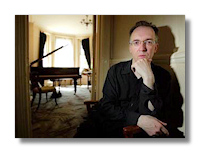
Anne Midgette

Washington Post Hires Full-time Music Critic

By Susan Elliott
Musical America

Amid the current trend to the contrary among newspapers, The Washington Post last week hired a permanent staff music critic to succeed Tim Page. Anne Midgette, who has been in the job on an interim basis since January, when Page took a leave of absence, has been hired officially as The Post's classical music critic.

"In light of all the lay-offs around the country, they're really bucking the trend in committing to serious arts journalism," said a delighted Midgette in a brief telephone conversation.

Read more about this at the Musical America website:

   http://www.musicalamerica.com/news/newsstory.cfm?archived=0&storyid=18457

Everybody Gets A Piano

|
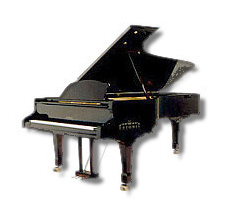
Pearl River Piano Company

Keyboard moment in China's cultural evolution

By Petroc Trelawny
The Australian

As my plane makes its final approach into the southern Chinese city of Guangzhou, the mountains give way briefly to green paddy fields, and then industry takes over.

Beneath are hundreds of vast blue-roofed sheds and smoking red-brick chimney stacks. The landscape is mapped with rail yards and lorry parks; heavily laden barges crawl along the creeks of the Pearl River. With a vast economy that's now larger than that of nearby Hong Kong, Guangdong Province deserves its title as the factory of China. …

I've come to visit a company that last year made 100,000 pianos. The Pearl River Piano Company says it's now the world's largest: 3000 staff work on eight production lines, and it feels more like a car factory than a place making things as delicate and tactile as pianos.

A basic Pearl River piano costs about $1600, a fortune to many Chinese, but well within the budget of the country's burgeoning urban middle class. Their new wealth, combined with a desire to give their offspring a better childhood than they experienced, has led to an obsession with the piano in China. Conservative estimates suggest that 30 million Chinese children are learning the instrument; many reckon the figure is much higher. One academic told me the country was in the grip of piano fever.

Read more about this at The Australian website:

   http://www.theaustralian.news.com.au/story/0,,23910488-16947,00.html

Rise of the Machines

|

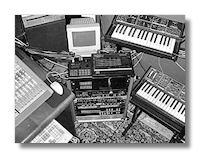
Are Digital Orchestras a Sign of the Times?

By David Pogue
New York Times

This past weekend, I attended an astonishing performance of "Les Misérables" performed by 13- to 17-year olds at a local theater program. Two things made it memorable: first, that this program's director was able to find such amazing voices in this age group, especially for a show where most of the characters are men. (In my experience, more teenage girls than boys are interested in theater.)

Second, the production came breathtakingly close to simulating a full professional production – on a church rec-room stage that measures about 30 feet across and 12 feet deep. We're talking tiny. "Les Minirables."

And yet it worked, partly because the carefully built, minimal sets and props were just enough to suggest their big-budget Broadway equivalents – and partly because of a digital orchestra that accompanied the cast.

Read more about this at the New York Times website:
   http://www.nytimes.com/2008/06/05/technology/05pogue-email.html

Conflict of Interest?

|
Universal Music Artist Agency

The Manager as Double Agent

By Matthew Gurewitsch
Wall Street Journal

Last fall, the Universal Music Group, owners of the premier classical labels Decca and Deutsche Grammophon, sent shock waves through the industry when they launched, without warning, the Universal Music Artist Agency, offering the company's glamorous roster of recording artists – we are talking the likes of Renée Fleming and Lang Lang – for galas, corporate events, promotional campaigns and even Christmas parties. Mind you, these stars were not Universal's clients.

Under the contracts the world of classical music is used to, the person who negotiates an artist's services for performances, personal appearances, endorsements, recording deals and any other activities is the artist's manager. The historic role of the recording company – whether Universal or a competitor like Sony Classical or EMI Classics – has been to finance recordings and handle manufacturing, distribution, press and promotion, while retaining copyright in perpetuity.

Read more about this at the Wall Street Journal website:

   http://online.wsj.com/article/SB121244733967139457.html

Music directors' salaries are definitely on the upswing

By Charles Storch
Chicago Tribune

At events scheduled here Monday, the Chicago Symphony Orchestra is to officially introduce Riccardo Muti as its music director-designate. Should Muti be asked why he chose to commit here instead of, say, New York, it's likely he will cite the chance to lead our world-class orchestra and reside in our congenial city.

Don't expect him or the CSO to reveal how much he will be paid when he begins a five-year term as music director in September 2010.

Most symphony orchestras are loath to reveal up-to-date compensation (pay and benefits) for top executives and contractors. Like other U.S. not-for-profits, it can expect two or more years to pass before its tax filings, containing pay details, are readily accessible…

Read more about this at the Chicago Tribune website:

   http://www.chicagotribune.com/entertainment/chi-music-salaries-0601jun01,0,6092832.story

Into the 21st Century

|
Gramophone

Gramophone to put 85 years of classical music articles online

By Mark Brown
The Guardian

Gramophone magazine has always had an impressive list of contributors, from Rachmaninov to Barbirolli to Rattle – but the problem has been reading them all. Yesterday the 85-year-old magazine announced it is putting its entire archive online as well as entering the commercial download market. The magazine has never missed a month's publication since Compton Mackenzie founded it in 1923, even during the war years.

After 18 months' planning, editors said yesterday that, by early September, every word ever printed in the magazine will be available free in its searchable online archive. It also believes the classical music recording industry has been slow when it comes to digital downloads, so by January 2009 the archive will be linked to a download and mail order service.

Read more about this at the Guardian website:

   http://music.guardian.co.uk/classical/story/0,,2277562,00.html

I Puritani at the Met

A Big-Screen Test for Opera

Simulcasting Has Put A Song in the Hearts of Met Execs. Others Are Holding Their Applause.

By Anne Midgette
Washington Post

When "The Daughter of the Regiment," one of the Metropolitan Opera's most-anticipated premieres this season, comes live to a movie house near you on Saturday, it's a good bet that the theater will be mobbed. Met General Manager Peter Gelb's vision for high-definition cinema transmissions of operas has proved so successful after two seasons that the company is adding more of them every year: 11 have just been announced for 2008-09. And other opera companies are scrambling to catch up.

This spring, productions from the San Francisco Opera, La Scala in Milan and London's Royal Opera House began appearing in North American movie theaters. But the response has not been quite the same. On April 5, 170,000 people around the world saw the Met's "La Bohème." A week later, however, when a taped performance of the San Francisco Opera's "Don Giovanni" played in selected theaters around the country, the Pavilion Park Slope movie house in Brooklyn had all of 13 people in the audience.

Read more about this at the Washington Post website:

   http://www.washingtonpost.com/wp-dyn/content/article/2008/04/23/AR2008042303689.html

The Demise of the Brick and Mortar

|
Tower - Everything music go...

Record Stores Fight to Be Long-Playing

By Ben Sisario
New York Times

Now added to the endangered species list in New York City, along with independent booksellers and shoe repair: the neighborhood record store.

The hole-in-the-wall specialty shops that have long made Lower Manhattan a destination for a particular kind of shopper have never made a great deal of money. But in recent years they have been hit hard by the usual music-industry woes – piracy, downloading – as well as rising real estate prices, leading to the sad but familiar scene of the emptied store with a note taped to the door.

Some 3,100 record stores around the country have closed since 2003, according to the Almighty Institute of Music Retail, a market research firm. And that's not just the big boxes like the 89 Tower Records outlets that closed at the end of 2006; nearly half were independent shops. In Manhattan and Brooklyn at least 80 stores have shut down in the last five years.

Read more about this at the New York Times website:

   http://www.nytimes.com/2008/04/18/arts/music/18reco.html

The Sexy Side of Classical Music

|
Violinist Janine Jansen by Mitch Jenkins

Saint Louis Symphony Orchestra: A Sex Appeal

By Eddie Silva
Playbill Arts

Let's talk about sex – and classical music.

A couple of years ago the writer Greg Sandow, who discusses the state and fate of classical music on artsjournal.com, alerted his readers to the emergence of an audacious new feature in MUSO, a magazine based in the UK that writes about the classical music world the way Spin writes about rock & roll. In MUSO's online version, Sandow heralded, is a section called "G Spot," which features a list of fans picks for sexiest soloists, with pictures and commentary.

For example, violinist Joshua Bell is described to be "As American as apple pie and just as tasty." Pianist Hélène Grimaud is praised for her "gamine gaze." Room is left for praise of the artists' musicianship, "supreme skills across an extraordinary range of repertoire" and "steely pianistic strength," but the message MUSO spreads is that having one gift does not belie the other. And, more importantly, classical can be hot.

Classical music is declared dead, usually with deep regret, by some astute and erudite critic on a regular basis. And just as it is declared dead, it is passionately declared alive and well by another astute and erudite critic – usually the next day. Death and resurrection is a great theme of religion and literature, but a steady dose of it can be emotionally depleting, especially if it happens to be your art form being compared to Lazarus. Within the chronicling of the death-life continuum of classical music, at least one fact is inarguable: classical music's presence near the center of popular culture has diminished considerably over (at least) the last two decades.

Read more about this at the Playbill Arts website:

   http://www.playbillarts.com/features/article/7621.html

The Founder of Naxos

|
Klaus Heymann, CEO of Naxos

Klaus Heymann profile

CNN

Klaus Heymann may not know how to read music or play a musical instrument, but he has been attending classical concerts with his parents since he was 9 years old. Today he is best known as a successful entrepreneur, who is a classical music amateur.

Heymann began his career in his native city of Frankfurt, as an export advertising and promotion manager for Max Braun AG, a manufacturer of audio equipment, household appliances and electric shavers.

After working for an American newspaper, The Overseas Weekly, for five years in Germany, he came to Asia in 1967 to start up its Hong Kong office, and subsequently started his own business.

Heymann's Pacific Mail Order System began as a direct-mail advertising company, which later evolved into a mail-order firm for members of the U.S. Armed Forces serving in Vietnam. It provided cameras, watches and audio equipment, including Bose loudspeakers and Revox tape recorders.

Read more about this at the CNN website:

   http://www.cnn.com/2008/BUSINESS/03/31/heymann.profile/

Trumpet