







Site Search

Affiliates

In association with
Amazon
Amazon UKAmazon GermanyAmazon CanadaAmazon FranceAmazon Japan

ArkivMusic
CD Universe


Sheet Music Plus Featured Sale

Classical Sheet Music


News & Information

Recently in Composers Category

A Certain Apollonian Quality

|
Christopher Rouse by Christian Steiner

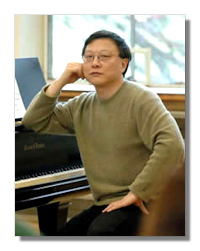
Christopher Rouse: Going to Eleven

By Frank J. Oteri
New Music Box

When most people think of the music of Christopher Rouse, the first thing they probably think of is how loud it is. Some years back there was even a notorious story about an orchestra musician who threatened to sue Rouse for subjecting him to such high decibel levels on stage. Ear-splitting volume is more commonly associated with hard rock than classical music. Rock was a formative influence on this Baltimore native, who as a child was immediately drawn to early rock and roll before his mother turned him on to symphonies, but he quickly grew most fond of raucous 20th-century fare, from Prokofiev and Stravinsky. Once he found his own voice as a composer, the visceral power of rock influenced an over-the-top compositional sensibility which has manifested itself in his two powerful symphonies, numerous concertos, and a massive Requiem which finally received its world premiere last year. His brand new Concerto for Orchestra, which Marin Alsop will premiere at Cabrillo this summer, also promises to pack a wallop.

But not everything Chris writes is completely in-your-face. At the 2007 Chamber Music America conference, the Calder Quartet played haunting strains of music sometimes at the threshold of audibility. In that crowded hotel conference suite you could hear a pin drop. Everyone stood still, including me. I came in late but had to stay until the end to find out what they were playing. When I learned that it was from the Second String Quartet by Chris Rouse, I was mildly stunned. That a composer I had known for years and had come to admire for his raucous percussion pieces such as Odoun Badagris and Bonham and the intense Second Symphony could also write music as subtle and fragile as this completely made me rethink his music. I pored over scores and was startled by how meticulously detailed they were – even the most cataclysmic passages.

Read the complete interview at the New Music Box website:

   http://www.newmusicbox.org/article.nmbx?id=5619

Prolific and Unknown

|
Opus One - Hewitt Symphonies #1 & 32

Composing behind closed doors

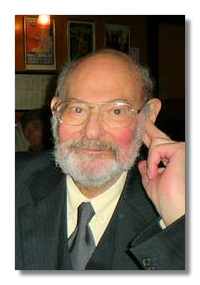
Philadelphia's Harry Hewitt, prolific, gentlemanly and unknown, is getting a hearing five years after his death.

By David Patrick Stearns
Philiadelphia Inquirer

Were it possible to completely live the life of one's imagination, Harry Hewitt would have succeeded in doing so.

The Philadelphia composer created 3,000 works over 60 years – 32 symphonies, an opera, songs inspired by Lord of the Rings – but was barely known to artistic colleagues living only blocks from his apartment at 19th and Pine. His concerts were off the grid, his recordings few, his recognition level nothing remotely resembling what composers crave – and need, in order to grow.

Gentlemanly, idealistic and possessed of a smiling, Buddha-like manner, Hewitt died in such obscurity at age 82 five years ago that fellow composer Jan Krzywicki made a point of speaking at a memorial service he feared would be sparsely attended. "Harry was kind to me; I wanted to support him," he recalled. Hewitt wasn't necessarily ignored; he simply never came to the attention of many Philadelphia musicians.

Read more about this at the Philiadelphia Inquirer website:

   http://www.philly.com/inquirer/entertainment/20080629_Composing_behind_closed_doors.html

New Found Mozart?

|
Wolfgang Mozart

Unknown Mozart's compositions in Poland?

New Poland

Experts from famous Mazarteum in Salzburg in Austria will probably examine wheather compositions, which were found in musical collection in Jasna Góra, signed by Wolfgang Amadeusz Mozart, are really the famous composer works of art. On 24th April Polish Press Agency (Polska Agencja Prasowa) informed that in collection in Jasna Góra, unknown Mozart's compositions may be found. On 2th May, during International Festival of Sacred Music "Gaude Mater" (Miedzynarodowego Festiwalu Muzyki Sakralnej) in Czestochowa, one of the composition, an aria, was peformed.

Read more about this at the New Poland website:

   http://news.poland.com/result/news/id/442

New Music from Osmo Vänskä

|

Vänskä sets down the baton and takes up the pen

The famed music conductor makes his second foray into the world of composition with a nine-minute work that reflects the 35W bridge collapse.

By Graydon Royce
StarTribune.com

Osmo Vänskä, composer, has struck again. The music director of the Minnesota Orchestra has knocked out a new work titled "Bridges" that will have its premiere on Sunday with the Metropolitan Symphony Orchestra. The nine-minute piece was inspired by the collapse of the Interstate 35W bridge last summer.

Bill Schrickel, principal bass with the Minnesota Orchestra and conductor of the Metropolitan Symphony, had been nagging Vänskä to write something since 2006, when the Minnesota Orchestra performed his composition "Here!...Beyond?"

Read more about this at the Star Tribune website:

   http://www.startribune.com/entertainment/music/18976034.html

Performing More Works by Women

|
Judith Lang Zaimont, composer

Lend Me a Pick Ax: The Slow Dismantling of the Compositional Gender Divide

By Lisa Hirsch
NewMusicBox

In the world of classical music, as elsewhere, women have made tremendous progress over the last 30 years. Following the introduction of blind auditions in the 1970s, which greatly reduce bias, women now make up about half of the string and woodwind players in American orchestras. Women occupy prominent administrative positions in major musical institutions. Women direct and design productions at important opera houses.

Women also make up about 30 percent of composition students in American colleges and conservatories. While this is a vast and positive change, it's still not easy for women to get their works performed, especially by symphony orchestras. During the 2004-05 concert season, works by women accounted for only one percent of all pieces performed by the 300 or so member orchestras who responded to the repertory survey of the American Symphony Orchestra League (now the League of American Orchestras, or LAO). The following year, with a boost from Joan Tower's widely-performed Made in America, the number rose to two percent.

Read more about this at the NewMusicBox website:

   http://www.newmusicbox.org/article.nmbx?id=5576

Vivaldi's "Argippo" Found

|
Antonio Vivaldi

Vivaldi's long-lost opera returns to Prague after 278 years

After hunting the missing manuscript down in a German archive, Czech conductor revives "Argippo"

By David Randall
aaaa

A long-lost opera by Antonio Vivaldi was to have its first performance in centuries last night. Argippo, discovered by a Czech musician as he rummaged through an old archive of anonymous scores, was being staged at a castle in Prague, the city where it had its premiere in 1730. Fittingly, it will be conducted by Ondrej Macek, the man who found the manuscript, and played by his Baroque Music Ensemble Hofmusici.

Vivaldi, called by contemporaries "the Red Priest" for the colour of his hair, is known these days, to all but serious lovers of Baroque music, for a single work: The Four Seasons. However, he was a prolific composer who produced more than 500 concertos, 73 sonatas, numerous pieces of sacred music and 46 operas. One of them, Argippo, opened in the Palace of Count Spork in the centre of Prague 278 years ago. The Czech capital was then a city of arts with some of the best music of the time, often performed by the continent's most prominent singers and musicians.

Read more about this at The Independent website:

   http://www.independent.co.uk/arts-entertainment/music/news/820860.html

Paul Hindemith's "Lost" Piano Concerto

|

Local premiere, first recording of the elusive Hindemith

By David Patrick Stearns
Philadelphia Inquirer

Piano concertos by major composers don't disappear quietly and aren't easily hidden.

Though Paul Hindemith's Klaviermusik mit Orchester was silenced for more than eight decades by the illustrious Austrian family that paid for its creation, it dangled just out of reach of those who knew of its existence, locked up in a Bucks County farmhouse, with access blocked intractably and repeatedly whenever anyone – whether Hindemith's estate or Philadelphia conductor Jonathan Sternberg – came close.

Finally discovered in 2002, Klaviermusik had an acclaimed 2004 world premiere in Berlin, and will be recorded for the first time, live in concert, at 8 p.m. Sunday at the Kimmel Center with the Curtis Symphony Orchestra.

Not just another Hindemith work, Klaviermusik quickly has become one of the composer's most-played concertos, performed by the New York Philharmonic and San Francisco Symphony, and garnering musical satisfaction that almost justifies the exasperating Viennese intrigue surrounding it.

Read more about this at the Philadelphia Inquirer website:

http://www.philly.com/inquirer/magazine/20080424_Local_premiere__first_recording_of_the_elusive_Hindemith.html

Prokofieff Behind the Mask

|
Sergey Prokofiev - Diaries 1915-1923: Behind the Mask

The secret diaries of Sergey Prokofiev

Russia's revolution coincided with a blossoming of musical talent. Sergey Prokofiev's extraordinary diaries, to be published next week, show the composer at the centre of both

The Independent

It's 16 December 1922. Sergey Prokofiev receives a letter informing him that the trunk of precious papers and manuscripts he had packed up for safekeeping in the vaults of a publishing company upon his rushed departure from Russia in May 1918 has been lost. In it were the score of the Second Piano Concerto, a sheaf of childhood compositions, the notebook containing his diary between September 1916 and February 1917, photographs, letters to his father and records of his beloved chess tournaments. "But most of all I mourn the loss of the Diary," writes the composer. "The loss of the Diary is a tragedy, as there was so much of interest in it: it was my last winter in Petrograd which saw the production of The Gambler and a general flowering of my talent." He goes on to recall the professional tribulations, love affairs and squabbles contained in its pages, raging against the "scoundrels" who failed to ensure its safekeeping.

As it turns out, Prokofiev's rage was misplaced and, though he would not discover it until 1927 when he returned to the USSR, the diary had been preserved. And now it is published for the first time in English translation. The diaries were seized by the Soviet government on the composer's death and hidden in the state archives for years until Prokofiev's son Sviatoslav and grandson Serge were granted permission to transcribe them – no easy task, as the thousands of pages were almost all written in the composer's vowel-less shorthand.

Read the complete extract from from Sergey Prokofiev: Diaries 1915-1923: Behind the Mask, edited by Anthony Phillips at The Independent website:

   http://www.independent.co.uk/arts-entertainment/music/features/804351.html

Redefining the Possibilities

|
Christopher O'Riley

Pianist-arranger Christopher O'Riley has redefined the possibilities of classical music

By Diane Peterson
The Press Democrat

It's been a dozen years since pianist Christopher O'Riley last performed with the Santa Rosa Symphony.

In the interim, the multitalented Midwesterner has continued to evolve, using his early experience in jazz and rock as a springboard to new heights as a classical artist.

From his high-profile role as the host of "From the Top" – a public radio show centered on young musicians – to his groundbreaking arrangements of songs by the Brit alt-rock band Radiohead, O'Riley, 51, has earned a reputation for innovation coupled with a refreshing lack of pretense.

This weekend, he will tackle Béla Bartók's Concerto No. 1 with the Santa Rosa Symphony. The concerto looks back to the Viennese School and to Brahms, whose Symphony No. 1 will round out the second half of the program conducted by Music Director Bruno Ferrandis.

O'Riley likes to perform pieces he feels passionate about. Under his nimble fingers and carefully crafted arrangements, an eclectic stream of pop music has migrated to the classical music stage over the years.

"It's really sort of a selfish enterprise," he said in a phone interview from northeast Ohio, where he spends most of his time. "It's always been about the song … a couple of Cocteau Twin songs, a Stephen Sondheim song. Things just take me over."

At the same time, the virtuoso has championed new music from within the classical world, premiering eclectic works by Richard Danielpour and Aaron Jay Kernis while recording well-known gems by Beethoven, Ravel and Scriabin.

Read more about this, including an interview, at the The Press Democrat website:

   http://www1.pressdemocrat.com/article/20080410/LIFESTYLE/804100308/

2008 Pulitzer Prize in Music

|
David Lang by Klaus Rudolph

David Lang Wins Music Pulitzer

By Tom Huizenga
NPR

David Lang, a New York-based composer, has won the Pulitzer Prize for music with his piece, The Little Match Girl Passion, based on the children's story by Hans Christian Andersen.

Lang's music makes a big impact with small forces. The piece is scored for only four voices and a few percussion instruments, played by the singers. They sing the sad story of a little girl who freezes to death selling matches on the street during a cold winter's night.

In notes Lang wrote to accompany the Carnegie Hall premiere last October, he says he was drawn to Andersen's story because of how opposite aspects of the plot played off each other.

"The girl's bitter present is locked together with the sweetness of her past memories," Lang says. "Her poverty is always suffused with her hopefulness. There's a kind of naïve equilibrium between suffering and hope."

Lang was also intrigued by the religious allegory he saw beneath the surface of the story, and he found inspiration in the music of his favorite composer, J.S. Bach.

Read more about this, including an audio excerpt, at the NPR website:

   http://www.npr.org/templates/story/story.php?storyId=89442735

Trumpet